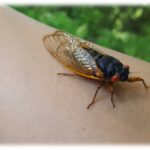
A natural wonder will occur in 15 states this year: the emergence of the Brood X, 17-year periodical cicadas! Also known as “17-year or 13-year locusts” the last mass emergence of these insects occurred in 2004. Now, 17 years later, the immature cicadas will emerge from the ground, molt one last time to gain wings,…Read more about Periodical Cicadas are Coming, but Your Vegetables are Safe![Read More]
Vegetable Crops - General
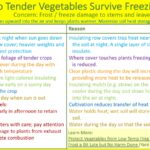
There is a frost and freeze warning for 4/20, 4/21, 4/22. Vegetable growers should be prepared to take protective actions on early-planted warm-season vegetables (tomato, cucumber, pepper, summer squash, bean etc.). For high tunnel growers, medium-weight floating row covers should provide sufficient protection. Growers should close the structure when inside temperatures drop below 80°F to…Read more about Frost and Freeze Warning[Read More]
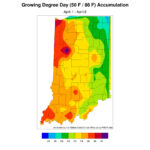
March wrapped up as one of Indiana’s wettest (44th wettest out of 126 years) and warmest (16th warmest). It was marked by unusually warm days and then cool days. Was it ever just average? Certainly, most days fell within the climatological range of temperatures. Precipitation seemed to be partial to the southern part of the…Read more about April Showers or Lingering Drought?[Read More]
USDA is establishing new programs and efforts to bring financial assistance to farmers, ranchers and producers who felt the impact of COVID-19 market disruptions. The new initiative—USDA Pandemic Assistance for Producers—will reach a broader set of producers than in previous COVID-19 aid programs. USDA is dedicating at least $6 billion toward the new programs. This…Read more about CFAP 2 – USDA Pandemic Assistance for Producers[Read More]
Iowa State University Extension and Outreach is offering the free online course “Risk Management Education for Farmers with On-Farm Visitors”. Producers will learn practical management techniques to enhance the safety and health of their on-farm visitors. For more information about this course, please visit Farmers with On-site Visitors Can Learn to Manage Risk during Free…Read more about A Free Course to Teach Farmers with On-site Visitors to Manage Risk[Read More]
WHAT: An Indiana Pesticide Clean Sweep Project designed to collect and dispose of suspended, canceled, banned, unusable, opened, unopened or just unwanted pesticides (weed killers, insecticides, rodenticides, fungicides, miticides, etc.) is being sponsored by the Office of Indiana State Chemist (OISC). This disposal service is free of charge up to 250 pounds per participant. Over…Read more about Clean Sweep 2021[Read More]
Three new vegetable IPM videos in Spanish are available on Youtube. They were made by a team led by Natalie Hoidal, Extension Educator at Univ. of Minnesota. Búsqueda de problemas en el campo (Scouting for problems in the field) Diagnóstico de problemas de las plantas (Diagnosing plant problems) Recolección de plantas enteras para el diagnóstico…Read more about IPM Videos in Spanish from the Great Lakes Vegetable Working Group[Read More]
The USDA is establishing new programs and efforts to bring financial assistance to farmers, ranchers and producers who felt the impact of COVID-19 market disruptions. The USDA Pandemic Assistance for Producers announced recently include: Investing $6 Billion to Expand Help & Assistance to More Producers; Adding $500 Million of New Funding to Existing Programs; Carrying…Read more about Farmers may Benefit from Additional Financial Assistance[Read More]
The Vegetable Beet is a live weekly interview and discussion focused on vegetable production challenges and opportunities brought to you by the Great Lakes Vegetable Producers Network. We grow more together. JOIN US LIVE! We will be broadcasting live via Zoom at 12:30 ET/11:30 CT every Wednesday from the first week of March to the…Read more about Great Lakes Vegetable Producers Network’s Broadcast is Back[Read More]
A wide range of topics related to vegetable production was covered in our winter meetings. Recording of these meeting are available on-line now. If you missed these presentations, or want to visit them again, please follow the links to Purdue Extension Youtube Channel, where you will find a playlist for each of the meetings that…Read more about Winter Webinar Recordings[Read More]