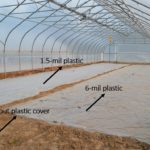
Soil solarization can be used as a tool for soil disinfestation. It is accomplished by covering moist soil with transparent polyethylene film for 4 to 6 weeks in the summer. During this period, soils are heated to temperatures that are lethal to many soil pathogens, nematodes and weed seeds. This summer we conducted a demonstration…Read more about The Update of Soil Solarization in a High Tunnel at SWPAC[Read More]
Vegetable Crops - General
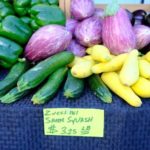
This publication is the second part of a series of publications that aim to help farmers selling at farmers markets and other local markets. Below we offer information on price determination and pricing strategies for farmers markets. The importance of understanding pricing information Pricing is probably the single most important driver of farm profitability and…Read more about What You Need to Know about Selling in Farmers Markets—Let’s Talk about Prices[Read More]
Farmers markets continue to grow in number and locations. According to the United States Department of Agriculture-Agricultural Marketing Service (USDA-AMS), there are currently 8,702 farmers markets in the United States, an increase of almost 400 percent since 1994 (USDA-AMS, 2017). The USDA-AMS directory of farmers markets reported 191 farmers markets in Indiana by August 2017:…Read more about What You Need to Know about Selling in Farmers Market — Farmers Markets and Its Benefits[Read More]
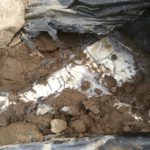
When mixing fertilizers, it is important to check fertilizer compatibility before application. If incompatible fertilizers are mixed, they form insoluble precipitations that can clog drip emitters and damage sprayers used to apply foliar fertilizers (Figure 1.). This article discusses a few scenarios for which special attention should be paid on the solubility of mixed fertilizers….Read more about Fertilizer Compatibility[Read More]
When we first began working in high tunnels about 8 years ago, most of the popular literature said that the tunnels would provide protection from most insect pests, other than the usual greenhouse pests like aphids and mites. What we found very quickly is that that information was untrue. We found very high populations of…Read more about Caterpillars in High Tunnels[Read More]
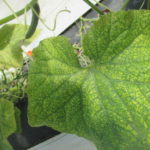
We have received a number of reports of spider mite problems lately. Some of them have been on crops grown in high tunnels, particularly tomatoes and cucumbers. High tunnels are the perfect environment for mites because it is hot, which means they reproduce faster, and the mites are protected from rainfall, which is a major…Read more about Spider Mites[Read More]
Recent dry weather raises concern about effectiveness of preemergent herbicides. Preemergent herbicides applied on the soil surface need to be moved into the soil where the target weed seeds are germinating (normally 1-2 inches deep) in order to be effective. The process normally requires 0.5 to 0.75 inch of water within a few days of herbicide application….Read more about Effectiveness of Preemergent Herbicides[Read More]
Developing and mixing your nutrient solution is one of several very important steps in the production process. Mistakes are easily made when fertilizers are mixed. Not only does this have a cost implication, but also it can have severe consequences on production and therefore revenue. In the previous article Taking Care of Plant Nutrition in…Read more about Taking Care of Plant Nutrition in Your High Tunnel – Fertilizer and Nutrient Solution Mixing Tips[Read More]
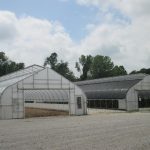
Tomatoes growing in high tunnels are in the middle of or close to harvest. Developing and maturing fruit are under leaf canopies. On the top of the plants, many flowers are still blooming. These flowers will contribute to the second big harvest. Although tomatoes in June are most valuable, we certainly appreciate big, red and…Read more about Add Shade to High Tunnels[Read More]
Managing domestic animals in a direct market venue can be very challenging. While best practice is to exclude domestic animals from production and packing areas, produce may be exposed to domestic animals at the point of sale if selling at a produce auction or farmers market. When selling through a direct market venue, growers should…Read more about Service and Companion Animals at Direct-Market Venues[Read More]