
Small and medium-sized vegetable farms face unique challenges balancing profitability with sustainable production practices and food safety requirements. To better understand how these farmers navigate complex decision-making processes, the Soil to Market Team—comprising Maria Marshall, Renee Wiatt, Petrus Langenhoven, Betty Feng, and Nathan Shoaf—conducted a comprehensive survey of 500 small and medium-sized farmers across the…Read more about Understanding Farm Decision-Making: Insights from the 2024-2025 Producer Survey[Read More]
Cover crop
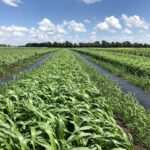
Summer cover crops offer clear benefits to vegetable growers and the environment. Cover cropping offers clear benefits to growers and the environment. It is a valuable opportunity to add organic material to the soil, and it increases soil carbon, enhances soil fertility and nitrogen cycling, reduces erosion, and helps to reduce weed pressure in subsequent…Read more about Summer Cover Crops for Improved Soil Health and Weed Management[Read More]
Small and medium-sized vegetable farms face unique challenges balancing profitability with sustainable production practices and food safety requirements. To better understand how these farmers navigate complex decision-making processes, the Soil to Market Team—comprising Maria Marshall, Renee Wiatt, Petrus Langenhoven, Betty Feng, and Nathan Shoaf—conducted a comprehensive survey of 500 small and medium-sized farmers across the…Read more about Understanding Farm Decision-Making: Insights from the 2024-2025 Producer Survey[Read More]
Small and medium-sized vegetable farms face unique challenges balancing profitability with sustainable production practices and food safety requirements. To better understand how these farmers navigate complex decision-making processes, the Soil to Market Team—comprising Maria Marshall, Renee Wiatt, Petrus Langenhoven, Betty Feng, and Nathan Shoaf—conducted a comprehensive survey of 500 small and medium-sized farmers across the…Read more about Understanding Farm Decision-Making: Insights from the 2024-2025 Producer Survey[Read More]
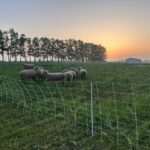
We’ve (already) flipped the calendar to the month of August, which means that you might be in the throes of seeding fall vegetables and purchasing some cover crop seed for the end of the season. But if you haven’t gotten cover crops yet, there’s still some time left to order your preferred varieties before they…Read more about Feed the Soil, Feed your Crops… Feed your Livestock![Read More]
A news release from SARE dated September 5, 2023. Adapted from the Conservation Technology Information Center A new national survey report has found that the vast majority of farmers who use cover crops don’t need incentive payments to continue with the practice because of how much they appreciate its value to their land and business. According…Read more about Sustainable Agriculture Research and Education (SARE) News – National Cover Crop Survey Report[Read More]
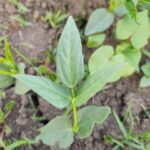
Drought tolerance is top of everyone’s mind this year. Dry conditions and cover crops don’t always mix – they use precious moisture in dryland agriculture that’s rarely returned in a timely fashion. In irrigated agriculture, the expense of irrigating them might not be justified. However, there are cover crops that tolerate dry conditions and still…Read more about Drought-busting Summer Nitrogen Fixer? Look No Further Than Cowpea[Read More]
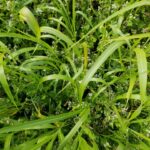
What can a relative of broom corn do for you on a vegetable farm? Build biomass while beating the heat! Sorghum-sudangrass (Sorghum x drummondii) (Figure 1) is a summer-loving hybrid cover crop species. Its parents are wild sorghum, native to sub-Saharan Africa, and domesticated sorghum, known as broom corn or milo in our part of…Read more about Cover Crop Species Spotlight – Sorghum Sudangrass[Read More]
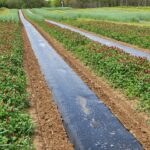
In watermelon systems in Indiana, cover crops are extensively used with the primary function of acting as a wind-break to protect the seedlings when they are planted in May. Due to the nature of the landscape and the soil type (e.g., open areas with sandy soils), seedlings are exposed to physical damage caused by sandblasting….Read more about Enhancing Insect Pest and Pollinator Management with Flowering Cover Crops[Read More]
Dr. Betty Feng’s lab within the Department of Food Science at Purdue University is hosting a series of webinars this March and April. The webinars are free to anyone who wishes to participate and will cover various topics, including on-farm food safety and agriculture soil management. Food Safety Plan (accumulative series of webinars) March 21…Read more about Webinar Series – Scaling up Your Small and Medium-sized Farm[Read More]