Growers may be wondering whether to replant pumpkin fields where the stand is uneven due to excess moisture. Potential yield of the replants is one thing it would be good to know. We have data on yield of pumpkins direct-seeded or transplanted in mid-July in northern Indiana. The trials were no-till planted into a harvested…Read more about Replanting Poor Stands of Pumpkins[Read More]
Crop Culture
Burrs and Cones. Both of the trellises in the Boiler Hopyard have begun flowering and coning. The primary shoots were pruned at the top of the net on the dwarf trellis in order to promote lateral growth. The pruning took place on May 19 and again on May 28. The bines on the dwarf trellis…Read more about Boiler Hopyard Update-July 9, 2015[Read More]
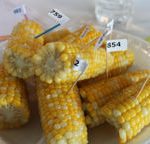
Pinney Purdue Vegetable Field Day and Sweet Corn Sampler. Thursday, August 13, 2015. 4:00 p.m. – 8:00 p.m. CDT. Pinney Purdue Ag Center, 11402 S. County Line Rd., Wanatah, IN. Plot tours include soil health management and disease suppressive soils, tomatoes and peppers in high tunnels, and sweet corn varieties. To register, contact Lori Jolly-Brown,…Read more about Upcoming Events – Pinney Purdue Vegetable Field Day and Sweet Corn Sampler[Read More]
High rainfall amounts lead to loss of nitrogen from the soil. Sometimes the loss is great enough that a crop will benefit from additional nitrogen application. This article will describe how nitrogen is lost and factors to consider in deciding whether to apply extra nitrogen. There are two main ways nitrogen is lost from wet…Read more about Nitrogen Loss from Wet Soils[Read More]
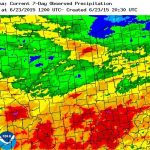
Much of the state has seen excessive rains in recent weeks (Fig. 1). When soils are saturated vegetable crops suffer. This article, slightly revised from its original publication date in July 2003, describes and explains problems that are likely to occur. Vegetable crops become stressed in waterlogged soils. Aboveground wilting, yellowing and death of leaves,…Read more about Waterlogged Soils and Plant Growth[Read More]
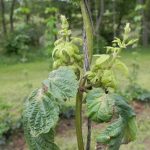
Purdue University’s Boiler Hop Yard has started its second growing season with the hopes of providing Indiana growers with science-based recommendations for hop production in the Midwest. With summer rapidly approaching, hop bines are now climbing over 10 feet high in portions of Indiana, and the Boiler Hop Yard is no exception. Downy Mildew. One…Read more about Boiler Hop Yard Update[Read More]
A field day will be held on July 9 to share with the public the various research activities at the Southwest Purdue Agricultural Center in Vincennes, IN. The day will start at 7:30 A.M. with a health fair. Registration starts at 8:30 A.M. Presentation topics include: managing cucumber beetles while protecting bees, production of vegetables…Read more about Southwest Purdue Agricultural Center Field Day[Read More]
Blossom end rot of tomato has been showing up in some protected growing structures. This article reviews the disorder and summarizes preventive practices. Blossom end rot is a physiological disorder caused by a deficient supply of calcium to the developing fruit. It is a common problem on tomatoes, but can also occur on peppers, eggplants,…Read more about Blossom End Rot of Tomato[Read More]
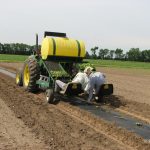
Getting seedlings from the transplant tray into the field is essential for a good crop (Figure 1). Healthy transplants treated well will quickly establish themselves in the field, setting the foundation for a productive crop. Here I offer some suggestions for successful transplant establishment. Harden transplants by exposing them to higher light, cooler temperature, and…Read more about Successful Transplant Establishment[Read More]
Cover crops should be killed at least a couple of weeks before planting vegetables. That will give the cover time to partially decompose, and time for any cutworm larvae that may be in the crop to die or pupate. If wet weather delays killing or incorporation of cover crops, the time between incorporation and planting…Read more about Managing Cover Crops in Spring[Read More]