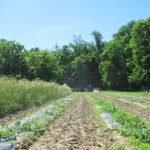
Watermelon production is threatened by Fusarium wilt, a widely distributed soilborne disease that can cause yield losses up to 100%. Currently, there are no watermelon varieties that are completely resistant to all races of Fusarium wilt. One way to control the disease is through grafting. The grafted plant combines a watermelon cultivar with a squash…Read more about Opportunities for Growing Grafted Watermelons[Read More]
Crop Culture
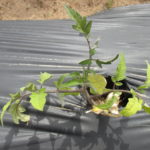
Recent rain and cold conditions have brought detrimental effects to some of the early planted vegetables. In southwest Indiana, air temperatures have dropped into the 40s °F and soil temperatures have dropped into the 50s °F in early May. The low temperatures would have greatly inhibited absorption of water and mineral nutrients for many warm season vegetables. In one…Read more about Effects of the Recent Rain and Cold Conditions on Vegetable Production[Read More]
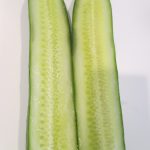
A plant is considered to be seedless if it is able to produce a fruit without or contain a much-reduced number of seeds, or in some cases, only present traces of aborted seeds. Seedlessness is a desirable fruit character because seeds are often hard, have a bad taste and produce hormones that lead to fruit…Read more about Seedless Fruit Production[Read More]
Effectively managing foliar diseases including late blight (LB), early blight (EB), and Septoria leaf spot (SLS), is one of the biggest challenges facing organic tomato growers. New, resistant hybrid varieties are available, but organic growers often plant heirloom varieties instead because they are perceived to have superior flavor and growers can save seed. Copper fungicides…Read more about The TOMI Project Aims to Help Tomato Growers Better Manage Foliar Diseases[Read More]

There are several potential benefits of growing grafted tomatoes, particularly for early season tomato production in greenhouses or high tunnels. If you are interested in trying this technique but wondering whether it is possible to graft tomato plants by yourself, a Purdue extension publication, Techniques for Tomato Grafting, (https://extension.purdue.edu/extmedia/HO/HO-260-W.pdf ) provides a step-by-step guideline for small…Read more about Growing Grafted Tomatoes in High Tunnels[Read More]
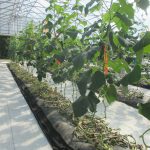
Tomato is considered one of the most profitable crops grown in high tunnels, but continually growing one single crop leads to build-up of diseases. In addition, growers are facing more competition in selling tomatoes in the market. To enhance resilience of high tunnel system and increase access to consumers, crop diversification is important. In this article, instead…Read more about 2016 Cucumber Variety Evaluation in a High Tunnel at Southwest Indiana[Read More]
As Indiana growers finish up the 2017 season, it is important to remember to clean and sanitize equipment and tools. In this article, I would like to discuss the importance of and how to sanitize. Bacteria and fungi that cause plant disease may survive on some types of equipment. Examples include: stakes, transplant trays, shovels, greenhouse…Read more about Fall Clean and Sanitize[Read More]

The Midwest Cover Crops Council (MCCC) strives to facilitate widespread adoption of cover crops throughout the Midwest, to improve ecological, economic, and social sustainability. The Cover Crop Decision Tool is an initiative by the MCCC to consolidate cover crop information by state to help farmers make cover crop selections at the county level. The tool…Read more about Cover Crop Decision Tool for Vegetable Growers[Read More]
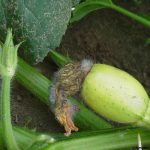
There has been some concern about poor fruit set in pumpkin fields that otherwise have healthy vigorous vines. This summer we have experienced above normal temperatures for much of the pumpkin fruit set season and I suspect that has played a role. This article will consider temperature as well as other factors that influence pumpkin…Read more about Pumpkin Fruit Set[Read More]
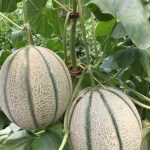
Indiana is a very important player in the domestic melon market. The total acreage planted in Indiana peaked in 1997 at 3,600 acres. In that year the total production was 455,000 cwt with an average income of $16.00 per cwt. The total farm value of production was $7,280,000 ($2,022 per acre). Yield has increased since…Read more about High Tunnel Evaluation of Vertically-Grown Cantaloupe and Galia Melon Varieties and the Development of Best Production Practices for Indiana[Read More]