Growers start to plant tomatoes in unheated high tunnels around the end of March in southern Indiana. Around that time, there may still be a few light frosts, or even heavier ones, like the one we just experienced in the past week. With additional help from row covers inside of high tunnels, temperatures normally can…Read more about Check Soil Temperatures before Planting Cucumbers in a High Tunnel[Read More]
Crop Culture
On January 1, products containing >6.5% dicamba and an agriculture use label are now restricted use pesticides. In order to purchase these herbicides, buyers must carry a private or commercial pesticide applicator license. While dicamba herbicides have been on the market for over 50 years to control broadleaf weeds, the recent development of dicamba resistant…Read more about Using Driftwatch/Fieldwatch to Help Dicamba Applicators Locate Sensitive Crops[Read More]
Awareness of tomato grafting has increased tremendously in the past years. Some growers fall in love with this technology and apply it to every tomato they grow. While others find this technology is not cost effective. The growers who have successfully adapted this technology are often small-scale, high tunnel or greenhouse growers who have mastered the grafting…Read more about Is it Economically Sound to Grow Grafted Tomatoes?[Read More]
Strawberry production in Indiana primarily utilizes matted row systems, in which bare root strawberry plants are set in the spring, fruit is first harvested in the second year and plants are maintained for a few seasons. Strawberry production using an annual plasticultural system is popular in the southern states, at where strawberry is planted in…Read more about Would Low Tunnels Provide New Opportunities for Strawberry Production in Indiana?[Read More]
In the past season, we tested performances of eight specialty melons grown under high tunnel, greenhouse, hydroponic, and conventional field systems. The melon varieties we have tested in our trials include Lilliput, Inspire, Sugar Cube, French Orange, Tasty Bites, Escorial, Savor, and Artemis. Many of these melon varieties are Charentais (Cucumis melo var. cantalupensis). A…Read more about Results of Specialty Melon Variety Trials will be Presented at the Indiana Hort Congress[Read More]
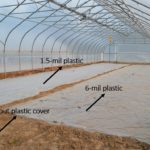
Soil solarization can be used as a tool for soil disinfestation. It is accomplished by covering moist soil with transparent polyethylene film for 4 to 6 weeks in the summer. During this period, soils are heated to temperatures that are lethal to many soil pathogens, nematodes and weed seeds. This summer we conducted a demonstration…Read more about The Update of Soil Solarization in a High Tunnel at SWPAC[Read More]
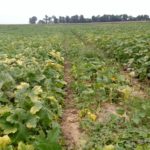
This time of year, I receive many complaints of pumpkin plants with yellow leaves. There can be many reasons why pumpkin plants have yellow leaves. The most common reason for yellow pumpkin leaves doesn’t have anything to do with a disease that can spread from plant to plant. Usually, the reason for the yellow pumpkin…Read more about Yellow Leaves on Pumpkins[Read More]
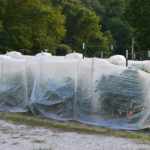
Tomato foliar diseases such as early blight, Septoria leaf blight, bacterial spot and speck that are commonly seen in the field are often less common on tomatoes grown in greenhouses and high tunnels. It is also true that high tunnel tomatoes have smoother skins than tomatoes grown in the fields. An important factor that determines…Read more about Using Season-long Retractable Tunnels May Help Control Foliar Diseases and Improve Fruit Quality of Tomatoes[Read More]
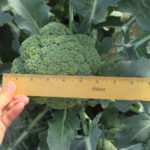
A fall broccoli trial was conducted in a high tunnel at Southwest Purdue Ag Center in 2016 to test the potential of growing broccoli in high tunnels after tomatoes. This article describes what we found from the trial. Broccoli is a cool-season, frost-tolerant crop. The harvest portion of broccoli is the compact, slightly dome-shaped head…Read more about Fall Broccoli Production in High Tunnels[Read More]
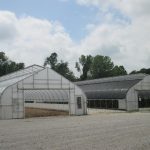
Tomatoes growing in high tunnels are in the middle of or close to harvest. Developing and maturing fruit are under leaf canopies. On the top of the plants, many flowers are still blooming. These flowers will contribute to the second big harvest. Although tomatoes in June are most valuable, we certainly appreciate big, red and…Read more about Add Shade to High Tunnels[Read More]