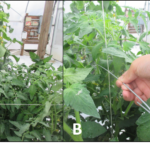
The Florida-weave or sometimes called stake and weave is a commonly used tomato trellis system (Figure 1). It has several benefits and is easy to implement. However, sometimes the plants grow too tall and can hardly be supported by the stakes, or they may be too vigorous and break the strings. In this article, we…Read more about An Alternative Trellis System may Improve Tomato Yield[Read More]
Crop Culture
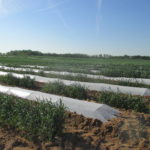
Two types of injury on young warm-season vegetable plants are caused by low temperatures: frost/freezing injury and chilling injury. Frost/freezing injury occurs when temperatures drop below 32°F. Ice formation in plant tissues cut cell membranes. When the tissue thaws, the damage results in fluids leaking from the cell, causing water soaked damage. Frost/freezing injury is…Read more about Protect Early Planted Warm-Season Vegetables from Low Temperatures[Read More]
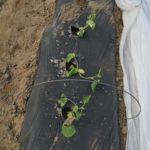
Chilling injury occurs when temperatures are above 32°F and below 55°F. The plant tissue becomes weakened that leads to cellular dysfunction. The most noticeable visual symptom of chilling injury is leaf and hypocotyl wilt (Figure 1). This is caused by the rapid decline in the ability of roots to absorb and transport water. It also…Read more about Chilling Injury on Young Warm-season Vegetable Plants[Read More]

Bolting of crops overwintered in high tunnels is common in the spring. ‘Bolting’ refers to lengthening and blooming of the flowering stalk. Bolting is often a problem because the quality of the marketable part of the plant declines. Also, plants subject to bolting are programmed to die once they complete flowering and seed production so…Read more about Bolting and Blooming in High Tunnels[Read More]

Tomato and Cucumber growers who are interested in grafting tomato and cucumber plants by themselves may find this information helpful. Step-By-Step instruction of how to graft tomato plants is available from Purdue Extension publication Vegetable Grafting: Techniques for Tomato Grafting https://mdc.itap.purdue.edu/item.asp?Item_Number=HO-260-W as well as a Purdue Extension video https://www.youtube.com/watch?v=7Ufx66Isf88 A cucumber grafting instruction was also…Read more about Learn How to Graft Cucumber and Tomato Plants[Read More]
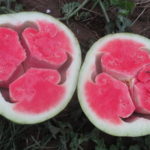
Hollowheart of watermelons is a physiological fruit disorder. Flesh separates inside of the fruit, typically forming three gaps (Figure 1 and 2). In severe cases, hollowheart could cause watermelon load rejection. Watermelon fruit that has hollowheart tends to be triangular shaped. Poor pollination is the primary reason causing hollowheart. Scientists were able to prove that seedless watermelons…Read more about Hollowheart of Watermelons[Read More]
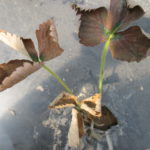
Strawberries are primarily grown in the mattered row system in Indiana, in which bare-root strawberry plants are set in the spring, fruit is first harvested in the second year and plantings are renovated each year for a few seasons. Growers in southern Indiana have expressed interest in growing strawberries in the annual plasticultural system. With…Read more about Annual Strawberry Production in Southern Indiana[Read More]
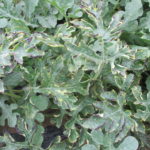
Watermelon harvest is in full swing in southern Indiana. At this time, we frequently see many types of leaf symptoms. Some of them are caused by foliar diseases, such as anthracnose, Alternaria leaf blight and gummy stem blight. These diseases require special attention, normally in the form of fungicide sprays, to slow spread of the…Read more about Not All the Watermelon and Cantaloupe Leaf Symptoms are caused by Pests[Read More]
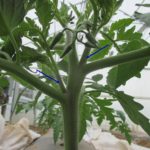
I have recently received a number of calls from growers about how to prune determinate tomatoes in a stake and weave system. Although this is relatively easy compared to how to prune indeterminate tomatoes with a trellis system, there are a few things I would like to call to your attention. What to prune The…Read more about Prune Determinate Tomatoes[Read More]
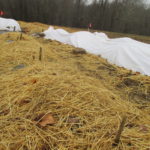
Although strawberry plants can be quite cold hardy, they need protection to survive the winter. In North Carolina, growers use floating row covers to protect strawberries in the winter. In Indiana, straw mulch is a more traditional way of winter protection for strawberries grown in a matted row system. After two relatively mild winters in…Read more about Strawberry Winter Protection: Straw Mulch vs. Row Covers[Read More]