Our recent field visit revealed a green bean issue that is likely associated with wet conditions. Purdue soybean specialist Shaun Casteel recently released this video that may also help vegetable bean growers to assess the damage. https://www.youtube.com/watch?v=IMfoghn7Ilk
Crop Culture
High rainfall amounts lead to loss of nitrogen from the soil. Sometimes the loss is great enough that a crop will benefit from additional nitrogen application. This article will describe how nitrogen is lost and factors to consider in deciding whether to apply extra nitrogen. There are two main ways nitrogen is lost from wet…Read more about Nitrogen Loss from Wet Soils[Read More]
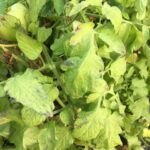
After the heavy rains in the past a few days, flooding/waterlogging injury stands out in my farm visit this week. Regardless of tomato or cucumber, the injured plants showed leaf yellowing that occurred 2 to 3 days after waterlogging (Figure 1). The yellowing leaves are a result of chlorophyll loss, which is associated with N…Read more about Plants Recovering from Waterlogging Damage[Read More]
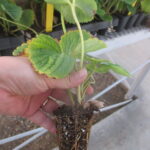
In Indiana, strawberry is traditionally grown as a perennial crop using a matted-row system, in which strawberry bare-root plants (Figure 1) are planted in spring on bare soil. Each year, fruit is harvested from mother plants as well as daughter plants that are derived from established runners in the past year. Strawberries can also be…Read more about Getting Ready to Plant Strawberries in a Plasticulture System — Planting Materials[Read More]
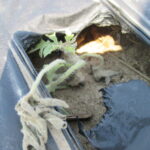
In early May, we had an extended cold period with daily average air temperatures in the 50s°F. Min temperatures are in the 40s°F, some nights even upper 30s°F. In most areas in southern Indiana, it is fortunate we did not encounter a frost with temperature dropped below 32°F, but the low temperature for the extended…Read more about Why do Watermelon and Melon Plants Wilt?[Read More]
Pumpkin planting is right around the corner. The recent Vegetable Beet Podcast produced by Great Lakes Vegetable Producers Network featured Brad Bergefurd from The Ohio State University and Nathan Johanning from University of Illinois talking about Pre-season Pumpkin Tips. They shared many of their insights in planting spacing, fertility management, weed control, no-till etc. A…Read more about Pumpkin Resources[Read More]
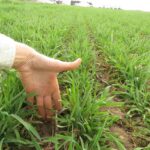
In a recent Hoosier Ag Today/CCSI Soil Health Podcast, Stephen Meyers of Purdue Horticulture and Dan Perkins of Perkins Good Earth Farm covered spring management of cover crops on vegetable farms. They discussed a variety of methods for terminating: flail mowing and tarping, roller-crimping, tillage, and killing with herbicide. They pointed out that decisions about…Read more about Cover Crops in May: Soil Health Podcast on Spring Management and Observations of Winter Rye at Pinney Purdue[Read More]
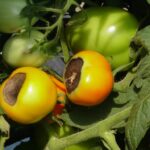
As tomatoes bloom and set fruit it is a good time to review practices for avoiding some common fruit problems. Water management is key to avoiding blossom end rot. Adequate potassium is important to reduce yellow shoulder and internal white tissue. This article provides more information on these topics, and includes some information previously published…Read more about Reducing Blossom End Rot and Yellow Shoulder/Internal White Tissue in Tomato[Read More]
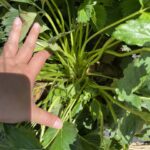
Strawberry harvest is right around the corner. We visited a few fields last week, things are generally looking good at the farm visited. Damage from the freeze event about two weeks ago seems minimal. With last year’s lesson, growers are prepared and applied frost protection to the early cultivars. Under the protection, the blooms survived…Read more about Strawberry Update[Read More]
Vegetable growers, we would like to hear your story about the freeze event on Apr. 20 and 21. What crops are you growing? Did you take protective actions? Did it cause damage on the crops? Hearing your stories would help us better design our extension programs. If you allow, we would like to share your…Read more about Share Your Experience about the Freeze Event[Read More]