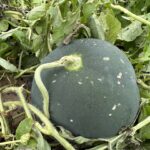
There are many challenges in growing watermelons. Hail occurring right before harvest time is undoubtedly one of them. In the past weeks, there have been thunderstorms in southern Indiana. Some brought hail. Small hail causes minor damage to watermelon leaves and stems, but big hail can devastate the foliage and cause significant scarring to the…Read more about Watermelon Recovery from Hail Damage, Suggestions from Bob Hochmuth[Read More]
Crop Culture
It is not unusual for watermelon wilt to occur in the late season in our region. The plants are loaded with fruit and are sensitive to many stresses. In some cases, it is clear pathogens cause the problem, such as late-season fusarium wilt. While in other cases, it is hard to associate the symptom with…Read more about Improving Watermelon Cultural Practices, Are We on the Right Track?[Read More]
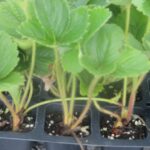
The harvest season may not have ended yet; it is time to plan for the new planting. This article summarizes options for planting materials and considerations for plasticulture-grown strawberries in the region. Purchasing plug plants Plug plants are like vegetable transplants with actively growing root systems. Plug plants are much easier to establish than bare-root…Read more about Plug? Bare-root? What Other Options for Plasticulture Strawberry Planting? [Read More]
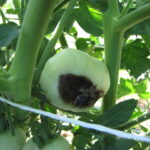
Tomatoes need a consistent water supply when they start to bloom and set fruit. As plants grow more foliage and have more fruits set, their water needs increase. As a result, the irrigation amount must steadily increase to maintain the consistent soil water content and the water supply to the plants. What would happen if…Read more about Tomatoes Need a Consistent Water Supply[Read More]
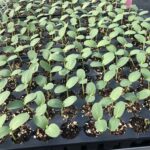
Most of us know a temperature lower than 32°F would kill tender vegetables like tomatoes, peppers, melons, and cucumbers. Home gardeners would wait to plant those crops after the last frost passed, but commercial farmers may take the risk of planting earlier to capture early-season premium prices. Farmers use various strategies, i.e., high tunnels, low…Read more about Check Soil Temperatures Before Planting Cold Sensitive Crops[Read More]

We are concerned about frost/freeze damage to the crops at this time of year. As I am writing this article, we had forecasted low temperatures in the lower 20sºF on March 14 and 18 in southern Indiana. How does this affect plasticulture strawberries? I want to share my thoughts in this article. Before discussing whether…Read more about Strawberry Spring Frost Protection—Considerations in March[Read More]
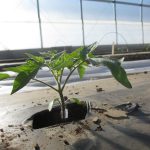
Grafted tomatoes show advantages, particularly for high tunnel production. A Purdue extension publication, Techniques for Tomato Grafting, and the video provide a step-by-step guideline for small growers to explore this technique. I am often asked. When should I start to plant the seeds to produce grafted plants? The chart below shows a general timeline and materials needed to produce…Read more about Grafted Tomatoes for High Tunnel Production[Read More]

A common approach in winter production is to allow crops to reach maturity or harvestable size by the end of November. High tunnels are then used as a ‘living refrigerator’ from December to around the middle of February. Crops are harvested as needed in the darkest and coldest periods. This approach, however, did not work…Read more about Low Temperatures in December Hurt January and February Markets[Read More]
In April we announced a new bulletin “Scheduling Fall and Winter Vegetable Production in High Tunnels”, available from the Purdue Education store at https://edustore.purdue.edu/item.asp?Item_Number=HO-330-W . With the fall/winter high tunnel season underway we are now announcing it again. The publication brings together information collected on farms and research stations in Indiana and Ohio to provide…Read more about Scheduling Fall and Winter Vegetable Production in High Tunnels, Revisited[Read More]
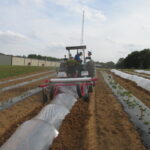
5I have heard concerns about the size of strawberry plants this year. To provide a timely update of crop status, we created a blog site where there will be frequent updates of plasticulture strawberry status across Indiana. If you are interested in learning the current crop status, please visit this site https://www.purdue.edu/hla/sites/guan/blog/. We saw a…Read more about Plasticulture Strawberry Crop Status: Are Additional Protections Needed to Encourage Fall Growth?[Read More]