
This article is my response to a grower’s question about lowering soil pH in a high tunnel. The soil test indicated pH of the soil in his high tunnel was 7.7. The high pH could be partially caused by alkaline water he used to use for irrigation. The grower has changed the water source, but…Read more about Lowering Soil pH in High Tunnels[Read More]
Greenhouses & High Tunnels

Awareness of tomato grafting has increased tremendously in the past years. Some growers fall in love with this technology and apply it to every tomato they grow. While others find this technology is not cost effective. The growers who have successfully adapted this technology are often small-scale, high tunnel or greenhouse growers who have mastered the grafting…Read more about Is it Economically Sound to Grow Grafted Tomatoes?[Read More]

Consumers love cucumbers that are sweet, seedless and have thin skins. They are willing to pay high prices for the long or mini cucumbers sold at grocery stores. These cucumbers are often grown in greenhouses and shipped long distances. It will attract consumers’ attention if greenhouse type cucumbers can be produced locally in high tunnels,…Read more about Are You Interested in Growing Greenhouse Type Cucumbers in High Tunnels, and Targeting for Early Season Production?[Read More]
When we first began working in high tunnels about 8 years ago, most of the popular literature said that the tunnels would provide protection from most insect pests, other than the usual greenhouse pests like aphids and mites. What we found very quickly is that that information was untrue. We found very high populations of…Read more about Caterpillars in High Tunnels[Read More]
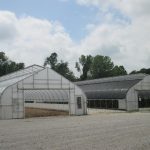
Tomatoes growing in high tunnels are in the middle of or close to harvest. Developing and maturing fruit are under leaf canopies. On the top of the plants, many flowers are still blooming. These flowers will contribute to the second big harvest. Although tomatoes in June are most valuable, we certainly appreciate big, red and…Read more about Add Shade to High Tunnels[Read More]

Every grower will have to do some basic calculations when mixing a nutrient solution. Understanding some of the calculations will help you to apply the correct concentration of a nutrient or determine the concentrations of a combination of nutrients applied. In the previous article Taking Care of Plant Nutrition in Your High Tunnel-Water Hardness and…Read more about Taking Care of Plant Nutrition in Your High Tunnel – Water Soluble Fertilizer Calculations[Read More]
It is essential, especially in hydroponics to start with a laboratory analysis of your source water. It is also important to do follow-up analysis throughout the year. Water quality can change especially where the water source is a well or a pond. In the article Taking Care of Plant Nutrition in Your High Tunnel-Water Alkalinity (Issue…Read more about Taking Care of Plant Nutrition in Your High Tunnel – Water Hardness and the Removal of Unwanted Ions[Read More]
One of the most damaging pests in cucurbit production are cucumber beetles and the bacterial pathogen they transmit (Erwinia trachephila), leading to bacterial wilt. In the recently released video, Dr. Laura Ingwell from Purdue Entomology demonstrates how to install insect exclusion screens on high tunnels. Such screens are effective at excluding cucumber beetles and the pathogen…Read more about Video—Installing High Tunnel Insect Exclusion Screen[Read More]
In the past I have had many conversations with growers about plant nutrition in their high tunnels. A good plant nutrient management plan is an integral part of making a success of the crop you are growing. Plant nutrition is important to grow a strong and healthy seedling, the first step of a successful crop….Read more about Taking Care of Plant Nutrition in Your High Tunnel – Water Alkalinity[Read More]
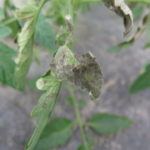
While many virus diseases affect pepper and tomato plants, in the Midwest, the most common virus diseases of these two crops are tomato spotted wilt virus (TSWV) and Impatiens necrotic spot virus (INVV). These diseases are usually observed in greenhouse or high tunnel situations. The two viruses, TSWV and INSV are closely related. In fact,…Read more about Viruses on Greenhouse Tomatoes[Read More]