In January 2016, Standards for the Growing, Harvesting, Packing, and Holding of Produce for Human Consumption, otherwise known as the Produce Rule, became law. This rule, as part of the Food Safety and Modernization Act, sets a standard for produce food safety. The water testing component of the produce rule requires growers to regularly test irrigation water….Read more about Produce Rule Water Testing Requirements – Am I Covered?[Read More]
Found 1716 Articles
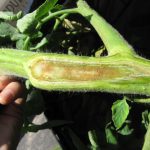
Recently, this disease was observed in a greenhouse in Indiana. This article will serve as a review of this important disease. The symptoms of bacterial canker vary considerably. In most cases, the edges of the leaves may turn yellow and/or brown. That is, the margins of the leaves may become chlorotic and/or necrotic (Figure 1). This symptom, which…Read more about Bacterial Canker of Tomato[Read More]
In a previous article ‘Opportunities in Hydroponics’ (VCH 609) we discussed two types of Hydroponics, solution culture and medium culture. In this article we will focus on Growth Substrates (media), which form an integral part of medium culture. Growth substrates can be divided into two groups, organic and inorganic media. Inorganic media can be further…Read more about Substrates for Soilless High Tunnel or Greenhouse Production[Read More]
I have never had as many questions about how to use MELCAST as I did in 2015. The interest in this program is growing both here in Indiana and nationally. Read on to find out how to apply fungicides according to the weather and perhaps save money in the process. MELCAST (MELon disease foreCASTer) is…Read more about MELCAST 2016[Read More]
In recent years, protecting declining populations of pollinators has become an important issue. Many of our vegetable crops are dependent upon pollinators for production of fruit. Below is a table that highlights the benefits of honey bees and other pollinators for vegetable production. Crops That Require Pollinators Crops That Don’t Require Pollinators But Have…Read more about Protecting Pollinators[Read More]
High Tunnel Tour at SWPAC Location: Southwest Purdue Agricultural Center, 4369 North Purdue Road, Vincennes, IN 47591 Date: May 9, 2016, 3:00 PM to 5:00 PM EST Please join us for a high tunnel tour at Southwest Purdue Agricultural Center. You will see state-of-the-art high tunnels, learn about season extension of strawberry production under high…Read more about Upcoming Events[Read More]

We went through an unseasonably cold period in early April (Figure 1). In southern Indiana, a few high tunnel tomato growers have already planted their crops. These plants may need some extra help. In Vincennes, IN, we used row covers to cover the newly planted tomatoes in high tunnels the past few nights, our recorded lowest temperature…Read more about Minimum Temperatures from April 9-11[Read More]
Census data showed that in 2014 Indiana (12 acres), Illinois (11 acres) and Kentucky (13 acres) dedicated a very small portion of their food crop acreage to production under protection. According to the USDA National Agriculture Statistical Service 2014 Horticulture Specialties Census, of all the states surrounding Indiana, Ohio and Michigan have grown and sold…Read more about Importance of Water and Soil Analysis for High Tunnel Growers[Read More]
Soil pH plays an important role in plant nutrition. However, we might not be familiar with how nitrogen fertilizers influence soil pH over time. This article explains how nitrogen fertilizers influence soil pH over time and discusses some considerations in choosing N fertilizers. Plants can take up N in two forms: ammonium and nitrate. Ammonium…Read more about Effects of Nitrogen Fertilizers on Soil pH[Read More]
The Food Safety Modernization Act Produce Rule addresses many issues with regard produce food safety. One issue not addressed is the issue of biological soil amendments of animal origin (i.e. manure). When issuing the rule, the Food and Drug Administration (FDA) chose to leave blank those portions of the rule dealing with the required interval between manure…Read more about Food and Drug Administration Issues Request for Comments[Read More]
Purdue University prohibits discrimination against any member of the University community on the basis of race, religion, color, sex, age, national origin or ancestry, genetic information, marital status, parental status, sexual orientation, gender identity and expression, disability, or status as a veteran. This material may be available in alternative formats. 1-888-EXT-INFO Disclaimer: Reference to products in this publication is not intended to be an endorsement to the exclusion of others which may have similar uses. Any person using products listed in this publication assumes full responsibility for their use in accordance with current directions of the manufacturer.