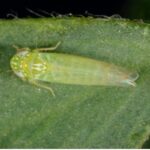
Thrips, aphids, planthoppers, leafhoppers, and whiteflies are common pests of specialty crops that are often misidentified. Whether it’s tomatoes or squash, it’s important to know the differences between these insects and what it means to see them on or around your crops. Below, we provide some information and diagnostic tips to identify each of these…Read more about Some Commonly Mistaken Insect Pests[Read More]
Found 1626 Articles
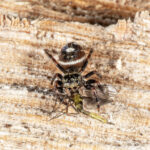
I know what you’re thinking: this is an insect spotlight, but you are writing about spiders! They are not insects! Well, you are correct. They are not insects but rather Arachnids. However, they are closely related, studied by Entomologists, and play an important role in arthropod food webs, so bear with us. Hopefully, this article…Read more about Insect Spotlight: Spiders – An Overview Of Their Role In Agricultural Systems[Read More]
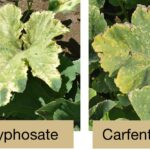
Across the state, pumpkin plantings are hitting their stride with varying degrees of success. The grower phone calls I’ve received lately revolve around options for managing emerged weeds. Broadcast options are limited to grass-selective herbicides such as sethoxydim, clethodim, and halosulfuron (Sandea®) for small broadleaf weeds and sedge suppression. All of these products can result…Read more about Post-Directed Herbicide Applications in Pumpkin[Read More]
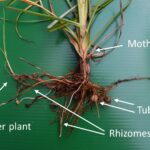
Common names: Yellow nutsedge, yellow nutgrass, nut sedge, chufa, earth almond, northern nutgrass Latin names: Cyperus esculentus L. Family: Cyperaceae (Sedge family) General Description Perennial sedges are among the most troublesome weed species globally across agronomic crops, horticultural crops and turfgrass. Because nutsedges look like grasses (Figure 1), they are often referred to as “nutgrasses”….Read more about Weed Spotlight: Yellow Nutsedge[Read More]
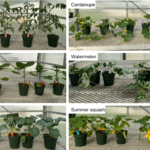
This week, several regions of Indiana experienced excessive rainfall due to the remnants of Hurricane Beryl passing through the state. The heavy rain caused flooding in some vegetable fields. When soil water levels surpass optimal requirements, oxygen is depleted, leading to waterlogging stress for the plants. Figure 1 displays the varied responses of different crops…Read more about Vegetable Responses to Waterlogging Stress[Read More]
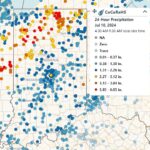
The remnants of Hurricane Beryl brought much-needed rain to the state, although some areas experienced excessive totals. In addition, sporadic power outages were reported as a result of wind gusts exceeding 30 mph. The Community Collaborative Rain, Hail, and Snow (CoCoRaHS) volunteer network once again proved essential, with observations ranging from just under 0.4 inches…Read more about Remnants of Hurricane Beryl Bring Relief and Challenges to Indiana[Read More]

Welcome to the Vegetable Crops Hotline (VCH), Purdue Extension’s exclusive newsletter for people in the business of growing vegetables. What a week it has been. The remnants of Hurricane Beryl caused heavy rainfall in several locations in Indiana, and very windy conditions caused damage. The Meigs Horticulture Facility, part of the Throckmorton Purdue Ag Center,…Read more about From the Editor’s Desk[Read More]

Nominations are now being accepted for farmers to serve on local U.S. Department of Agriculture (USDA) Farm Service Agency (FSA) county committees. These committees make important decisions about how federal farm programs are administered locally. All nomination forms for the 2024 election must be postmarked or received in the local FSA office by Aug. 1,…Read more about Indiana Farm Service Agency Seeking Nominations for Farmers to Serve on Local County Committees[Read More]

Welcome to the Vegetable Crops Hotline (VCH), Purdue Extension’s exclusive newsletter for people in the business of growing vegetables. This issue is packed with invaluable information. Our featured article focuses on Food Safety Considerations for Vegetable Farms. This issue also includes our insect and weed spotlight articles. We also examine Marketing and Social Media for…Read more about From The Editor’s Desk[Read More]
The Produce Safety Alliance is offering an additional pilot of the Spanish Language Online Grower Training. This pilot course will be offered at no cost to the participants and is specifically for Spanish-speaking growers. If you know of any growers who would benefit from participating in an Online Grower Training, please contact Mariana Villarreal Silva…Read more about Seeking Spanish-Speaking Growers for Online PSA GT Course Pilot[Read More]
Purdue University prohibits discrimination against any member of the University community on the basis of race, religion, color, sex, age, national origin or ancestry, genetic information, marital status, parental status, sexual orientation, gender identity and expression, disability, or status as a veteran. This material may be available in alternative formats. 1-888-EXT-INFO Disclaimer: Reference to products in this publication is not intended to be an endorsement to the exclusion of others which may have similar uses. Any person using products listed in this publication assumes full responsibility for their use in accordance with current directions of the manufacturer.