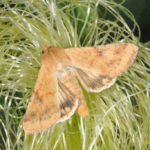
We have begun our state-wide trapping and monitoring program for corn earworm (Figure 1). The latest trap catch information can be found here. Traps have been placed at each of the eight Purdue Agricultural Centers throughout the state. Trap catches at the reporting farms are already in the double digits. Please refer to E-31 to…Read more about Corn Earworm Trapping is Underway[Read More]
Laura Ingwell

Entomology
Area(s) of Interest: Vegetable Pest Management, Protected Agriculture, Controlled Environment Agriculture, Urban Agriculture
Area(s) of Interest: Vegetable Pest Management, Protected Agriculture, Controlled Environment Agriculture, Urban Agriculture

Supported by NC SARE (LNC17-390), we are continuing research for improving high tunnel cucumber production. One of the biggest challenges for growing cucumbers in high tunnels in the summer is two-spotted spider mites. Dry and hot environments featured in high tunnels allow two-spotted spider mite populations to increase rapidly. The mites cause leaf yellowing, necrosis,…Read more about Watch for Two-spotted Spider Mites on High Tunnel Cucumbers[Read More]
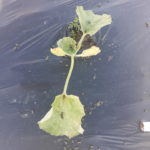
I know this may not come as a surprise to most of you, but it is rare that we get to observe the effectiveness of insecticides in such a dramatic way as we encountered when visiting a melon grower in southern IN recently. And in this case, the decision to apply an insecticide at transplant…Read more about Insecticides Kill Insects[Read More]
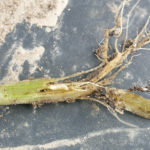
In addition to delaying much of our fieldwork, the cool set spring has wreaked havoc on some of the plants we have been able to squeeze in during brief dry periods. We have received reports of damage caused by seedcorn maggots (Figure 1) and wireworms (Figure 2). In preparation of this article I browsed the…Read more about Seedcorn Maggots and Wireworms in Cucurbits[Read More]
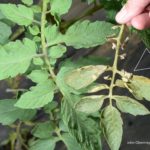
As we wait patiently for the ground to dry and our seedlings to grow, take a moment to consider your strategy for maintaining plant health. If you haven’t started already, it is time to make sure that your pest monitoring programs are in place for the season. For those of you growing in high tunnels,…Read more about Pest Monitoring[Read More]

This disease was recently observed in a tomato greenhouse. This article will review tomato spotted wilt virus symptoms, biology and management. Tomato spotted wilt virus (TSWV) and the closely related Impatiens necrotic spot virus (INSV) are usually observed in greenhouse or high tunnel situations. Both TSWV and INSV affect many hosts, including vegetables and flowering…Read more about Tomato Spotted Wilt Virus[Read More]

Bacterial wilt is a serious pest of cucumbers and melons. This disease is caused by the bacterium, Erwinia tracheiphila. However, it is spread by the striped or spotted cucumber beetle. Most management schemes have concentrated on controlling the cucumber beetle in order to lessen the severity of bacterial wilt. Currently, management of bacterial wilt often…Read more about Susceptibility of Melon Varieties to Bacterial Wilt[Read More]
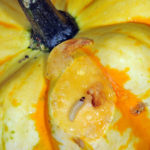
Many of us may forget about the pesky squash vine borer until it’s too late. This pest of cucurbit crops tends to be sporadic in our region; you are either battling it every year or it hardly makes an appearance. The squash vine borer is a member of the clear-winged moths, a unique group of…Read more about What’s Eating my Squash?[Read More]
Entomologists are looking for the lettuce aphid, Nasonovia ribis-nigri. If you are growing lettuce, or other leafy greens, including under protected agriculture structures, please keep your eyes out for aphids. We will be using these insects in research examining pest management strategies in hydroponic vegetable production systems. We are aiming to develop low-input IPM strategies,…Read more about In Search of Aphids[Read More]
It’s not uncommon for us to get calls from growers who are expressing concern about a particular insecticide product that is not working as well as the growers would like. Often, growers will suggest that Product X is no good or that the target insect has now developed resistance to that particular insecticide. Before we…Read more about Why Your Insecticide May Not Be Working as Well as You Would Like[Read More]