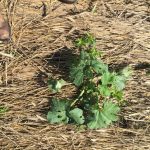
(This article is modified from one published in issue 537 of this newsletter written by Sarah E. Hulick and Steve Reiners, Department of Horticulture Science, Cornell University, NYSAES. Liz Maynard also contributed to this article.) Recent storms have brought hail to parts of Indiana. Loss of yield and quality in vegetable crops due to hail…Read more about Hail Damage[Read More]
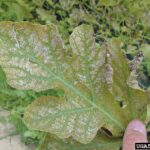
When ground level ozone is high enough to trigger an Air Quality Action Day alert from the Indiana Dept. of Environmental Management (IDEM) it is a reminder that crops may be injured by ozone. A number of areas around the state have experienced alerts in recent days, e.g. July 14 in S. Indiana. If crops…Read more about Ozone Injury on Vegetable Plants[Read More]
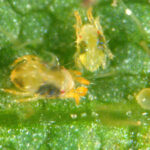
While we might be struggling with the heat and lack of rain, there is one pest that is loving it, Mites! Now is the time to be on your toes watching out for this pest. Early detection and treatment are key. In protected environments prevention and early intervention are especially important; In the field, heavy…Read more about Mites on the Rise[Read More]
About half of the watermelon fields in our area are not equipped with supplemental irrigation. Watermelon production in these fields is therefore dependent exclusively on rainfall. In fields where supplemental irrigation is available, drip irrigation under black plastic mulch is the most commonly used system. Overhead irrigation through central pivot is also used in some…Read more about Considerations for Irrigation Management in Watermelon Production[Read More]
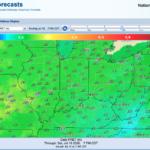
The past 30 days have been met with warmer than normal temperatures in the northern counties and drier than normal conditions throughout most of the state (Figures 1 and 2). This warm and dry environment is conducive to developing drought – particularly with the increased evapotranspiration rates. While climate outlooks are calling for increased confidence…Read more about Reference Evapotranspiration Forecasts across Indiana[Read More]
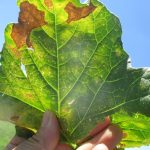
Manganese (Mn) toxicity was observed in a cantaloupe field at the Southwest Purdue Agricultural Center this year. This is a plant nutritional disorder related to acid soils and it usually occurs in clusters in a field. A plant tissue test confirmed that the Mn level in the leaves of the affected plants was 3766 ppm,…Read more about Manganese Toxicity on Cantaloupe Observed Again[Read More]
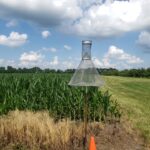
After weeks of successive trap catches in the double digits, our recent catches have gone down. Be sure to check the CEW trapping website for updates daily. At this point in the season, when field corn is in the silking stage, the threat to sweet corn, and potentially hemp, goes down. The current action threshold…Read more about Corn Earworm Trapping Update[Read More]
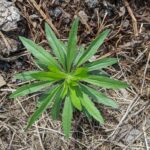
Scientific names: Erigeron canadensis or Conyza canadensis Horseweed, also known as marestail, fleabane, or colt’s tail, is a common and troublesome weed throughout North America due to its high seed production, wind dissemination, lack of seed dormancy, and adaptability to dry and moist soil. Moreover, horseweed populations have shown to be resistant to Group 2…Read more about Horseweed[Read More]
Purdue University prohibits discrimination against any member of the University community on the basis of race, religion, color, sex, age, national origin or ancestry, genetic information, marital status, parental status, sexual orientation, gender identity and expression, disability, or status as a veteran. This material may be available in alternative formats. 1-888-EXT-INFO Disclaimer: Reference to products in this publication is not intended to be an endorsement to the exclusion of others which may have similar uses. Any person using products listed in this publication assumes full responsibility for their use in accordance with current directions of the manufacturer.