Last year at about this time, we announced that the Southwest Purdue Ag Center (SWPAC) would be closed to visitors due to concerns about the pandemic. At this time, SWPAC is still closed to visitors. We have devised an alternative method of dropping off samples that will avoid face-to-face contact. Follow these instructions to drop…Read more about Vegetable Samples for the SW Purdue Ag Center[Read More]
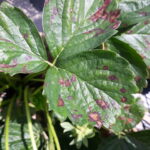
A new strawberry disease has been found in Indiana and researchers are looking for samples to determine the extent of the problem. The disease, caused by a species of the fungus Neopestaltiopsis, has been reported in several southeastern states and other countries where it causes leafspots, fruit spots and a plant decline. In Indiana, the…Read more about New Strawberry Disease[Read More]

The time has arrived to start implementing our scouting programs for monitoring and early detection, an integral part of your integrated pest management plan. In high tunnels or other protected environments there are a variety of insect pests that are capable of overwintering and can move into an of the early-season crops that you are…Read more about Early Season Scouting[Read More]
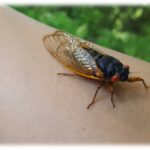
A natural wonder will occur in 15 states this year: the emergence of the Brood X, 17-year periodical cicadas! Also known as “17-year or 13-year locusts” the last mass emergence of these insects occurred in 2004. Now, 17 years later, the immature cicadas will emerge from the ground, molt one last time to gain wings,…Read more about Periodical Cicadas are Coming, but Your Vegetables are Safe![Read More]
USDA is implementing updates to the Coronavirus Food Assistance Program (CFAP) for producers of agricultural commodities marketed in 2020 who faced market disruptions due to COVID-19. This is part of a larger effort to reach a greater share of farming operations and improve USDA pandemic assistance. The CFAP 2 signup period has reopened as part…Read more about CFAP 2 Application Open[Read More]
Vegetable growers, we would like to hear your story about the freeze event on Apr. 20 and 21. What crops are you growing? Did you take protective actions? Did it cause damage on the crops? Hearing your stories would help us better design our extension programs. If you allow, we would like to share your…Read more about Share Your Experience about the Freeze Event[Read More]
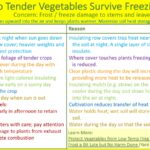
There is a frost and freeze warning for 4/20, 4/21, 4/22. Vegetable growers should be prepared to take protective actions on early-planted warm-season vegetables (tomato, cucumber, pepper, summer squash, bean etc.). For high tunnel growers, medium-weight floating row covers should provide sufficient protection. Growers should close the structure when inside temperatures drop below 80°F to…Read more about Frost and Freeze Warning[Read More]

The average American eats almost 9 pounds of cantaloupe and 2 pounds of honeydew each year (Agricultural Marketing Resource Center, 2018). An increased melon consumption is mainly explained by consumer awareness of melon health benefits, year-round availability, creative marketing strategies, and improved cultivars. To address these economic opportunities, retailers, growers, and other industry stakeholders should…Read more about The Three Types of Melon Consumers[Read More]

Purdue University prohibits discrimination against any member of the University community on the basis of race, religion, color, sex, age, national origin or ancestry, genetic information, marital status, parental status, sexual orientation, gender identity and expression, disability, or status as a veteran. This material may be available in alternative formats. 1-888-EXT-INFO Disclaimer: Reference to products in this publication is not intended to be an endorsement to the exclusion of others which may have similar uses. Any person using products listed in this publication assumes full responsibility for their use in accordance with current directions of the manufacturer.