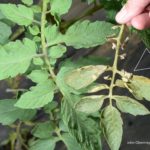
As we wait patiently for the ground to dry and our seedlings to grow, take a moment to consider your strategy for maintaining plant health. If you haven’t started already, it is time to make sure that your pest monitoring programs are in place for the season. For those of you growing in high tunnels,…Read more about Pest Monitoring[Read More]
Found 1716 Articles
In response to the many questions about this disease on cucurbits, a new extension bulletin has been produced. The bulletin may be accessed at the link below. Or contact me to get your copy. https://www.extension.purdue.edu/extmedia/bp/bp-204-w.pdf
Ever year, I put together fungicide schedules for cucurbits. These may be found at purdue.ag/pumpkinfs and purdue.ag/melonfs. They may be downloaded as PDFs on legal sized pages. Please use these tables along with the MW Vegetable Production Guide and the fungicide label. If you have trouble with accessing the tables or have other questions. please…Read more about Fungicide Schedules[Read More]

No reason exists to expect drought anytime soon in Indiana, with much of the state remaining rather wet after last weekend’s showers. One good new development exists. The precipitation pattern that has existed since nearly January seems to be becoming a little less predictable, which could mean more periods of drier weather between fronts on…Read more about Indiana Climate and Weather Report[Read More]
From time to time, I will make changes to the MW Vegetable Production Guide. These changes will appear automatically in the on-line version. For those who purchase a hard copy, watch the Vegetable Crops Hotline for changes. See below for the changes that have been made to the Production guide for 2019 Page Comment…Read more about MW Vegetable Guide Updates[Read More]
The Midwest Vegetable Production Guide for Commercial Growers 2018 is available for sale as a hardcopy ($15) or free on-line (be sure to check the article in this issue about changes that have been made to the on-line version). Actually, the Vegetable Guide has been available since last December. The guide may be purchased through the…Read more about Midwest Vegetable Production Guide[Read More]
Southwest Purdue Agricultural Center Field Day Date: June 27, 2019. Registration begins at 8:30 am. Location: Southwest Purdue Agricultural Center, 4669 N. Purdue Road in Vincennes, IN 47591 Topics related to vegetable production include: Organic Tomato Production: Dan Egel will discuss the Tomato Organic Management and Improvement Project — including foliar disease management of tomatoes. High…Read more about Upcoming Events[Read More]
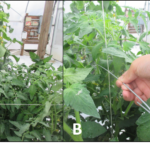
The Florida-weave or sometimes called stake and weave is a commonly used tomato trellis system (Figure 1). It has several benefits and is easy to implement. However, sometimes the plants grow too tall and can hardly be supported by the stakes, or they may be too vigorous and break the strings. In this article, we…Read more about An Alternative Trellis System may Improve Tomato Yield[Read More]
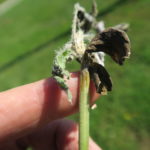
A recent observation of gummy stem blight on a watermelon transplant has reminded me to remind growers to inspect seedlings. Whether one is growing transplants or receiving transplants for delivery, seedlings should be inspected for possible disease problems. If one is uncertain of the cause of the symptoms, an official diagnosis can be obtained by…Read more about Watermelon Transplant Diseases[Read More]
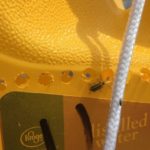
Have you ever wondered how striped cucumber beetles manage to find your cucurbits every year? Striped cucumber beetles rely on sight and smell to find food. They are particularly attracted to the color yellow and scents produced by cucurbit flowers and male striped cucumber beetles. This summer we studied how we could use lures that…Read more about DIY Traps for Striped Cucumber Beetle Management[Read More]
Purdue University prohibits discrimination against any member of the University community on the basis of race, religion, color, sex, age, national origin or ancestry, genetic information, marital status, parental status, sexual orientation, gender identity and expression, disability, or status as a veteran. This material may be available in alternative formats. 1-888-EXT-INFO Disclaimer: Reference to products in this publication is not intended to be an endorsement to the exclusion of others which may have similar uses. Any person using products listed in this publication assumes full responsibility for their use in accordance with current directions of the manufacturer.