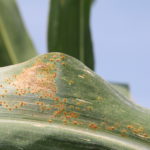
This article is modified from Darcy Telenko’s article about field corn in a recent Purdue Pest and Crop newsletter. Southern rust of corn is normally a disease of tropical areas. During summer months, however, the fungus which causes southern rust, Puccinia polysora, may move into Indiana or other Midwestern states. Southern rust has officially been confirmed…Read more about Southern Rust on Sweet Corn in Indiana[Read More]
Found 1716 Articles
The 2020 Indiana SFC is coming March 5-7, 2020, in Danville, Indiana. We are now accepting proposals for oral presentations, workshops, tours and posters. The deadline to submit is Friday, August 30, 2019. Attendees are interested in practical knowledge that can be applied to their operations to increase the environmental sustainability and economic viability of…Read more about 2020 Indiana Small Farm Conference Call for Proposals[Read More]
WHAT: An Indiana Pesticide Clean Sweep Project designed to collect and dispose of suspended, canceled, banned, unusable, opened, unopened or just unwanted pesticides (weed killers, insecticides, rodenticides, fungicides, miticides, etc.) is being sponsored by the Office of Indiana State Chemist (OISC). This disposal service is free of charge up to 250 pounds per participant. Over…Read more about Indiana Pesticide Clean Sweep Project[Read More]

Vegetable Field Day at Pinny Purdue Ag Center Date: Aug. 13, 5:00 pm CDT. Location: Pinney Purdue Ag Center. 11402 S. County Line Rd., Wanatah, IN 46390. Just north of US 30 between LaPorte and Porter Counties The public and those who raise vegetables commercially or as a hobby are invited to a vegetable and…Read more about Upcoming Events[Read More]
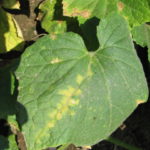
Cucurbit downy mildew has been observed on cucumber in the southwest corner of Michigan, just across the border from La Porte County and LaGrange Counties, Indiana. All cucurbit growers in Indiana should be scouting for downy mildew. Cucurbit growers in northern Indiana should be managing for downy mildew. The organism that causes downy mildew of…Read more about Downy Mildew of Cucurbits in Michigan[Read More]
We know as a business owner, your time is valuable and in short supply, but if you can please spare 15 minutes to answer a few questions, we would like to invite you to participate in a Purdue Agricultural Sciences Education and Communication study entitled “Obstacles Encountered and Overcome by Indiana Entrepreneurs in Niche Agricultural…Read more about How have YOU Built Your Business to Burst through Barriers?[Read More]
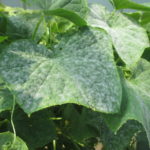
Powdery mildew is particularly severe in high tunnel and greenhouse growing conditions (Figure 1). It affects a wide range of crops including tomatoes and cucumbers. In addition to using synthetic fungicides to control this disease in high tunnels, we found powdery mildew on cucumbers can also be effectively controlled through variety selection and intensive plant…Read more about Variety Selection is Important for Managing Cucumber Powdery Mildew in High Tunnels[Read More]
Vegetable growers are used to scouting for pests such as spider mites and aphids. Growers have come to recognize the yellow leaves caused by spider mites and the curled leaves caused by aphids. Growers understand that even after spider mites and aphids are dead, the symptoms of the damage may remain on the affected leaves….Read more about Fungicides and Lesions[Read More]

While the remnants of Hurricane Barry brought some much-needed precipitation to the state, the next few weeks look to be on the dry side. Temperatures are also expected to be warmer than normal, so heat stress may become an issue for plants and animals. The Midwestern Regional Climate Center’s (MRCC) Vegetation Impact Program (VIP) provides…Read more about Indiana Climate and Weather Report[Read More]
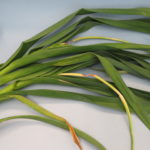
Earlier this summer, sunken lesions were observed on garlic scapes on a small farm in east central Indiana. Lesions started out a cream or tan color (Figure 1), however under rainy or humid conditions, spore production caused lesions to turn orange (Figure 2). Larger lesions resulted in the collapse of the scapes. It is estimated…Read more about Anthracnose of Garlic a New Disease to Indiana[Read More]
Purdue University prohibits discrimination against any member of the University community on the basis of race, religion, color, sex, age, national origin or ancestry, genetic information, marital status, parental status, sexual orientation, gender identity and expression, disability, or status as a veteran. This material may be available in alternative formats. 1-888-EXT-INFO Disclaimer: Reference to products in this publication is not intended to be an endorsement to the exclusion of others which may have similar uses. Any person using products listed in this publication assumes full responsibility for their use in accordance with current directions of the manufacturer.