2017 Indiana Small Farm Conference Indiana Small Farm Conference will be held from Thursday, March 2 to Saturday, March 4, 2017 in Danville, Indiana at the Hendricks County Fairgrounds. The Indiana Small Farm Conference is a three day learning and networking event supporting small or diversified farms. Information about this year’s programs, registration and lodging…Read more about Upcoming Events[Read More]
Found 1716 Articles
NCR-SARE’s Professional Development Program (PDP) provides funds for professional development projects that provide sustainable agriculture training to agricultural professionals and educators. Projects can be up to three years in duration, and funding level is capped at $75,000 for each project. The 2017 call for proposals is now available online at http://www.northcentralsare.org/Grants/Our-Grant-Programs/Professional-Development-Grant-Program Proposals are due at…Read more about NCR-SARE 2017 Professional Development Program Call for Proposals[Read More]
OCCSP provides cost share assistance to producers and handlers of agricultural products who are obtaining or renewing their certification under the National Organic Program (NOP). Certified operations may receive up to 75 percent of their certification costs paid during October 1, 2016, through September 30, 2017, not to exceed $750 per certification scope. Certified organic…Read more about Organic Certification Cost-Share Program (OCCSP)[Read More]

There are several potential benefits of growing grafted tomatoes, particularly for early season tomato production in greenhouses or high tunnels. If you are interested in trying this technique but wondering whether it is possible to graft tomato plants by yourself, a Purdue extension publication, Techniques for Tomato Grafting, (https://extension.purdue.edu/extmedia/HO/HO-260-W.pdf ) provides a step-by-step guideline for small…Read more about Growing Grafted Tomatoes in High Tunnels[Read More]
As part of a multi-state effort being headed by Dr. Ian Kaplan at Purdue University in the Department of Entomology, we are investigating how to best manage insect pests on cucurbits, in our case watermelons, while having the least possible impact on pollinators. The research is being funded through the USDA/NIFA Specialty Crop Research Initiative….Read more about Purdue Looking for Watermelon Growers to Collaborate on Research Study[Read More]
Welcome to a New Year of the Vegetable Crops Hotline (VCH), Purdue Extension’s newsletter for people in the business of growing vegetables. Our goal is to provide timely information that will be useful for Indiana vegetable growers. If there is something you’d like to see included, please let us know. Frequently we include links to…Read more about Welcome to a New Year of the Vegetable Crops Hotline[Read More]
Illiana Veg Symposium presentations available online.
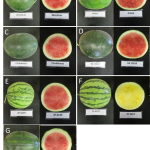
— Notes from Watermelon Research and Development Group Annual Meeting and 2016 Indiana Watermelon Variety Trial We are proud to be in Vincennes, the heart of watermelon producing counties in Indiana. In case you are unfamiliar with watermelon production here, Indiana is just behind Florida, Texas, Georgia, California and South Carolina in watermelon production nationwide….Read more about Watermelon Variety Considerations[Read More]
The North Central Regional FSMA Center is again seeking fresh produce growers input in order to determine how they can help growers comply with the Produce Safety Rule of FSMA. This is the second survey for fresh produce growers and will take about 5 minutes to complete. Your inputs, whether you responded to the first…Read more about North Central Regional Center for FSMA Training, Extension, and Technical Assistance Seeking Grower Input – Round 2[Read More]

Daikon radish is a member of Brassica family. It forms a large white tap root like a giant carrot. The tap root (12 to 20 inches long and 2 to 4 inches in diameter) penetrates into the soil leaving 2 to 6 inches protruding above ground. Radishes are cool-season crops. They are best grown with…Read more about Daikon Radish[Read More]
Read more about Daikon RadishPurdue University prohibits discrimination against any member of the University community on the basis of race, religion, color, sex, age, national origin or ancestry, genetic information, marital status, parental status, sexual orientation, gender identity and expression, disability, or status as a veteran. This material may be available in alternative formats. 1-888-EXT-INFO Disclaimer: Reference to products in this publication is not intended to be an endorsement to the exclusion of others which may have similar uses. Any person using products listed in this publication assumes full responsibility for their use in accordance with current directions of the manufacturer.