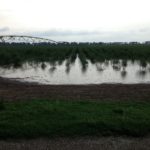
Recent heavy rains across much of the state have resulted in widespread ponding and flooding in fields. This creates multiple considerations for those growing produce for fresh consumption. Flooding and pooling create food safety challenges because of their potential to introduce contaminants (i.e. risk) into the production system. However, with proper management, many of these…Read more about Food Safety Considerations for Flooded Fields[Read More]
Found 1716 Articles
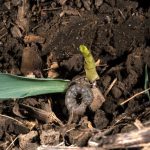
We have had substantial black cutworm moth (Figure 1.) catches in our pheromone traps. Black cutworm moths typically lay their eggs on winter annual weeds growing in un-tilled fields. When the eggs hatch, the larvae will begin feeding on the weeds. Then, when you kill the weeds with either tillage or a burndown herbicide, the…Read more about Black Cutworm[Read More]
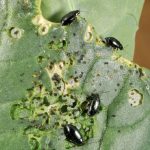
Many of our vegetable crops are attacked by one or more species of flea beetles (Figure 1). All species do similar types of damage, chewing small holes in the leaves. Damage is most important on young plants or transplants, so growers should watch young plants carefully. Fortunately, flea beetles are easy to control. Sevin®, the…Read more about Flea Beetles[Read More]
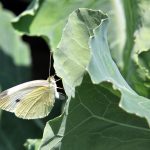
Crucifers such as cabbage, cauliflower, and broccoli are frequently attacked by a variety of caterpillars, with the most important being the imported cabbageworm, diamondback moth, and cabbage looper. The first caterpillar pest to attack crucifers is the imported cabbageworm. The adult stage is the common white butterfly that you will see flying around your field…Read more about Cabbage Caterpillars[Read More]

Southwest Purdue Ag Center Field Day Save the date June 29 for Southwest Purdue Ag Center Field Day Beginning Farmer Tours and Workshops Join Purdue’s beginning farmer team for farm tours in 2017. June 15. Clay Bottom Farm near Goshen, IN uses intensive growing methods to support a CSA program on less than an acre…Read more about Upcoming Events[Read More]
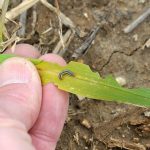
We have had major flights of armyworm moths (Figure 1.), as evidenced by pheromone trap catches. Catches have been highest in the northeastern portion of the state. Armyworms prefer grasses but will feed on other crops if necessary. During outbreak years, the infestation usually will start in pastures or other grassy areas. Once the armyworms…Read more about Armyworms[Read More]
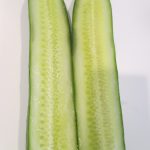
A plant is considered to be seedless if it is able to produce a fruit without or contain a much-reduced number of seeds, or in some cases, only present traces of aborted seeds. Seedlessness is a desirable fruit character because seeds are often hard, have a bad taste and produce hormones that lead to fruit…Read more about Seedless Fruit Production[Read More]
Farmer Rancher Grant Program of NCR-SARE is for farmers and ranchers who want to explore sustainable solutions to problems through on-farm research, demonstration, and education projects. The Farmer Rancher Grant offers grants of up to $7,500 for an individual applicant, $15,000 for 2 applicant farmers cooperating, and $22,500 for three or more farmers cooperating. More…Read more about 2017 North Central SARE Grant Awardees Announced[Read More]
Another update has been added for the Midwest Vegetable Production Guide for Commercial Growers 2017. Under Root maggot controls for rutabagas, please substitute the information below for the existing information on page 211. Lorsban 15G at 3.3 fl. oz per 1000 linear ft. of row at planting or Lorsban 4E/Advanced at 1 fl. oz/1000 linear…Read more about April MW Vegetable Guide Update[Read More]
Growers that purchase the insecticide Belay® should read the label carefully. The new label will contain several significant changes. Please see this announcement recently released by Valent. “Valent is voluntarily removing or limiting certain crop uses on the Belay® label going forward due to on-going regulatory challenges with these uses. Specifically, all Fruiting Vegetable uses have…Read more about Belay Label Change[Read More]
Purdue University prohibits discrimination against any member of the University community on the basis of race, religion, color, sex, age, national origin or ancestry, genetic information, marital status, parental status, sexual orientation, gender identity and expression, disability, or status as a veteran. This material may be available in alternative formats. 1-888-EXT-INFO Disclaimer: Reference to products in this publication is not intended to be an endorsement to the exclusion of others which may have similar uses. Any person using products listed in this publication assumes full responsibility for their use in accordance with current directions of the manufacturer.