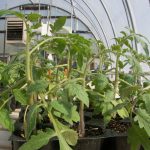
Almost every year, I have a greenhouse tomato grower or two call me about tomato plants that are distorted and don’t seem to be growing right. The problem often turns out to be ethylene damage. This year, I have decided to write an article about it before I get those calls. Tomato plants with ethylene damage…Read more about Ethylene Damage on Tomato Plants[Read More]
Found 1716 Articles

As Thanksgiving approaches, I have noticed that the gourds I set out before Halloween are starting to rot. But before I throw them away, what is causing the lesions? The circular lesions that can be seen in Figure 1 and 2 are symptoms of anthracnose of gourd. That is, the pathogen that is causing the…Read more about Anthracnose of Gourds[Read More]
Read more about Anthracnose of GourdsVegetable growers are familiar with pesticide labels that specify how much of a product may be applied. As commercial growers, we usually think about such instructions as telling us how much pesticide is the right amount to apply to a crop to be effective. While such an interpretation is correct, there is more to the labeled rates…Read more about The Results are in: Pesticide Residues in Produce[Read More]
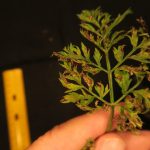
Last fall, my lab received a carrot sample with disease-like lesions (Figures 1 and 2). There are at least 3 carrot diseases that may appear similar. These diseases are: Alternaria leaf blight (late blight), Cercospora leaf spot (early blight) and bacterial leaf blight. Often an examination in the laboratory is necessary. My examination revealed the characteristic spores…Read more about Alternaria Leaf Blight of Carrot[Read More]
Fall is already here and winter is closer than expected. As business starts to slow take the opportunity to reflect on what was great, good, or not-so-good during this growing season. This time of year also brings the opportunity to start planning next year’s strategies. Pricing strategy is one of the key strategies influencing your…Read more about The Top Five Things to Consider Before Pricing Your Products[Read More]
The Midwest Cover Crops Council (MCCC) strives to facilitate widespread adoption of cover crops throughout the Midwest, to improve ecological, economic, and social sustainability. The Cover Crop Decision Tool is an initiative by the MCCC to consolidate cover crop information by state to help farmers make cover crop selections at the county level. The tool…Read more about Cover Crop Decision Tool for Vegetable Growers – Discussion on November 7th[Read More]
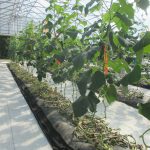
Tomato is considered one of the most profitable crops grown in high tunnels, but continually growing one single crop leads to build-up of diseases. In addition, growers are facing more competition in selling tomatoes in the market. To enhance resilience of high tunnel system and increase access to consumers, crop diversification is important. In this article, instead…Read more about 2016 Cucumber Variety Evaluation in a High Tunnel at Southwest Indiana[Read More]

We have two new extension faculties join the Department of Horticulture and Landscape Architecture at the Purdue University. Please join me welcome Dr. Ariana Torres and Dr. Krishna Nemali. Dr. Torres’ background combines field experience in agriculture with theoretical and applied research on agricultural economics. After earning her B.Sc. in Agricultural Engineering at Zamorano University,…Read more about Welcome Dr. Ariana Torres and Dr. Krishna Nemali[Read More]
As Indiana growers finish up the 2017 season, it is important to remember to clean and sanitize equipment and tools. In this article, I would like to discuss the importance of and how to sanitize. Bacteria and fungi that cause plant disease may survive on some types of equipment. Examples include: stakes, transplant trays, shovels, greenhouse…Read more about Fall Clean and Sanitize[Read More]
Usually I wait until January before releasing information about the Midwest Vegetable Production Guide for Commercial Growers (ID-56). For two reasons, however, I would like to talk about the 2017 ID-56 now. This year, we welcome Michigan growers and Michigan State University to the Midwest Vegetable Production Guide The Guide is now an 8-state publication….Read more about MW Vegetable Guide for 2017[Read More]
Purdue University prohibits discrimination against any member of the University community on the basis of race, religion, color, sex, age, national origin or ancestry, genetic information, marital status, parental status, sexual orientation, gender identity and expression, disability, or status as a veteran. This material may be available in alternative formats. 1-888-EXT-INFO Disclaimer: Reference to products in this publication is not intended to be an endorsement to the exclusion of others which may have similar uses. Any person using products listed in this publication assumes full responsibility for their use in accordance with current directions of the manufacturer.