Aphids can be one of the most damaging and hard to control pests during the winter months in high tunnels. The first step to managing aphids is to develop a scouting plan. Aphids reproduce clonally and develop quickly leading to very large population build-up in a short period of time. Therefore scouting is recommended at…Read more about Aphid Management in Winter Green Production in High Tunnels[Read More]
Found 1716 Articles

Tomato Grafting Workshop Date: November 14, 16,17, 2016 2:00 PM to 3:00 PM (EST) Location: Southwest Purdue Ag Center (SWPAC), 4369 N. Purdue Road, Vincennes, IN Grafting has the potential to control soilborne diseases and increase yield of high tunnel grown tomatoes. Grafted tomato transplants cost about $2-$4 per plant. High cost prevents growers using this…Read more about Upcoming Events[Read More]
This is the final issue of the Vegetable Crops Hotline (VCH) for 2016. Now is the time for subscribers who receive a paper copy in the mail to renew. A renewal form is included with this issue. You can also sign-up for Veggie Texts with the same form. More information about Veggie Texts can be…Read more about Time to Renew[Read More]
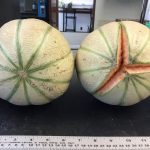
In issue 619 and 620 of the Vegetable Crops Hotline newsletter I gave you a brief background of the materials used and methods followed during the variety evaluation. I also discussed some of the challenges we encountered while doing the trial work. The varieties evaluated included: Entry # Variety 1 Sephia (Galia type) 2 Tirreno…Read more about High Tunnel Evaluation of Vertically-Grown Cantaloupe and Galia Melon Varieties[Read More]
We are planning programs for the 2017 Indiana Horticultural Congress and other winter meetings. We really hope these meetings can benefit you. Please let us know what you want to hear and who you want to hear it from. Call or email with suggestions. Thanks!!
With the start of pumpkin harvest, it is a good time to review important considerations for harvest and postharvest storage of pumpkins and winter squash (butternut, acorn and hubbard squash etc.). First, pumpkin and winter squash should be harvested fully mature to reach their optimal quality and fulfill their potential for long shelf lives. Characters…Read more about Harvest and Postharvest Storage of Pumpkins and Winter Squash[Read More]
Downy mildew has now been observed on butternut squash, jack-o-lantern pumpkins and cucumbers in Knox County. The list of cucurbits observed in Porter County has been updated to include butternut squash and giant pumpkin. All cucurbit growers should assume that downy mildew is present nearby and may attack any cucurbit crop. However, it is not clear what affect…Read more about Downy Mildew of Cucurbit Update[Read More]
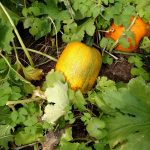
Several pumpkin growers have asked me when to stop managing for pumpkin diseases. That is, when should a pumpkin grower stop applying fungicides? I cannot provide a definitive answer for this question; every grower will have to make his or her own decision. Below, however, are some factors to consider. Estimate the crop yield – walk through the…Read more about Late Season Pumpkin Disease Management[Read More]

Southwest Indiana Melon and Vegetable Growers’ Technical Meeting Date: November 28, 2016 5:00 PM to 8:00 PM (EST) Location: Southwest Purdue Ag Center (SWPAC), 4369 N. Purdue Road, Vincennes, IN The meeting will start at 5 P.M. for board members to discuss topics for the March meeting. Any member who wants to participate in the discussion is welcome….Read more about Upcoming Events[Read More]

Amanda Deering is the Indiana Leader for the North Central Region Center for Food Safety Modernization Act (FSMA) Training, Extension and Technical Assistance. As the state leader, she is responsible for identifying and notifying partner organizations, businesses, and agencies in Indiana that can assist with communicating and disseminating information about FSMA to fruit and vegetable producers….Read more about North Central Region Center for FSMA Seeking Grower Input[Read More]
Purdue University prohibits discrimination against any member of the University community on the basis of race, religion, color, sex, age, national origin or ancestry, genetic information, marital status, parental status, sexual orientation, gender identity and expression, disability, or status as a veteran. This material may be available in alternative formats. 1-888-EXT-INFO Disclaimer: Reference to products in this publication is not intended to be an endorsement to the exclusion of others which may have similar uses. Any person using products listed in this publication assumes full responsibility for their use in accordance with current directions of the manufacturer.