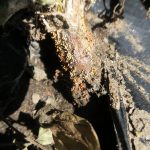
Southern blight of tomato thrives under hot, dry conditions. Usually, such conditions are more common in August than early July. However, 2016 has been relatively hot and dry in southwest Indiana. Perhaps for this reason, I have observed this disease in my own tomato plots. This article will discuss the symptoms, biology and management of southern blight of…Read more about Southern Blight of Tomato[Read More]
Found 1716 Articles
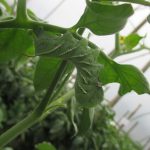
Hornworms can be pests of tomato and pepper in field grown crops, but for some reason seem to be particularly severe in high tunnels. Hornworms are very large caterpillars, measuring up to 4 inches long (Figure 1), and they can consume large quantities of foliage and will also feed on green fruit (Figure 2). In…Read more about Hornworms[Read More]
Pickin’ and Packin’: 2016 Postharvest Produce Workshop Date: July 12, 2016, 9:00 AM – 12:30 PM (EDT) Location: Purdue University, Nelson Hall of Food Science, Rm 1195, 745 Agriculture Mall Dr. West Lafayette, IN 47906 Workshops will be offered for updating produce growers on the Food Safety Modernization Act Produce Rule and other food safety issues. It…Read more about Upcoming Events[Read More]
There is a variety of commercial suppliers to choose from when purchasing predatory insects and parasitoids for biological control. Some of them rear the insects themselves and others are distributors for some of the larger rearing facilities in Europe and Canada. There are some key things to consider when choosing a supplier. The first of…Read more about Considerations and Suppliers for Biological Control[Read More]
Pheromone trap catches of corn earworms have been relatively low in most areas of the state, with northern Indiana having the highest counts. Counts from the Purdue research farms can be seen at https://extension.entm.purdue.edu/cornearworm/index.php. Remember that as the field corn surrounding your sweet corn begins to silk and be attractive to the earworm moths for…Read more about Corn Earworm[Read More]
This disease is more likely to develop during periods of heavy rains in relatively poorly drained soils. June started out dry for many areas of Indiana, however recent rains increase the likelihood of Phytophthora diseases. Phytophthora fruit rot of watermelon causes large, soft areas to develop on mature watermelon fruit. These lesions can be several inches…Read more about Phytophthora Fruit Rot of Watermelon[Read More]
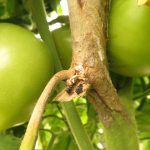
Below, I will briefly discuss four diseases that I have observed on tomatoes recently. White mold of tomato – Perhaps the most common symptom of white mold of tomato is the light brown area on the lower stem (Figure 1). This brown area is essentially dead and will result in the wilt and death of the…Read more about Tomato Disease Update[Read More]
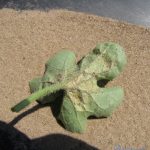
We have received a number of reports of outbreaks of spider mites, primarily in watermelons in the field and cucumbers in high tunnels. Spider mite damage can be recognized by the chlorosis often observed on older leaves (Figure 1). Plus, the underside of leaves affected by spider mites often appears ‘dirty’ due to the debris caught…Read more about Spider Mites[Read More]
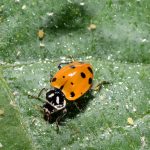
Supplementing the natural enemy population to control insect pests, i.e. augmentation biological control, is of interest to many high tunnel producers. Augmentation biological control has proven very effective at managing a number of greenhouse pests and there are a variety of commercial suppliers. For high tunnels, the greatest challenge is keeping the released predators or…Read more about Augmentation Biological Control in High Tunnels[Read More]
Last week, the highest temperature reached 110°F for a few successive days inside of our high tunnels. As a result, we observed some blossom drop on tomatoes. More information on high temperature effects on tomato fruit set can be found here. In addition to blossom drop, high temperature and high light intensity contribute to sunscald injury,…Read more about Whether to Put Shade Cloth on High Tunnel Tomatoes[Read More]
Purdue University prohibits discrimination against any member of the University community on the basis of race, religion, color, sex, age, national origin or ancestry, genetic information, marital status, parental status, sexual orientation, gender identity and expression, disability, or status as a veteran. This material may be available in alternative formats. 1-888-EXT-INFO Disclaimer: Reference to products in this publication is not intended to be an endorsement to the exclusion of others which may have similar uses. Any person using products listed in this publication assumes full responsibility for their use in accordance with current directions of the manufacturer.