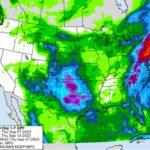
Wednesday, September 6th, was the first day in what seemed like a long, long time that rain fell across most of Indiana. Amounts ranged from a trace to around an inch. Where the rain fell was incredibly spotty (i.e., no rain within a mile or two of significant rain), highlighting the very localized nature of…Read more about Outlooks Favoring Cooler Temperatures Over Next few Weeks[Read More]
Found 1716 Articles

A news release from SARE dated September 5, 2023. Adapted from the Conservation Technology Information Center A new national survey report has found that the vast majority of farmers who use cover crops don’t need incentive payments to continue with the practice because of how much they appreciate its value to their land and business. According…Read more about Sustainable Agriculture Research and Education (SARE) News – National Cover Crop Survey Report[Read More]
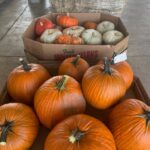
The Clearspring Produce Auction is located just 2 miles south of US 20 in Clearspring Township in the Heart of the LaGrange-Elkhart Amish Settlement. It is within easy driving distance of the towns of Shipshewana, Topeka, Emma, and LaGrange. Produce is sold 3 days a week throughout most of the growing season (Tuesday, Thursday, Friday),…Read more about Clearspring Produce Auction Price Update[Read More]
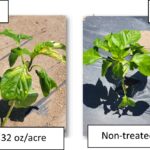
Command® 3ME herbicide recently received a 24C Special Local Need label for use in banana peppers in the state of Indiana (Figure 1). Prior to this registration, Command® 3ME could be applied in the production of other types of bell and non-bell peppers, but not banana peppers. Field research results by the Horticulture Crops Weed…Read more about Command 3ME Now Registered for Use in Banana Peppers in Indiana[Read More]

Background Tomato pinworm “TPW” (Keiferia lycopersicella) is a small microlepidopteran pest of solanaceous crops with a strong preference for tomato (Figure 1). It naturally occurs in warm climates of the U.S., including Texas, Florida, Hawaii, and California. It cannot survive outdoors in temperate climates, such as Indiana, where winter temperatures exceed a low threshold of…Read more about Presence of Tomato Pinworm on High Tunnel Tomato in Indiana[Read More]

Midwest Mechanical Weed Control Field Day returns Wednesday, September 27, 2023, to OSU Wooster Campus in Wooster, OH. WHAT TO EXPECT In-field demonstrations of cultivation tools for vegetables and row crops Demonstrations of implements on both four-wheel and two-wheel tractors Expo featuring industry-leading cultivation companies and cutting-edge tools Conversations with international cultivation experts …and more! The field day connects farmers,…Read more about Mechanical Weed Control Field Day[Read More]
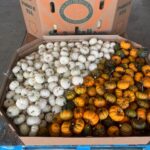
The Clearspring Produce Auction is located just 2 miles south of US 20 in Clearspring Township in the Heart of the LaGrange-Elkhart Amish Settlement. It is within easy driving distance of the towns of Shipshewana, Topeka, Emma, and LaGrange. Produce is sold 3 days a week throughout most of the growing season (Tuesday, Thursday,…Read more about Clearspring Produce Auction Price Update[Read More]
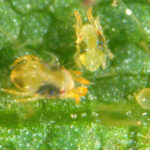
If you work or have worked with specialty crops, we are reaching out for your help. To develop a scouting protocol for twospotted spider mite management, we are aiming to identify the limit of detection of this pest by growers. We are hoping that you will take 5-10 minutes to complete a survey displaying a…Read more about Mite Insect Survey[Read More]

This summer, we interviewed four farmers growing strawberries in plasticulture in Indiana. Their business is on different scales, and they sell through varied market channels. How do strawberries fit into their overall crop and market strategy? What are the opportunities and challenges? The lessons the experienced farmers share will be of great value to others…Read more about Strawberry Chat Update— Farmer Interviews[Read More]
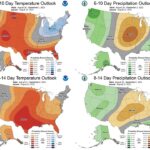
Have you ever heard of the song by Glenn Frey, “The Heat Is On”? No pun intended, but the heat is certainly on! Heat index values over 110F have made things sticky and oppressive across the state. As I drove into work on Thursday morning, the humidity was so high that I had to defrost…Read more about The Heat and Humidity Is On, But Will It Last?[Read More]
Purdue University prohibits discrimination against any member of the University community on the basis of race, religion, color, sex, age, national origin or ancestry, genetic information, marital status, parental status, sexual orientation, gender identity and expression, disability, or status as a veteran. This material may be available in alternative formats. 1-888-EXT-INFO Disclaimer: Reference to products in this publication is not intended to be an endorsement to the exclusion of others which may have similar uses. Any person using products listed in this publication assumes full responsibility for their use in accordance with current directions of the manufacturer.