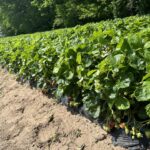
I visited Kube-Pak (Allentown, NJ) during the North American Strawberry Growers Summer Tour. Kube-Pak wholesales bedding plants, plugs, potted plants and more. Our visit at Kube-Pak’s was at peak time of strawberry business. Mr. Rob Swanekamp showed us the steps of growing strawberry plugs, from tip production to shipping. The strawberry plugs’ shipping date starts…Read more about Strawberry Plug Production at Kube-Pak[Read More]
Found 1716 Articles
Welcome to the Vegetable Crops Hotline (VCH), Purdue Extension’s exclusive newsletter for people in the business of growing vegetables. In this issue, we highlight the first sighting of downy mildew on cucumber in Northern Indiana, strawberry plug production, interviews with strawberry growers, provide an update on vegetable pricing at the Clearspring Produce Auction, and cover…Read more about From the Editor’s Desk[Read More]
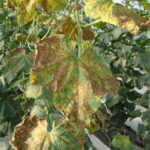
Downy mildew has been observed in Adam County in northern Indiana on cucumber. In addition, downy mildew on cucumber has been reported in southern Michigan and northern Ohio. Growers in northern Indiana should manage for downy mildew on valuable cucurbit crops. Growers throughout the state should scout for the disease. Growers should assume that all…Read more about Downy Mildew of Cucurbits[Read More]

6Drought and abnormally dry conditions continue to improve across most of Indiana (Figure 1). There seem to be a few counties – particularly along the western border – that have not been getting as much rain as elsewhere. Those areas are still at least abnormally dry through August 8, 2023. However, additional rain events over…Read more about Seasonable Temperatures Expected to Continue[Read More]
Welcome to the Vegetable Crops Hotline (VCH), Purdue Extension’s exclusive newsletter for people in the business of growing vegetables. In this issue, we highlight tar spot of sweet corn, draft animal power for small farms, and provide an update on vegetable pricing at the Clearspring Auction. Included are lots of information about educational opportunities presented…Read more about From the Editor’s Desk[Read More]
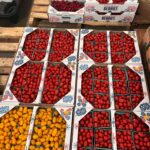
The Clearspring Produce Auction is located just 2 miles south of US 20 in Clearspring Township in the Heart of the LaGrange-Elkhart Amish Settlement. It is within easy driving distance of the towns of Shipshewana, Topeka, Emma, and LaGrange. Produce is sold 3 days a week throughout most of the growing season (Tuesday, Thursday, Friday),…Read more about Clearsprings Produce Auction Price Update[Read More]
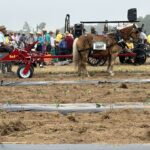
In late June 2023, I had the pleasure of attending the 29th annual Horse Progress Days (HPD) in Shipshewana IN. The intention of HPD is to showcase the latest innovations in the draft horse industry. The event also included educational seminars and clinics. The mission of the organization is to encourage and promote draft animal…Read more about Draft Animal Power on Small Farms[Read More]
This article has been adapted from a SARE news release published on July 27, 2023, by Sean McGovern. SARE’s newly revised What is Sustainable Agriculture? publication provides a primer to practices that can help farmers and ranchers improve the sustainability of any complex, integrated production and marketing system. Soil Health: Healthy soil provides a strong foundation for…Read more about Sustainable Agriculture Research and Education (SARE) News[Read More]

Grab your farm family and join the Purdue Succession Planning Team as we offer a three-day lunchtime virtual succession series! There will be presentations from Extension Educators and Specialists on “First Steps To Succession Planning” along with “Financial Feasibility of Farm Succession.” An attorney will also present at the workshop on the topic “Structuring…Read more about Virtual Succession Planning Workshop Series[Read More]
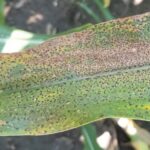
This disease is a relatively new disease to Indiana. So far, it has mostly affected field corn. However, tar spot was recently observed on sweet corn. This article will discuss the symptoms, biology and management of tar spot of sweet corn. Tar spot causes dark, mostly circular lesions on the leaves, stalks and husks of…Read more about Tar Spot of Sweet Corn[Read More]
Purdue University prohibits discrimination against any member of the University community on the basis of race, religion, color, sex, age, national origin or ancestry, genetic information, marital status, parental status, sexual orientation, gender identity and expression, disability, or status as a veteran. This material may be available in alternative formats. 1-888-EXT-INFO Disclaimer: Reference to products in this publication is not intended to be an endorsement to the exclusion of others which may have similar uses. Any person using products listed in this publication assumes full responsibility for their use in accordance with current directions of the manufacturer.