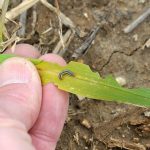
We have had major flights of armyworm moths (Figure 1.), as evidenced by pheromone trap catches. Catches have been highest in the northeastern portion of the state. Armyworms prefer grasses but will feed on other crops if necessary. During outbreak years, the infestation usually will start in pastures or other grassy areas. Once the armyworms…Read more about Armyworms[Read More]
Found 126 Articles
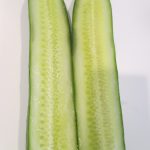
A plant is considered to be seedless if it is able to produce a fruit without or contain a much-reduced number of seeds, or in some cases, only present traces of aborted seeds. Seedlessness is a desirable fruit character because seeds are often hard, have a bad taste and produce hormones that lead to fruit…Read more about Seedless Fruit Production[Read More]
Farmer Rancher Grant Program of NCR-SARE is for farmers and ranchers who want to explore sustainable solutions to problems through on-farm research, demonstration, and education projects. The Farmer Rancher Grant offers grants of up to $7,500 for an individual applicant, $15,000 for 2 applicant farmers cooperating, and $22,500 for three or more farmers cooperating. More…Read more about 2017 North Central SARE Grant Awardees Announced[Read More]
Another update has been added for the Midwest Vegetable Production Guide for Commercial Growers 2017. Under Root maggot controls for rutabagas, please substitute the information below for the existing information on page 211. Lorsban 15G at 3.3 fl. oz per 1000 linear ft. of row at planting or Lorsban 4E/Advanced at 1 fl. oz/1000 linear…Read more about April MW Vegetable Guide Update[Read More]
Growers that purchase the insecticide Belay® should read the label carefully. The new label will contain several significant changes. Please see this announcement recently released by Valent. “Valent is voluntarily removing or limiting certain crop uses on the Belay® label going forward due to on-going regulatory challenges with these uses. Specifically, all Fruiting Vegetable uses have…Read more about Belay Label Change[Read More]
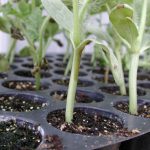
Many cantaloupe and watermelon growers are either growing transplants in a greenhouse or are expecting delivery of transplants in the next few weeks. Either way, growers should inspect transplants for disease before planting in the field. Below I will describe several common transplant diseases of cantaloupe and watermelon as well as management options. Gummy stem…Read more about Cantaloupe and Watermelon Transplant Diseases[Read More]
Indiana Farm Market Association (IFMA) Spring Tour Day The spring tour day will be held on May 2, 2017 in the Fort Wayne area. This is open to anyone with a farm retail store, farm market, or agritourism farm. It’s a great time for sharing ideas and gather new ones. This is a driving tour, map…Read more about Upcoming Events[Read More]
One way insects communicate with individuals of the same species is with pheromones. Pheromones are volatile chemicals released by an insect that usually can be detected only by individuals of the same species. There are a number of different types of pheromones, but the most common type is the sex pheromone. Usually the females will…Read more about Pheromones and Pheromone Traps[Read More]
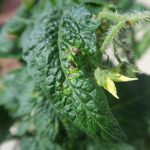
Many Indiana growers may have tomato transplants growing in a greenhouse for field or greenhouse/high tunnel production. The three most likely diseases are bacterial spot, bacterial speck and bacterial canker. This article describes symptoms for these diseases and some management options. While these bacterial diseases thrive in transplant production where plants are often overhead watered, these diseases are…Read more about Tomato Transplant Diseases[Read More]
It is with the deepest sorrow that we inform our readers of the deaths of Tom Roney of Tuttle Orchards in Greenfield, John Hilger of Hilger Family Farm in Fort Wayne and Abner Horrall of Melon Acres in Oaktown. They were all great leaders of the vegetable industry in Indiana. They will be greatly missed.
Purdue University prohibits discrimination against any member of the University community on the basis of race, religion, color, sex, age, national origin or ancestry, genetic information, marital status, parental status, sexual orientation, gender identity and expression, disability, or status as a veteran. This material may be available in alternative formats. 1-888-EXT-INFO Disclaimer: Reference to products in this publication is not intended to be an endorsement to the exclusion of others which may have similar uses. Any person using products listed in this publication assumes full responsibility for their use in accordance with current directions of the manufacturer.