Corn earworms are flying. I had 10 in my pheromone trap this morning (June 20). With the surrounding dent corn in most areas far from producing silks, the threshold for spraying silking sweet corn is 1 moth per night, well below what we are catching. So growers who have sweet corn with fresh silks are…Read more about Corn Earworm[Read More]
Found 126 Articles
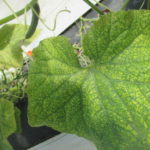
We have received a number of reports of spider mite problems lately. Some of them have been on crops grown in high tunnels, particularly tomatoes and cucumbers. High tunnels are the perfect environment for mites because it is hot, which means they reproduce faster, and the mites are protected from rainfall, which is a major…Read more about Spider Mites[Read More]

Indiana Fruit & Vegetable Field Tour The tour will be held at Tuttle Orchards, 5717 North 300 West Greenfield IN 46140, June 28, 9:00 am -4:00 pm. On-site registration 9 am at Tuttle Orchard. Registration fee is $5 per person. For further questions contact Lori Jolly-Brown at ljollybr@purdue.edu or (765) 494-1296. Southwest Purdue Ag Center Field Day Southwest…Read more about Upcoming Events[Read More]
Recent dry weather raises concern about effectiveness of preemergent herbicides. Preemergent herbicides applied on the soil surface need to be moved into the soil where the target weed seeds are germinating (normally 1-2 inches deep) in order to be effective. The process normally requires 0.5 to 0.75 inch of water within a few days of herbicide application….Read more about Effectiveness of Preemergent Herbicides[Read More]
The latest Census of Agriculture reported that 244,974 U.S. farmers utilized more than 14 million acres to grow specialty crops in 2012. In Indiana 2,935 farmers grew specialty crops on 63,252 acres. Indiana’s specialty crop industry includes operations that grow fruit and vegetable, tree nut, dried fruit, horticulture, floriculture, and nursery crops. Specialty crops include…Read more about Is My Farm Profitable? The Drivers of Farm Profitability[Read More]
Developing and mixing your nutrient solution is one of several very important steps in the production process. Mistakes are easily made when fertilizers are mixed. Not only does this have a cost implication, but also it can have severe consequences on production and therefore revenue. In the previous article Taking Care of Plant Nutrition in…Read more about Taking Care of Plant Nutrition in Your High Tunnel – Fertilizer and Nutrient Solution Mixing Tips[Read More]
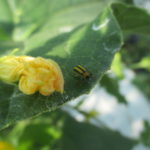
Populations of the overwintering generation of striped cucumber beetles are just about at their peak levels right now (Figure 1.). For muskmelons and cucumbers, this generation is the one that we worry the most about in terms of transmitting the pathogen that causes bacterial wilt. As a result, our spray threshold is relatively low, 1…Read more about Striped Cucumber Beetles[Read More]
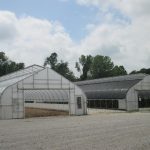
Tomatoes growing in high tunnels are in the middle of or close to harvest. Developing and maturing fruit are under leaf canopies. On the top of the plants, many flowers are still blooming. These flowers will contribute to the second big harvest. Although tomatoes in June are most valuable, we certainly appreciate big, red and…Read more about Add Shade to High Tunnels[Read More]
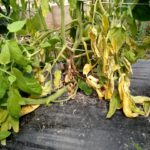
White mold has a large host range including tomatoes (where it may be referred to as timber rot), cucumbers, lettuce and snap beans as well as many more. In this article, I will concentrate on white mold on tomatoes in a greenhouse situation. Although white mold will occur in a field situation, this disease is…Read more about White Mold of Vegetables[Read More]
Managing domestic animals in a direct market venue can be very challenging. While best practice is to exclude domestic animals from production and packing areas, produce may be exposed to domestic animals at the point of sale if selling at a produce auction or farmers market. When selling through a direct market venue, growers should…Read more about Service and Companion Animals at Direct-Market Venues[Read More]
Purdue University prohibits discrimination against any member of the University community on the basis of race, religion, color, sex, age, national origin or ancestry, genetic information, marital status, parental status, sexual orientation, gender identity and expression, disability, or status as a veteran. This material may be available in alternative formats. 1-888-EXT-INFO Disclaimer: Reference to products in this publication is not intended to be an endorsement to the exclusion of others which may have similar uses. Any person using products listed in this publication assumes full responsibility for their use in accordance with current directions of the manufacturer.