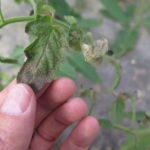
Tomato spotted wilt virus can cause stunting (Figure 1), necrotic ring spots (Figure 2), mottling (Figure 3) or chlorosis (Figure 4). In Figure 5, a pepper plant is shown with a ring-like lesion due to tomato spotted wilt virus. Figure 6 is a photo of a pepper transplant with mottled lesions due to impatiens necrotic…Read more about Photos of Tomato Spotted Wilt and Impatiens Necrotic Spot Virus[Read More]
Found 126 Articles
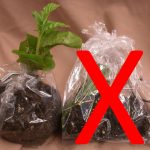
Samples in plug trays, as well as unrooted and rooted cuttings, and plants in pots require extra care when they are packaged for submittal to a diagnostic lab. Before you mail the next sample, please take a few minutes to review these suggestions for packaging and submitting samples. This will help preserve the integrity of…Read more about Tips for Submitting Greenhouse Samples to the Purdue Plant and Pest Diagnostic Lab (PPDL)[Read More]
In the past I have had many conversations with growers about plant nutrition in their high tunnels. A good plant nutrient management plan is an integral part of making a success of the crop you are growing. Plant nutrition is important to grow a strong and healthy seedling, the first step of a successful crop….Read more about Taking Care of Plant Nutrition in Your High Tunnel – Water Alkalinity[Read More]
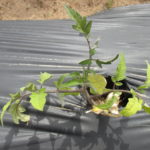
Recent rain and cold conditions have brought detrimental effects to some of the early planted vegetables. In southwest Indiana, air temperatures have dropped into the 40s °F and soil temperatures have dropped into the 50s °F in early May. The low temperatures would have greatly inhibited absorption of water and mineral nutrients for many warm season vegetables. In one…Read more about Effects of the Recent Rain and Cold Conditions on Vegetable Production[Read More]
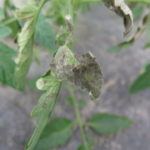
While many virus diseases affect pepper and tomato plants, in the Midwest, the most common virus diseases of these two crops are tomato spotted wilt virus (TSWV) and Impatiens necrotic spot virus (INVV). These diseases are usually observed in greenhouse or high tunnel situations. The two viruses, TSWV and INSV are closely related. In fact,…Read more about Viruses on Greenhouse Tomatoes[Read More]

Recent heavy rains across much of the state have resulted in widespread ponding and flooding in fields. This creates multiple considerations for those growing produce for fresh consumption. Flooding and pooling create food safety challenges because of their potential to introduce contaminants (i.e. risk) into the production system. However, with proper management, many of these…Read more about Food Safety Considerations for Flooded Fields[Read More]
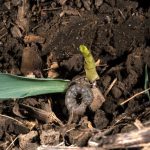
We have had substantial black cutworm moth (Figure 1.) catches in our pheromone traps. Black cutworm moths typically lay their eggs on winter annual weeds growing in un-tilled fields. When the eggs hatch, the larvae will begin feeding on the weeds. Then, when you kill the weeds with either tillage or a burndown herbicide, the…Read more about Black Cutworm[Read More]
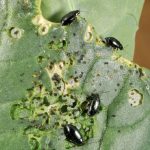
Many of our vegetable crops are attacked by one or more species of flea beetles (Figure 1). All species do similar types of damage, chewing small holes in the leaves. Damage is most important on young plants or transplants, so growers should watch young plants carefully. Fortunately, flea beetles are easy to control. Sevin®, the…Read more about Flea Beetles[Read More]

Crucifers such as cabbage, cauliflower, and broccoli are frequently attacked by a variety of caterpillars, with the most important being the imported cabbageworm, diamondback moth, and cabbage looper. The first caterpillar pest to attack crucifers is the imported cabbageworm. The adult stage is the common white butterfly that you will see flying around your field…Read more about Cabbage Caterpillars[Read More]

Southwest Purdue Ag Center Field Day Save the date June 29 for Southwest Purdue Ag Center Field Day Beginning Farmer Tours and Workshops Join Purdue’s beginning farmer team for farm tours in 2017. June 15. Clay Bottom Farm near Goshen, IN uses intensive growing methods to support a CSA program on less than an acre…Read more about Upcoming Events[Read More]
Purdue University prohibits discrimination against any member of the University community on the basis of race, religion, color, sex, age, national origin or ancestry, genetic information, marital status, parental status, sexual orientation, gender identity and expression, disability, or status as a veteran. This material may be available in alternative formats. 1-888-EXT-INFO Disclaimer: Reference to products in this publication is not intended to be an endorsement to the exclusion of others which may have similar uses. Any person using products listed in this publication assumes full responsibility for their use in accordance with current directions of the manufacturer.