On Friday, April 12, the FDA and CDC announced an outbreak of Salmonella Carrau in pre-cut melon products distributed by Indianapolis-based Caito Foods. While an Indiana company has been implicated in the outbreak, the melon product used to create the pre-cut products were not from Indiana and were likely imported from outside of the United…Read more about Salmonella Outbreak does not Involve Indiana-Grown Melons[Read More]
Found 122 Articles
Southwest Purdue Agricultural Center Field Day Date: June 27, 2019 Location: Southwest Purdue Agricultural Center, Vincennes, IN 47591 Tentative schedule of this event will include: Removing invasives and cultivating natives; Growing hemp in Indiana; Bee health; Organic tomato production; Drones to help scout for crop problems; High tunnel cucumber and specialty melon production; Low tunnels…Read more about Upcoming Events[Read More]
A research team at Purdue University invites you to participate in a survey of specialty crops growers to better understand your production and marketing challenges. This survey will help us identify future production and marketing research to help support growers like you. The survey takes approx. 10-15 minutes. Take the survey: http://bit.ly/purduesurvey Your responses are…Read more about Survey to Your Production and Marketing challenges[Read More]
On April 1, 2019, Dr. Hazel Wetzstein, Head of the Department of Horticulture and Landscape Architecture, announced a change in leadership for the Indiana Horticulture Congress. “I am pleased to announce that Petrus Langenhoven and Kyle Daniel have agreed to serve as Co-Chairs for the Indiana Horticulture Congress, effective immediately. They bring a wealth of…Read more about New Leadership Appointed for the Indiana Horticulture Congress[Read More]
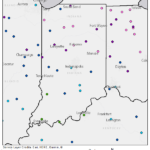
The rain seems to keep falling, barely providing time for things to dry out and start planting! The last few weeks has experienced up to 2” above normal precipitation – particularly for west-central and southern Indiana, which is near the 125th-125th percentile. Warm days seem to be relatively few and far between, causing a slow…Read more about Indiana Climate and Weather Report[Read More]
Great information on pest management of brassica crops can be found at the Brassica Pest Collaborative website (https://ag.umass.edu/vegetable/resources/brassica-pest-collaborative). This project recently conducted several online workshops on managing insect pests of brassicas, including imported cabbageworm, cross-striped cabbageworm, cabbage maggot, flee beetle. All the webinars should be posted on the above website after April 12.
Basic Aspects of High Tunnel Soil Fertility Management – (Petrus Langenhoven, plangenh@purdue.edu, 765-496-7955) – Spring has arrived! Every high tunnel grower is now thinking of planting summer vegetable crops in high tunnels or has already planted. Whichever scenario applies to you, I hope that you have submitted soil samples or are in the process of…Read more about Basic Aspects of High Tunnel Soil Fertility Management[Read More]
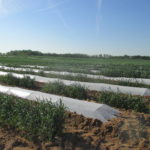
Two types of injury on young warm-season vegetable plants are caused by low temperatures: frost/freezing injury and chilling injury. Frost/freezing injury occurs when temperatures drop below 32°F. Ice formation in plant tissues cut cell membranes. When the tissue thaws, the damage results in fluids leaking from the cell, causing water soaked damage. Frost/freezing injury is…Read more about Protect Early Planted Warm-Season Vegetables from Low Temperatures[Read More]
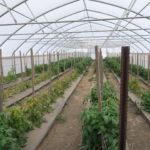
This disease was recently observed in a tomato greenhouse. This article will review tomato spotted wilt virus symptoms, biology and management. Tomato spotted wilt virus (TSWV) and the closely related Impatiens necrotic spot virus (INSV) are usually observed in greenhouse or high tunnel situations. Both TSWV and INSV affect many hosts, including vegetables and flowering…Read more about Tomato Spotted Wilt Virus[Read More]
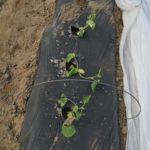
Chilling injury occurs when temperatures are above 32°F and below 55°F. The plant tissue becomes weakened that leads to cellular dysfunction. The most noticeable visual symptom of chilling injury is leaf and hypocotyl wilt (Figure 1). This is caused by the rapid decline in the ability of roots to absorb and transport water. It also…Read more about Chilling Injury on Young Warm-season Vegetable Plants[Read More]
Purdue University prohibits discrimination against any member of the University community on the basis of race, religion, color, sex, age, national origin or ancestry, genetic information, marital status, parental status, sexual orientation, gender identity and expression, disability, or status as a veteran. This material may be available in alternative formats. 1-888-EXT-INFO Disclaimer: Reference to products in this publication is not intended to be an endorsement to the exclusion of others which may have similar uses. Any person using products listed in this publication assumes full responsibility for their use in accordance with current directions of the manufacturer.