The following article was written by a colleague located on Long Island in New York. She is an expert on cucurbit powdery mildew. The fungicides which are effective against cucurbit powdery mildew changes frequently as fungi become resistant to certain fungicides. While the situation Dr. McGrath describes may not match your field exactly, it makes…Read more about Conventional Fungicide Recommendations for Cucurbit Powdery Mildew[Read More]
Cucurbits
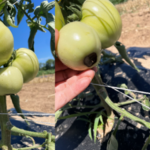
At Southwest Purdue Ag Center (SWPAC) and Pinney Purdue Ag Center (PPAC), we demonstrate irrigation impacts on several fruiting vegetable crops. Tomato, pepper, eggplant, watermelon, and cantaloupe are planted on plastic-covered beds with drip tapes. They grow on beds side-by-side with and without irrigation. We used two approaches to schedule irrigation, one bed is irrigated based on…Read more about Irrigation Demonstration Update June 25[Read More]

Thanks to my University of California Cooperative Extension colleagues, I visited central valley vegetable production last week. Undoubtedly, I learned a lot on this trip. I want to share what I learned with Indiana growers in a few newsletter articles. This short article highlights two things I saw farmers use to extend early-season crop production….Read more about Season Extension Strategies—What I learned in a CA trip[Read More]
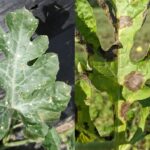
The following is a brief report of the pest and non-infectious problems found on vegetable in Indiana over the past 10 days. Tomato-In high tunnels and greenhouses, scattered growers have observed leaf mold, gray mold and white mold. Tomato spotted wilt has also been observed on tomatoes in high tunnels. Unfortunately, herbicide drift has also…Read more about Scouting Report[Read More]
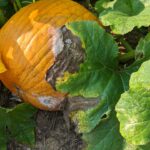
In the next month, many growers will start to plant pumpkins. This article will introduce aspects of disease management of pumpkins prior to the growing season. The information below is discussed under several of the most common diseases of pumpkins in Indiana. The objective of this article is to discuss what diseases are more likely…Read more about A Brief Primer on Disease Management of Pumpkin[Read More]
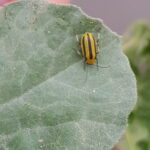
This time of year, when we are busy in the fields planting and prepping for a fruitful season, we need to be observant of the pest pressures that may be present. We have already had reports this year of cucumber beetles feeding on recently transplanted cucurbit crops, in particular melons and cucumbers. Let’s review why…Read more about Early Cucumber Beetle Management[Read More]
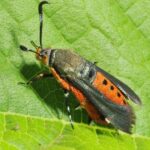
While it is not so much of a problem on large farms, with many acres of cucurbits, small farms and organic growers tend to be the most impacted by this pest. The squash vine borer (Figure 1) is a member of the clear-winged moths, a unique group of moths that are active during the daytime….Read more about Looking for Squash Vine Borer (SVB) Trapping Collaborators[Read More]
MELCAST is a weather-based disease-forecasting program that helps growers schedule foliar fungicide applications for watermelon and cantaloupe. MELCAST stands for MELon disease for CASTer. This program, designed by Dr. Rick Latin, Emeritus Professor of Plant Pathology at Purdue University, keeps track of weather conditions so that cantaloupe and watermelon growers can apply foliar fungicides to their crops when they…Read more about MELCAST 2022[Read More]
Course: Online PCQI Certification – Watermelon Packing Dates: May 5 & May 6, 2022 Times: 8:00 am – 6:00 pm EST Online Platform: Zoom Cost: $1000.00 each participant To register: pcqiclasses@gmail.com or text 561-261-9747 Course Info: Kiley will lead a VIRTUAL but interactive training session (via ZOOM) across two days from 8:00 am – 6:00 pm each day….Read more about Online PCQI Food Safety Certification[Read More]
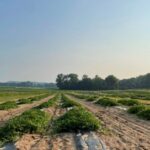
A large proportion of watermelon acres in Indiana are not currently using drip irrigation. Farmers may choose not to use drip irrigation because precipitation is usually abundant in most years for watermelon production. There is a desire to reduce costs and/or fear that over-irrigation may increase the risk of mature watermelon vine decline, a disease…Read more about Research Update on Nitrogen Management in Non-Irrigated Watermelon Production[Read More]