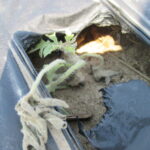
In early May, we had an extended cold period with daily average air temperatures in the 50s°F. Min temperatures are in the 40s°F, some nights even upper 30s°F. In most areas in southern Indiana, it is fortunate we did not encounter a frost with temperature dropped below 32°F, but the low temperature for the extended…Read more about Why do Watermelon and Melon Plants Wilt?[Read More]
Melons, Other
MELCAST is a weather-based disease-forecasting program that helps growers schedule foliar fungicides applications for watermelon and cantaloupe. MELCAST stands for MELon disease for CASTer. This program, designed by Dr. Rick Latin, Professor of Plant Pathology at Purdue University, keeps track of weather conditions so that cantaloupe and watermelon growers can apply foliar fungicides to their…Read more about MELCAST 2021[Read More]

The average American eats almost 9 pounds of cantaloupe and 2 pounds of honeydew each year (Agricultural Marketing Resource Center, 2018). An increased melon consumption is mainly explained by consumer awareness of melon health benefits, year-round availability, creative marketing strategies, and improved cultivars. To address these economic opportunities, retailers, growers, and other industry stakeholders should…Read more about The Three Types of Melon Consumers[Read More]
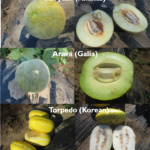
Melon is a crop with diverse fruit characteristics. They have different color, shape, rind pattern, texture, and flavor. In major food stores, cantaloupe and honeydew melons may be the only melon types sold, while the fantastic experience of melon consumption is far more than that. This created an opportunity for selling unique melon fruit at local farmers’ market and with a potentially higher price. It…Read more about Specialty Melon Evaluation in Southern Indiana[Read More]

The Annual Fall/Winter Meeting of the Southwest Indiana Melon and Vegetable Growers is scheduled on Monday, November 30, 2020, 3:00 pm – 5:00 pm (EST). This meeting will be held online this year because of COVID-19 restrictions. Dr. Wenjing Guan and Dr. Dan Egel will discuss the results of the 2020 watermelon and cantaloupe variety…Read more about Southwest Indiana Melon and Vegetable Growers Winter Meeting[Read More]
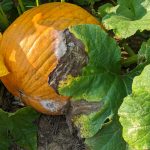
Phytophthora blight was a serious disease this past season. As a result, I have had many questions about managing this disease. The following article is an update of a previous article on this subject. The questions I have been asked have ranged from what do I spray to how does this disease work? Therefore, I…Read more about Phytophthora Blight of Cucurbits[Read More]
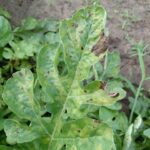
Downy mildew has been observed in LaPorte County in northern Indiana on cucumber. In addition, downy mildew on cucumber has been reported in southern Kentucky and on watermelon in the Kansas City area of Kansas. Growers in northern Indiana should manage for downy mildew on valuable cucurbit crops (Figure 1). Growers throughout the state should…Read more about Cucurbit Downy Mildew[Read More]
The 2019 production season started with above-normal rains. The wet conditions affected agriculture production, including watermelon and cantaloupe. In this article, we will review some of the watermelon and cantaloupe problems that are often associated with wet conditions. Manganese toxicity– This nutrient disorder occurs more often on cantaloupe that is grown in soils with pH…Read more about Results of Wet Condition on Watermelon and Cantaloupe[Read More]
Chateau SW® herbicide now has a 24(c) special local needs label for cucurbits. This product is produced by Valent, but the label is held by the Indiana Vegetable Growers Association (IVGA). To obtain a label, one must be a member of the IVGA, pay an annual $100 processing fee, read and understand the ‘conditions for…Read more about Chateau Herbicide SW 24(c) label[Read More]