During an OFRR, produce safety experts from ISDH, ISDA, and Purdue Extension will visit produce farms in the state to assess readiness for a FSMA inspection. These reviews are free, voluntary, and confidential. An OFRR takes approximately 2 hours, and it is scheduled at a time that is convenient for the grower. The reviewers will[Read More…]
Hoosier Food Market, an online sales platform where farmers can sell directly to consumers with no overhead costs. COVID-19 has changed the way we do a lot of things. Purdue Agriculture recognized that many farmers markets may not be operating at the same capacity, and restaurants may not be purchasing the same amount of product[Read More…]
On hot days in the summer, high tunnel growers may wonder whether to place shadecloth on high tunnels. Considering excessive heat inside the structures that may lead to plant stress, blossom drop and unmarketable fruit, there is a rational for doing it. However, it is important to realize the limitations of placing shadecloth on high[Read More…]
A few weeks ago, the Great Lakes Vegetable Producer’s Network discussed hoophouse nutrient management. Judson Reid from Cornell University and David Van Eeckhout from The Good Acre, St. Paul, MN, were the invited speakers. They shared their insights. I find them very helpful, so I want to pass my notes on to Indiana hoophouse growers.[Read More…]
Strawberries have a rich flavor; sugar, acid, phenolic content, and aroma all together make the wonderful fruit. Many factors are assumed to affect strawberry flavor. Some are supported by scientific evidence, some may be simply people’s impressions. In this article, we discuss some of the factors that are more likely to affect strawberry flavor. Locally[Read More…]

We received calls recently reporting observations of leaf curling on tomatoes. This article discusses factors that may cause tomato leaf curling. In a similar way as other vegetables, hot and dry conditions may cause leaf curling on tomatoes. In late spring and early summer, plants that are actively growing and developing fruit have a high[Read More…]
New 6-3-2020: Application for Coronavirus Food Assistance Program (CFAP) open; Jim Mintert and Indiana FSA Director Steve Brown discuss CFAP application;Indiana State Dept. of Health – Food Safety Guidance (English and Spanish); Guidance for Migrant Farm Workers, Labor Camps Operators and their Employers (Spanish); FDA and USDA release recommendations for those short of PPE. What[Read More…]

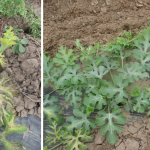
Watermelon is best grown at temperatures around 80-90°F. Temperatures above 90°F reduce the growth rate; above 105°F may cause plant injury. Temperatures below 42°F result in watermelon chilling injury; below 32°F will kill watermelon plants. Extended cool days that lead to soil temperatures dropping into lower 50°F can also kill watermelon seedlings. Using low tunnels is[Read More…]
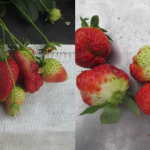
This article discusses the abiotic factors that may cause deformed strawberry fruit. unevenly developed strawberry fruit (Figure 1): Frost damage is probably the most common abiotic factor causing misshapen strawberry fruit. Temperatures lower than 30°F kill the pistil (female part) of strawberry flowers. Depending on the extent of the injury and the stage of fruit development.[Read More…]