
On February 27-28, the Produce Safety Alliance will hold a Water Summit near Cincinnati, OH. The purpose of the summit is to bring together growers, industry, academe, and FDA to discuss the agricultural water provisions of the Food Safety Modernization Act (FSMA) Produce Safety Rule. The summit’s format is similar to PSA’s previously hosted soil…Read more about Purdue Extension to Host Water Summit Remote Sites[Read More]
Found 1716 Articles
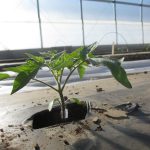
Awareness of tomato grafting has increased tremendously in the past years. Some growers fall in love with this technology and apply it to every tomato they grow. While others find this technology is not cost effective. The growers who have successfully adapted this technology are often small-scale, high tunnel or greenhouse growers who have mastered the grafting…Read more about Is it Economically Sound to Grow Grafted Tomatoes?[Read More]

2018 Indiana Small Farm Conference Date: March 1-3 Location: Hendricks County Fairgrounds, Danville, Indiana The 2018 conference in Danville, Indiana begins with a series of daylong workshops on March 1. Topics include on-farm fresh produce food safety, regenerative farming with livestock and agroforestry, farm viability and financial management, and a four season farm tour. Breakout sessions on…Read more about Upcoming Events[Read More]
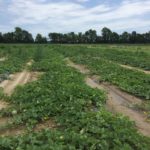
While Indiana remains a key player in the domestic cantaloupe market, commercial field production is limited to a few counties. The total acreage planted in Indiana peaked in 1997 at 3,600 acres with a total production of 455,000 cwt and an average income of $16 per cwt (USDA ESMIS, 2015). Indiana cantaloupe growers have lost…Read more about 2017 Field Evaluation of Specialty Cantaloupe and Charentais Melon Varieties[Read More]
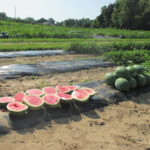
Seedless watermelon variety trials have been conducted at the Southwest Purdue Agricultural Center in Vincennes, IN for more than 20 years. In 2017, we evaluated the performance of 37 standard size seedless watermelon varieties and 4 mini watermelon varieties. This article introduces the top performing varieties in our trial in 2017. Standard size seedless watermelons…Read more about Top Performing Watermelon Varieties in the 2017 Indiana Watermelon Variety Trial[Read More]
This is the final issue of the Vegetable Crops Hotline (VCH) for 2017. Now is the time for subscribers who receive a paper copy in the mail to renew. A renewal form is included with this issue. Note that we provide an up-to three years’ subscription of VCH with a reduced price. You can also sign-up for…Read more about Time to Renew[Read More]
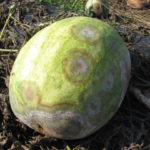
This disease was a serious problem in much of the state this past summer. As a result, I have had many questions about managing this disease. The questions I have been asked have ranged from what do I spray to how does this disease work? Therefore, I have written an article about the symptoms, biology and management…Read more about Phytophthora Blight of Cucurbits[Read More]
Farmers markets are a centerpiece of local food systems. These markets connect farmers with consumers and provide important economic benefits. While Indiana farmers can take advantage of the opportunities from selling directly to consumers, they face a dearth of information regarding pricing and marketing strategies. Information about pricing and product quality requirements are generally available…Read more about Indiana Farmers Markets Price Reports: How, Where, and Why[Read More]
Winter is the best time to recharge. In the last issue of this years’ Vegetable Crops Hotline newsletter, I would like to highlight a few free webinar resources that I found very useful in the past season. Hopefully, you can also benefit from them, and have a productive winter. eOrganic webinars http://articles.extension.org/pages/25242/webinars-by-eorganic A lot of great…Read more about Educational Resources[Read More]
In the last two months, the U.S. Food and Drug Administration (FDA) has released several communications dealing with the Produce Safety Rule (PRS). The following is a brief summary of those communications: Guidance On September 5, FDA released Guidance for Industry: Standards for the Growing, Harvesting, Packing, and Holding of Produce for Human Consumption: What…Read more about Produce Safety Rule Updates[Read More]
Purdue University prohibits discrimination against any member of the University community on the basis of race, religion, color, sex, age, national origin or ancestry, genetic information, marital status, parental status, sexual orientation, gender identity and expression, disability, or status as a veteran. This material may be available in alternative formats. 1-888-EXT-INFO Disclaimer: Reference to products in this publication is not intended to be an endorsement to the exclusion of others which may have similar uses. Any person using products listed in this publication assumes full responsibility for their use in accordance with current directions of the manufacturer.