The Midwest Vegetable Production Guide for Commercial Growers 2018 described above is a good way to keep up with what fungicides are recommended and their proper use. Last year, I developed a fungicide schedule to help growers schedule when fungicides are applied. These fungicide schedules seemed to be popular, so I have updated the fungicide…Read more about Fungicide Schedules[Read More]
Found 1716 Articles
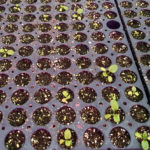
This is the time of year when growers begin planting seed—whether you are child planting a few seeds in Dixie cup for a school project, home tomato growers, or professional horticulturists. Unfortunately, one problem you may share in common is damping-off. Damping-off describes the death of seeds or seedlings and includes all of the following…Read more about Damping-off[Read More]
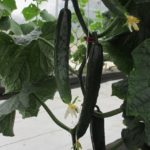
Cucumbers are produced with very different production systems. The ideal cucumber variety for process pickling production is not the variety used for greenhouse production. Choosing the suitable variety for a specific production system then becomes important. Where do you find recommended cucumber varieties for high tunnel production in seed catalogs? Some of the seed catalogs have a category called Greenhouse…Read more about What You Need to Know about Cucumber Varieties for High Tunnel Production[Read More]
Food Safety Modernization Act Produce Safety Rule Training A series of Food Safety Modernization Act produce safety rule training and registration information can be found on the website https://ag.purdue.edu/extension/safeproduce/Pages/FSMA-Training.aspx. The curriculum is designed to meet the needs of growers. Modules 1 through 6 align with sections outlined in the Food Safety Modernization Act (FSMA) Produce Safety Rule. Module…Read more about Upcoming Events[Read More]
The Midwest Vegetable Production Guide for Commercial Growers 2018 is available for sale as a hardcopy ($15) or free on-line. Actually, the Vegetable Guide has been available since last December. The guide may be purchased through the Education Store, at various extension meetings held around the state or from your Purdue University county educator. The…Read more about Midwest Vegetable Production Guide for Commercial Growers[Read More]

This article is my response to a grower’s question about lowering soil pH in a high tunnel. The soil test indicated pH of the soil in his high tunnel was 7.7. The high pH could be partially caused by alkaline water he used to use for irrigation. The grower has changed the water source, but…Read more about Lowering Soil pH in High Tunnels[Read More]
French Lick Resort & Casino 8670 W. State Rd. 56 French Lick, IN 47432 Phone numbers: French Lick – 1-888-936-9360 – Dan Egel – (812) 886-0198 Friday – March 9, 2018 8:30 am – 9:00 am Registration and Viewing of Exhibits 9:00 am – 9:40 am Pest and Product Update, D. Egel & W….Read more about Southwest Indiana Melon & Vegetable Growers Annual Meeting[Read More]
On January 1, products containing >6.5% dicamba and an agriculture use label are now restricted use pesticides. In order to purchase these herbicides, buyers must carry a private or commercial pesticide applicator license. While dicamba herbicides have been on the market for over 50 years to control broadleaf weeds, the recent development of dicamba resistant…Read more about Using Driftwatch/Fieldwatch to Help Dicamba Applicators Locate Sensitive Crops[Read More]
If you have not joined this free marketing and network program for growers, buyers and food producers in Indiana, take a moment to join today! Visit www.indianagrown.org to submit your Member application. Indiana Grown has received recognition and funding from the State Legislature to strengthen our local and regional food networks. Once you join, you…Read more about Indiana Grown[Read More]
Welcome to a new year of the Vegetable Crops Hotline (VCH), Purdue Extension’s newsletter for people in the business of growing vegetables. As usual, we will have fifteen issues throughout the 2018 growing season. The first issue of the year is sent to all who subscribed to VCH via US-mail in 2017 as well as new subscribers for 2018. To…Read more about Welcome to a New Year of Vegetable Crops Hotline[Read More]
Purdue University prohibits discrimination against any member of the University community on the basis of race, religion, color, sex, age, national origin or ancestry, genetic information, marital status, parental status, sexual orientation, gender identity and expression, disability, or status as a veteran. This material may be available in alternative formats. 1-888-EXT-INFO Disclaimer: Reference to products in this publication is not intended to be an endorsement to the exclusion of others which may have similar uses. Any person using products listed in this publication assumes full responsibility for their use in accordance with current directions of the manufacturer.