I have received calls about seedcorn maggots in melons and have seen wireworm damage in my research plots in Vincennes. Seedcorn maggots are usually associated with cool weather since the adult flies will not lay their eggs near melons plants when the soil temperature exceeds 70°F. So the cool weather we have had this past…Read more about Seedcorn Maggots and Wireworms[Read More]
Found 129 Articles

In March 2015 the Department of Horticulture and Landscape Architecture appointed Dr. Petrus Langenhoven as Horticulture and Hydroponics Crop Specialist. During the past 18 years Dr. Petrus Langenhoven has dedicated his career to the development of the horticulture sector in Sub-Saharan Africa. His career started off at the Agricultural Research Council in Stellenbosch, South Africa….Read more about Exciting Future for Horticulture in Indiana[Read More]
A field day will be held on July 9 to share with the public the various research activities at the Southwest Purdue Agricultural Center in Vincennes, IN. The day will start at 7:30 A.M. with a health fair. Registration starts at 8:30 A.M. Presentation topics include: managing cucumber beetles while protecting bees, production of vegetables…Read more about Southwest Purdue Agricultural Center Field Day[Read More]
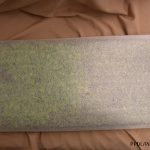
Samples in plug trays, as well as unrooted and rooted cuttings, and plants in pots require extra care when they are packaged for submittal to a diagnostic lab. Before you mail the next sample, please take a few minutes to review these suggestions for packaging and submitting samples. This will help preserve the integrity of…Read more about Tips for Submitting Greenhouse Samples to the Purdue Plant and Pest Diagnostic Lab[Read More]
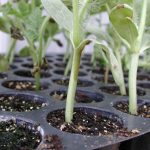
Most watermelon growers are in the process of placing transplants in the field. I have received several commercial samples of transplants still in trays prior to out-planting. The two diseases I have observed so far are gummy stem blight and bacterial fruit blotch. Below, I discuss these two diseases as well as management options. Gummy stem blight on…Read more about Watermelon Disease Update[Read More]
Many cantaloupe and watermelon growers have planted transplants in the field or will soon. A question many growers often have is when and how should one apply fungicides. Applying fungicides according to a weather-based system is easy for cantaloupe and watermelon growers. MELCAST was developed at Purdue University by Rick Latin to allow growers to…Read more about MELCAST[Read More]
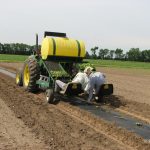
Getting seedlings from the transplant tray into the field is essential for a good crop (Figure 1). Healthy transplants treated well will quickly establish themselves in the field, setting the foundation for a productive crop. Here I offer some suggestions for successful transplant establishment. Harden transplants by exposing them to higher light, cooler temperature, and…Read more about Successful Transplant Establishment[Read More]
Do you use cover crops in your vegetable operation? Dr. James Farmer, Assistant Professor at Indiana University, is looking for farmers who use cover crops to participate in interviews about the use of cover crops, education/training in using cover crops, and the outcomes of cover crop usage. The interviews will be either in person or…Read more about Participants Needed for Cover Crop Interviews[Read More]
Effective Management of Farm Employees – Webinar. Thursday, May 28, 2015. 12:00 p.m. – 1:00 p.m. EDT. Register at http://goo.gl/NvQ1eL. This webinar will be facilitated by Phil Durst and Stan Moore from Michigan State University. These Extension Senior Extension Educators will discuss the impact of personnel management on the engagement of employees based on phone…Read more about Upcoming Events – Managing Employees and GAPs A to Z[Read More]
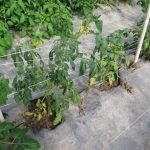
Symptoms of this disease include tomato plants with lower leaves that become yellow (chlorotic) and die; plants that begin to wilt; a lesion on the lower stem at ground level (Figures 1 and 2). If tomato plants are removed from the soil and carefully split open from the ground level, a discoloration of the vascular tissue…Read more about Fusarium Crown and Root Rot of Tomato[Read More]
Purdue University prohibits discrimination against any member of the University community on the basis of race, religion, color, sex, age, national origin or ancestry, genetic information, marital status, parental status, sexual orientation, gender identity and expression, disability, or status as a veteran. This material may be available in alternative formats. 1-888-EXT-INFO Disclaimer: Reference to products in this publication is not intended to be an endorsement to the exclusion of others which may have similar uses. Any person using products listed in this publication assumes full responsibility for their use in accordance with current directions of the manufacturer.