
Seedless watermelon variety trials have been conducted at the Southwest Purdue Agricultural Center in Vincennes, IN for more than 20 years. In 2017, we evaluated the performance of 37 standard size seedless watermelon varieties and 4 mini watermelon varieties. This article introduces the top performing varieties in our trial in 2017. Standard size seedless watermelons…Read more about Top Performing Watermelon Varieties in the 2017 Indiana Watermelon Variety Trial[Read More]
Watermelon
After harvest, storing vegetables in optimal conditions is important to ensure the whole season’s hard work has paid off. This article discusses the optimum storage conditions for tomato, pepper, cucumber, watermelon, cantaloupe and sweet corn. Tomato Ideal storage conditions for tomatoes depend on the maturity stage of picking. If tomatoes are picked at mature green,…Read more about Optimal Storage Conditions for Vegetables[Read More]

Watermelon production is threatened by Fusarium wilt, a widely distributed soilborne disease that can cause yield losses up to 100%. Currently, there are no watermelon varieties that are completely resistant to all races of Fusarium wilt. One way to control the disease is through grafting. The grafted plant combines a watermelon cultivar with a squash…Read more about Opportunities for Growing Grafted Watermelons[Read More]
Many cantaloupe and watermelon growers have transplanted seedlings to the field. Soon, these growers will have questions about what and when to apply fungicides. The article below in this issue of the Vegetable Crops Hotline will address what fungicides to apply (Fungicides schedules for cucurbits). This article discusses when to apply fungicides with the MELCAST system….Read more about MELCAST 2017[Read More]
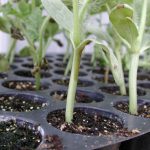
Many cantaloupe and watermelon growers are either growing transplants in a greenhouse or are expecting delivery of transplants in the next few weeks. Either way, growers should inspect transplants for disease before planting in the field. Below I will describe several common transplant diseases of cantaloupe and watermelon as well as management options. Gummy stem…Read more about Cantaloupe and Watermelon Transplant Diseases[Read More]
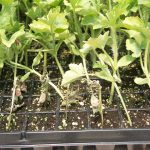
Fusarium wilt is one of the most serious diseases of watermelon in the Midwest. The disease often causes a one-sided wilt 2-3 weeks after transplanting. Whether a plant is affected, and to what degree, depends on the population of the long-lived spores in the soil that the roots contact. However, Fusarium wilt of watermelon is…Read more about Evidence for Spread of Fusarium Wilt of Watermelon in Transplant Trays[Read More]
As part of a multi-state effort being headed by Dr. Ian Kaplan at Purdue University in the Department of Entomology, we are investigating how to best manage insect pests on cucurbits, in our case watermelons, while having the least possible impact on pollinators. The research is being funded through the USDA/NIFA Specialty Crop Research Initiative….Read more about Purdue Looking for Watermelon Growers to Collaborate on Research Study[Read More]
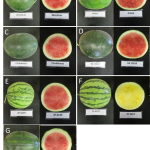
— Notes from Watermelon Research and Development Group Annual Meeting and 2016 Indiana Watermelon Variety Trial We are proud to be in Vincennes, the heart of watermelon producing counties in Indiana. In case you are unfamiliar with watermelon production here, Indiana is just behind Florida, Texas, Georgia, California and South Carolina in watermelon production nationwide….Read more about Watermelon Variety Considerations[Read More]
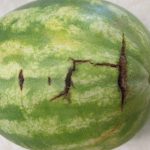
Cross stitch of watermelons is a physiological disorder (not caused by an infectious disease) first reported in 1990s on watermelon fruit. It received the name because the symptom looks like cross stitch. One or more rows of oval-shaped lesions lie along with the longitudinal axis of the fruit. These lesions are normally more close to…Read more about Cross Stitch of Watermelons[Read More]
For many vegetable growers, the season is in full swing. All that hard work in season preparation, planting and maintenance is paying off with harvest. One of the on-going season maintenance issues is applying fungicides. In other articles, I have described how and when to spray. In this article, I want to address when to stop. To limit the scope…Read more about When to Stop Spraying Fungicide[Read More]