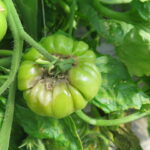
The author of this article, Dan Egel, retired from Purdue University in February 2024. This article is a brief review of the symptoms of foliar diseases of tomatoes in greenhouses or high tunnels. Remember that foliar diseases of tomatoes that are observed in greenhouses or high tunnels are different than those found in the field….Read more about Foliar Diseases of Tomato in Greenhouses[Read More]
Plant Disease Management
The Purdue University Plant and Pest Diagnostic Laboratory (PPDL) specializes in the identification of plant diseases, insects, and plants, as well as in the diagnosis of plant-health-related problems. The PPDL is a partner in the National Plant Diagnostic Network (http://www.npdn.org), a national consortium of diagnostic laboratories dedicated to enhancing the work of diagnostic labs through…Read more about The Purdue Plant and Pest Diagnostic Lab – Ready to Serve You[Read More]
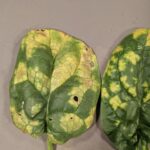
Downy mildew of spinach can be an important disease of spinach. The lesions are often a bright yellow with irregular margins (Figure 1). With time, these lesions can become a light brown. The underside of the lesion is dark black or purple under moist conditions. Under very conducive conditions, sporulation can occur on the top…Read more about Downy Mildew of Spinach[Read More]
MELCAST is a weather-based disease-forecasting program that helps growers schedule foliar fungicide applications for watermelon and cantaloupe. MELCAST stands for MELon disease for CASTer. This program, designed by Dr. Rick Latin, Emeritus Professor of Plant Pathology at Purdue University, keeps track of weather conditions so that cantaloupe and watermelon growers can apply foliar fungicides to their crops when they…Read more about MELCAST 2022[Read More]
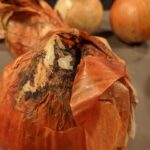
In November of last year, a grower brought onion samples to my attention. The samples had been stored on a greenhouse bench after harvest. A black mold had developed on many of the onions. Some of the onions appeared to have developed rotten areas on the top of the onion at the neck (Figure 1)….Read more about Black Mold of Onions[Read More]
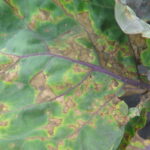
Cabbage is the crop most often affected by black rot, however, other crucifers such as broccoli, cauliflower, mustard, kohlrabi or brussels sprouts may be affected. The first symptom one is likely to notice is a V-shaped lesion on the margin of the leaf (Figure 1). However, severe symptoms may become irregular and jagged (Figure 2)….Read more about Black rot on Brassica Crops[Read More]
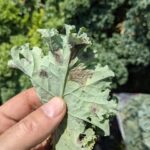
Late last season, I observed Alternaria leaf spot on kale. I want to use this article to review this disease on all brassica crops. This disease also occurs on broccoli, cabbage and other leafy brassicas. Alternaria leafspot usually doesn’t cause yield loss, but can cause unmarketable leaves. The symptoms on leaves usually include round, dark…Read more about Alternaria leaf spot of Brassicas[Read More]

Phytophthora blight caused by the pathogen Phytophthora capsici is one of the most important diseases in pepper production (Figure 1). The disease is difficult to control once established in a field. Using host resistance is an important approach in managing this disease. In past years, Rutgers Cooperative Extension has evaluated new bell pepper cultivars and…Read more about Bell Pepper Varieties for Phytophthora Resistance[Read More]
The Environmental Protection Agency (EPA) has proposed the following label changes including some use cancelations to the fungicides listed below. These fungicides mostly affect fruit growers; however, we include them here since many vegetable growers also grow fruit crops. Ziram, all conventional uses are proposed for cancellation. Thiram, all non-seed treatment uses proposed for cancellation….Read more about Fungicide Regulation Proposals[Read More]