As we continue to move toward harvest for many of our produce crops, numbers of workers will continue to increase on produce farms. Management of worker health has been, and continues to be, critical to insuring that farms have adequate labor. The following are a few resources available to growers as they continue to monitor…Read more about COVID-19 Resources for Agriculture Workers and Employers Available[Read More]
Found 1707 Articles
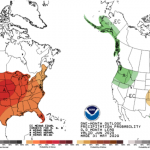
The month of May was sprinkled with a record-breaking freeze over Mother’s Day weekend, followed by heavy rainfall the following weekend, with a roller coaster of cool periods and extremely warm periods. We often think of spring as being that transition between winter and summer with lots of ups and downs, but those extremes from…Read more about June Outlook Calling for Above-Normal Temperatures[Read More]
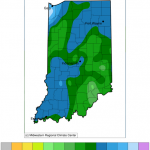
Two weekends ago, Indiana was facing freezing temperatures that broke numerous records across the state. This past weekend into early this week, the story has been lot of rain. As of the morning of Wednesday, May 20th, the northwest counties have received over 4 inches with a northwest to southeast gradient of decreasing amounts down…Read more about Will the Flooding Continue?[Read More]


What is this insect on my tomato plant? Is it a friend or foe? Answer: It is a friend! This is a super cool insect, known as a mantispid or ‘mantis fly.’ These insects are predatory and can be found around your garden, farm, or orchard feasting upon soft-bodied insect pests. Also, they are wasp…Read more about Answer to Question from Last Issue (5-7-2020)[Read More]

New 5-21-2020: Application for Coronavirus Food Assistance Program will begin on May 26; Indiana Registered Disinfectants for Use Against COVID-19 (updated) What is new? (5-21-2020) Application for Coronavirus Food Assistance Program will begin on May 26 (5/20) https://www.farmers.gov/cfap Indiana Registered Disinfectants for Use Against COVID-19 (updated) https://www.oisc.purdue.edu/pesticide/pdf/covid-19_disinfectants_051520.pdf Here are the categorized information resources Financial Application…Read more about COVID-19 Resources for Vegetable Growers (5/21)[Read More]
USDA will soon begin taking applications for the Coronavirus Food Assistance Program. As part of applying for the program, you’ll need to contact the Farm Service Agency county office at your local USDA Service Center to schedule an appointment. Find your office at farmers.gov/cfap. Your local FSA staff will work with you to apply for…Read more about Coronavirus Food Assistance Program[Read More]
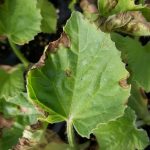
In the last issue of the Vegetable Crops Hotline, I wrote an article about common diseases of cantaloupe and watermelon transplants. Based on the samples I have received over the last few days, I would like to write about a disease that is not usually a problem: angular leaf spot. Angular leaf spot affects all…Read more about Angular leaf spot of Cucurbits[Read More]

Have you thought about produce your own value-added products that increase the value of your fresh produce? What are the challenges for you to start or expand your value-added business? How does COVID-19 affect your business? We would like to invite you to participate in the online survey to share your perspective and experiences on…Read more about Are You Interested in Value-Added Production?[Read More]
Pyridate herbicide was once a cornerstone of broadleaf weed control in mint before its market withdrawal. Recently the use of pyridate (Tough® 5EC) has been limited to emergency exemption use, also known as a Section 18 label, which must be approved each year. Pyridate is a photosystem II inhibitor used for postemergence weed control of…Read more about Tough® 5EC Herbicide Receives 2020 Section 18 Label for Mint in Indiana[Read More]
Purdue University prohibits discrimination against any member of the University community on the basis of race, religion, color, sex, age, national origin or ancestry, genetic information, marital status, parental status, sexual orientation, gender identity and expression, disability, or status as a veteran. This material may be available in alternative formats. 1-888-EXT-INFO Disclaimer: Reference to products in this publication is not intended to be an endorsement to the exclusion of others which may have similar uses. Any person using products listed in this publication assumes full responsibility for their use in accordance with current directions of the manufacturer.