
Welcome to the Vegetable Crops Hotline (VCH), Purdue Extension’s exclusive newsletter for people in the business of growing vegetables. In this issue, we are highlighting soil moisture deficit issues, irrigation resources, Colorado Potato Beetle damage, herbicide injury identification, and disease issues. Included is lots of information about educational opportunities and news from the Indiana Office…Read more about From the Editor’s Desk[Read More]
Found 1626 Articles
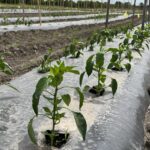
Irrigation is now becoming more critical. Temperatures are high, and many areas are experiencing lower-than-normal rainfall. However, I do have some good news for you if you are looking for a source that has a lot of information about irrigation. Lyndon Kelley is an Irrigation Educator for Purdue Extension and MSU Extension, and he maintains…Read more about In Some Areas Irrigation is Now More Critical[Read More]

This article is a news release that was published by the U.S. Department of Agriculture (USDA) on May 18, 2023. The U.S. Department of Agriculture (USDA) will cover up to 75% of the costs associated with organic certification, up to $750 per category, through the Organic Certification Cost Share Program (OCCSP). Indiana Farm Service Agency…Read more about USDA Accepting Applications to Help Cover Costs of Organic Producers[Read More]

The moment you’ve all been waiting for! Please help us to get the word out. The 2023 OISC Clean Sweep Pesticide Disposal info/participant form is available via the OISC website at the link https://oisc.purdue.edu/pesticide/clean_sweep.html If you are planning on participating in the program, please complete the attached 2023 OISC Clean Sweep participant form and…Read more about 2023 OISC Clean Sweep Pesticide Disposal[Read More]
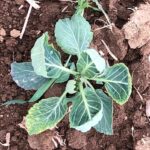
This time of year, my email inbox and phone text messages are filled with ugly photos of fruit and vegetable crops affected by suspected herbicide exposure. Sometimes the symptomology points toward a clear cause and effect, but most of the time, the answer is not so clear-cut. Here are a couple of recent examples: Cupping…Read more about Diagnosing Herbicide Injury is Easy… Sometimes.[Read More]
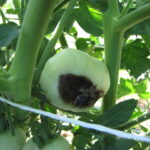
Tomatoes need a consistent water supply when they start to bloom and set fruit. As plants grow more foliage and have more fruits set, their water needs increase. As a result, the irrigation amount must steadily increase to maintain the consistent soil water content and the water supply to the plants. What would happen if…Read more about Tomatoes Need a Consistent Water Supply[Read More]
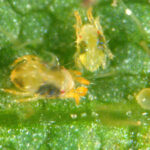
Are you interested in collaborating with Purdue Entomology on the grant “Improving two-spotted spider mite management in high tunnel cucumber production” funded by North Central SARE, Sustainable Agriculture Research and Education (LNC20-438)? The primary objectives of this research are to increase our understanding of two-spotted spider mite dynamics and management in a high tunnel cucumber…Read more about Looking for Collaborators on High Tunnel Spider Mite Project[Read More]
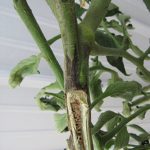
Tomato pith necrosis is a bacterial disease of tomatoes that occurs sporadically, usually in greenhouses or high tunnels. While this disease can kill or at least ruin marketable yield on tomatoes, the disease usually affects perhaps only a handful of plants in a greenhouse. That is, the disease does not seem to spread beyond the…Read more about Tomato pith necrosis[Read More]
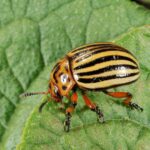
At the Purdue Student Farm, we are in full swing with our Colorado Potato Beetle (CPB; Figure 1) management program. On this small farm, these beetles are a consistent threat to the potato crop. This is in part due to their limited ability to rotate, as the whole farm is smaller than the recommended rotation…Read more about Are You Scouting Your Potatoes? The Beetles Are Here![Read More]
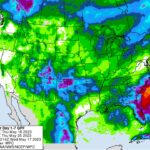
Cool mornings and warm afternoons have made conditions pleasant across the state. Through the first 17 days of May, temperatures ran 1.5◦F above normal (Figure 1). Indiana Climate Divisions 1 and 7 had the largest departures, which were 2.1◦F and 2.0◦F above normal, respectively. Since April 1, growing degree days (GDD) have accumulated between 260…Read more about Recent Localized Rainfall; Warm Temperatures and Below-normal Precipitation Forecasted[Read More]
Purdue University prohibits discrimination against any member of the University community on the basis of race, religion, color, sex, age, national origin or ancestry, genetic information, marital status, parental status, sexual orientation, gender identity and expression, disability, or status as a veteran. This material may be available in alternative formats. 1-888-EXT-INFO Disclaimer: Reference to products in this publication is not intended to be an endorsement to the exclusion of others which may have similar uses. Any person using products listed in this publication assumes full responsibility for their use in accordance with current directions of the manufacturer.