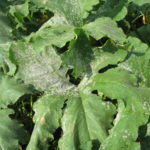
Powdery mildew is a common disease of cucurbits in Indiana. This disease is more common on cantaloupe and pumpkin. However, we have observed powdery mildew more frequently on watermelon in recent years. We have also observed this disease on cucumber in high tunnels. If left uncontrolled, this disease can cause loss of foliage, loss of…Read more about Powdery Mildew-Biology[Read More]
Found 1716 Articles
The following article was written by a colleague located on Long Island in New York. She is an expert on cucurbit powdery mildew. The fungicides which are effective against cucurbit powdery mildew changes frequently as fungi become resistant to certain fungicides. While the situation Dr. McGrath describes may not match your field exactly, it makes…Read more about Conventional Fungicide Recommendations for Cucurbit Powdery Mildew[Read More]
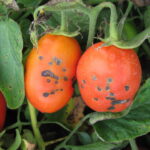
In the Midwest, three major bacterial diseases threaten tomato production. These diseases are bacterial canker, bacterial spot and bacterial speck. Although these diseases are all caused by bacteria, they vary in symptomology, biology and management options. In the last issue of the Vegetable Crops Hotline, we discussed bacterial canker. In this second in the series,…Read more about Bacterial Spot of Tomato[Read More]
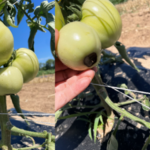
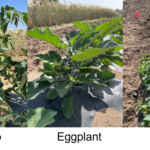
At Southwest Purdue Ag Center (SWPAC) and Pinney Purdue Ag Center (PPAC), we demonstrate irrigation impacts on several fruiting vegetable crops. Tomato, pepper, eggplant, watermelon, and cantaloupe are planted on plastic-covered beds with drip tapes. They grow on beds side-by-side with and without irrigation. We used two approaches to schedule irrigation, one bed is irrigated based on…Read more about Irrigation Demonstration Update June 25[Read More]
The U.S. Department of Agriculture (USDA) Farm Service Agency (FSA) is now accepting nominations for county committee members. Elections will occur in certain Local Administrative Areas (LAA) for members. LAAs are elective areas for FSA committees in a single county or multi-county jurisdiction. This may include LAAs that are focused on an urban or suburban…Read more about Farm Service Agency Now Accepting Nominations for Farmers to Serve on Local County Committees[Read More]

The Diverse Cornbelt project (#DCB) is a five-year, multi-disciplinary project exploring the real-world impacts of diversified farming systems beyond corn and soybeans in Indiana, Illinois, and Iowa. With more than 30 partners, we are seeking concrete options for diversification and understanding the agronomic, economic, social, infrastructure and policy changes that could make them viable. In…Read more about The Diverse Cornbelt Project[Read More]
June 30, 2022 is the last day to sign up for the 2022 Ag Census. If you have never received a census and are new to NASS surveys, sign up to be counted today. You do not need to sign up if you already receive NASS surveys. Key Dates: June 30, 2022 – sign up ends November 2022…Read more about Sign Up for 2022 Ag Census by June 30[Read More]
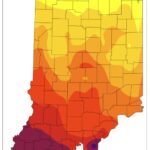
This week has made me long for the time when I lived in Reno, Nevada. Further north and higher in elevation than Las Vegas, the climate was absolutely beautiful – particularly if you are not into green vegetation, bugs, and drink coasters. Reno was never quite as hot as Las Vegas, but still had the…Read more about Heat Wave and Mugginess[Read More]
Strawberry harvest is coming to an end in most states. A couple of diseases were found. In addition to botrytis fruit rot and common leaf spot that farmers are familiar with, anthracnose was found caused severe damage in plasticulture production in southern Indiana. Part of the reason is the high temperature followed by frequent rainfalls…Read more about Strawberry Pests Observed in 2022 Season[Read More]
Vegetable growers understand that water deficiency decreases yield, reduces fruit marketability and quality, and, in extreme case, causes plants to die. In Indiana, we are typically not short of precipitation during growing seasons; rainfall is the primary water source. However, concentrated heavy rains and extended dry periods are not desirable for vegetable production. Severe losses…Read more about Irrigation Demonstration Update 1[Read More]
Purdue University prohibits discrimination against any member of the University community on the basis of race, religion, color, sex, age, national origin or ancestry, genetic information, marital status, parental status, sexual orientation, gender identity and expression, disability, or status as a veteran. This material may be available in alternative formats. 1-888-EXT-INFO Disclaimer: Reference to products in this publication is not intended to be an endorsement to the exclusion of others which may have similar uses. Any person using products listed in this publication assumes full responsibility for their use in accordance with current directions of the manufacturer.