Seedless watermelons are extremely dependent on pollinators for yield. A pollinator, typically a bee, has to first visit a male flower from a pollinizer plant (pollen donor) and then deposit the pollen on a female flower from the seedless plant. That pollinated female flower will become a seedless watermelon fruit. This pollen-transfer job can be…Read more about Do Managed Bumble Bees Contribute to Seedless Watermelon Pollination?[Read More]
Watermelon

The Southern Indiana Melon and Vegetable Growers Meeting is scheduled on Jan. 16, 2026, at French Lick Resort (French Lick Resort & Casino, 8670 IN-56, French Lick, IN 47432). The meeting agenda can be accessed here. The meeting registration fee is $30, including lunch. Registration fee will be collected on-site by the Indiana Vegetable Growers…Read more about 2026 Southern Indiana Melon and Vegetable Growers Meeting[Read More]
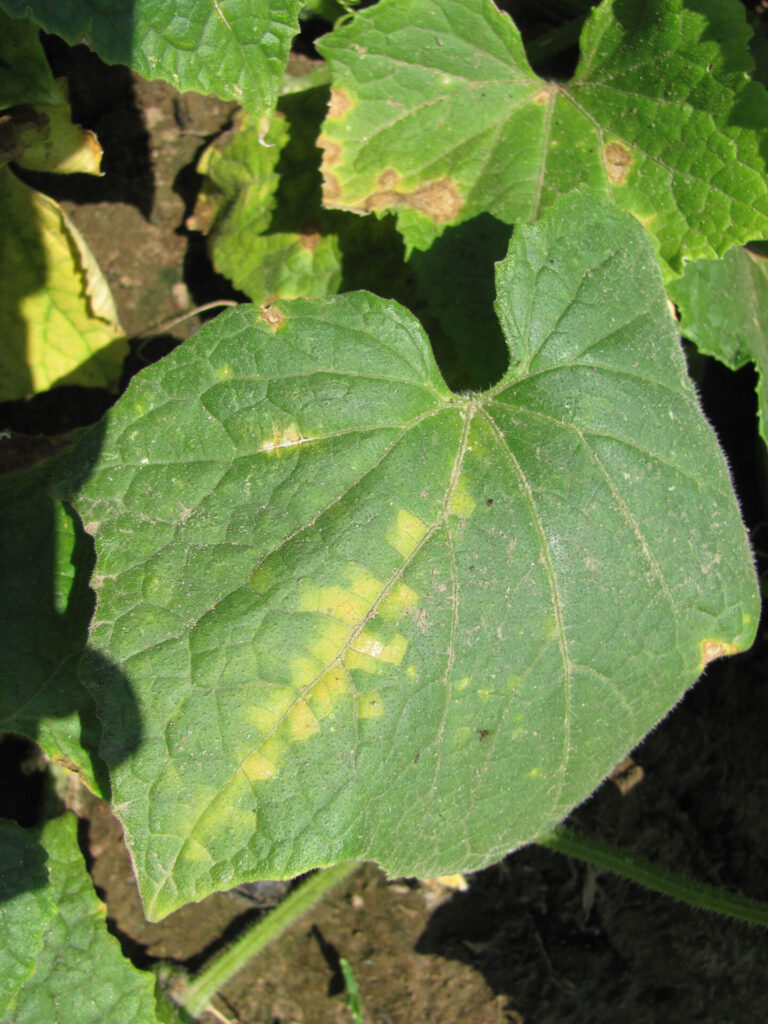
Last week, cucurbit downy mildew (Pseudoperonospora cubensis) was reported on cucumber in southwest Kentucky and northern Ohio. Last month, the disease was also reported in cucumber crops in Michigan. Being that close to Indiana, it is a good time to stay alert and scout fields for symptoms related to this disease. Remember, early detection of…Read more about Downy Mildew Confirmed in States Surrounding Indiana[Read More]

This Tuesday, July 29th – The Southwest Purdue Ag Center invites growers to attend their Watermelon Variety Evaluation Open House from 1:00 to 4:00 PM EDT. With the event just days away, now is the perfect time to plan your visit and discover which watermelon varieties could enhance your operation. This self-guided field tour allows…Read more about Don’t Miss This Week’s Watermelon Variety Evaluation Open House[Read More]
Open House Come and View the Latest Watermelon Varieties The self-guided Watermelon Variety Evaluation Open House at the Southwest Purdue Ag Center is scheduled for Tuesday, July 29, 2025, from 1:00 to 4:00 PM EDT. You are welcome to walk through the field and evaluate the watermelon varieties at your own pace. Extension Specialists Dr….Read more about Watermelon Variety Evaluation Open House on July 29[Read More]

Over the past ten years, evaluating dozens of watermelon and melon cultivars each season has allowed me to explore many unique types that differ from those typically found in mainstream markets. Some of these melons stand out with their distinctive rind patterns, varied colors, exceptional flavors, or other special characteristics. I’ve shared my observations through…Read more about Exploring Unique Melon Cultivars for Direct-to-Consumer Market[Read More]
Multiple foliar pathogens (some of which are also major problems for fruits) are appearing in watermelon and cantaloupe crops. It is time to continue or begin fungicide applications to prevent diseases such as gummy stem blight (Figure 1), anthracnose (Figure 2), and Phytophthora blight. During recent field visits, I have observed gummy stem blight and…Read more about Disease Watch: Gummy Stem Blight, Anthracnose, and Phytophthora in Cucurbits[Read More]

An average-yielding watermelon crop in an acre accumulates approximately 150 pounds of both nitrogen and potassium in the vegetative tissue and fruit. These nutrients are supplied by the soil’s existing nutrient pool and through supplemental fertilizer applications. Soil testing is a valuable tool for assessing what nutrients are present in soils and the amount of…Read more about Lessons Learned: Nitrogen Fertilizer Management in Indiana Watermelon Production[Read More]

Planning your vegetable varieties for the upcoming season? Purdue University has maintained comprehensive records of vegetable variety trials throughout the Midwest since 1999. The Midwest Vegetable Trial Report series offers valuable applied research findings specifically relevant to vegetable and melon production in the Midwest region. Below, you’ll find abstracts from the most recent reports. For…Read more about Data-Driven Decisions: Choosing Vegetable Varieties with Midwest Trial Results[Read More]
Growing watermelons in Indiana isn’t always easy if you have cucumber beetles and spider mites. These pests are some of the most damaging to Midwest cucurbits and are commonly managed with a combination of insecticides and miticides. Unfortunately, chemical management for one pest could interfere with control of another pest. For example, spider mite outbreaks…Read more about Want Fewer Spider Mites? Ease Up on the Beetle Spraying![Read More]