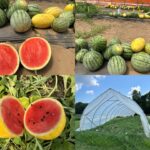
Over the past ten years, evaluating dozens of watermelon and melon cultivars each season has allowed me to explore many unique types that differ from those typically found in mainstream markets. Some of these melons stand out with their distinctive rind patterns, varied colors, exceptional flavors, or other special characteristics. I’ve shared my observations through…Read more about Exploring Unique Melon Cultivars for Direct-to-Consumer Market[Read More]
Greenhouses & High Tunnels
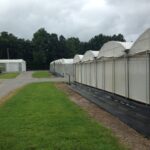
Many of you are getting ready to start planting your seeds in the greenhouse, especially if you are planning to transplant. Regardless of the time you start or the type of crop you are planting, it is important to ensure that you have clean and disinfected areas in your greenhouse to prevent disease infections and…Read more about Cleaning and Disinfesting Your Greenhouse Before Planting[Read More]
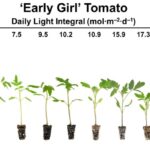
Optimizing light management is crucial for producing high-quality vegetable transplants in greenhouse environments. As greenhouse growers gear up for the spring production season, managing light conditions becomes a critical factor in producing high-quality vegetable transplants. With varying natural light levels and the challenges posed by greenhouse structures, understanding and optimizing daily light integral (DLI) is essential…Read more about Managing Daily Light Integral to Improve Vegetable Transplant Quality[Read More]
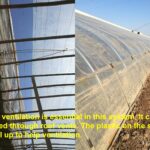
Passive solar greenhouses are widely used in northern China to grow crops year-round without supplemental heating. My former mentor introduced me to a project by the University of Missouri Extension, where they built a passive solar greenhouse. This past winter, I had the chance to meet Tim Reinbott at a conference and learned that his…Read more about Passive Solar Greenhouses[Read More]

This week, we experienced another round of very cold days, with minimum temperatures dropping into the single digits. Under these conditions, row covers are essential for helping plants survive and preventing cold damage even inside high tunnels. The difference in the minimum temperatures inside and outside of high tunnels may not always be significant, as…Read more about How Much Warmth Row Covers Provide at Extreme Cold Nights?[Read More]
As I sit by the window watching the snow fall, I can’t help but think about what’s on the minds of many high tunnel farmers right now: Can my tunnels withstand the snow? It’s a concern I haven’t faced in recent years, but this winter feels uncertain. As you can imagine, ensuring the safety of…Read more about Ready for the Snow, Resources for Tunnel Growers[Read More]
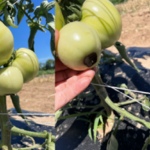
It seems the season has shifted abruptly from wet to dry. Over the past week, we’ve begun to hear reports typically associated with hot and dry conditions. At the Southwest Purdue Agricultural Center, we conduct side-by-side comparisons of different fruiting vegetables under varying irrigation treatments. This article summarizes our observations on how different fruiting vegetable…Read more about Fruiting Vegetable Responses to Drought Stress[Read More]
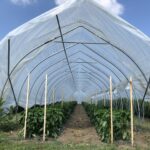
Over the past year, we conducted a comparative study on microclimate conditions within caterpillar tunnels and high tunnels at five farms in Indiana. This initiative was prompted by the growing interest in employing caterpillar tunnels for season-extension vegetable production among small and diversified farms. Caterpillar tunnels, typically lower in height than permanent high tunnels, stand…Read more about Comparison of Microenvironment between Caterpillar Tunnels and Permanent High Tunnels[Read More]
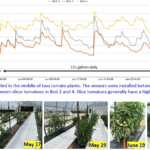
I often receive questions on how much water should apply to high tunnel tomatoes. Even the most experienced tomato growers could sometimes lose yield because of overlooking irrigation management. In this article, I describe a case study of how we use soil moisture sensors for irrigation management in a high tunnel tomato production system. This…Read more about A Case Study: Irrigation Management in High Tunnel Tomato Production[Read More]
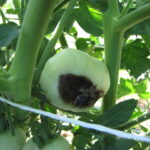
Tomatoes need a consistent water supply when they start to bloom and set fruit. As plants grow more foliage and have more fruits set, their water needs increase. As a result, the irrigation amount must steadily increase to maintain the consistent soil water content and the water supply to the plants. What would happen if…Read more about Tomatoes Need a Consistent Water Supply[Read More]