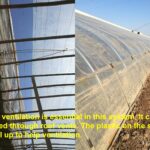
Passive solar greenhouses are widely used in northern China to grow crops year-round without supplemental heating. My former mentor introduced me to a project by the University of Missouri Extension, where they built a passive solar greenhouse. This past winter, I had the chance to meet Tim Reinbott at a conference and learned that his…Read more about Passive Solar Greenhouses[Read More]
Protected Culture and Season Extension

This week, we experienced another round of very cold days, with minimum temperatures dropping into the single digits. Under these conditions, row covers are essential for helping plants survive and preventing cold damage even inside high tunnels. The difference in the minimum temperatures inside and outside of high tunnels may not always be significant, as…Read more about How Much Warmth Row Covers Provide at Extreme Cold Nights?[Read More]
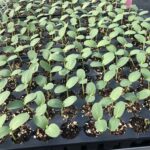
Most of us know a temperature lower than 32°F would kill tender vegetables like tomatoes, peppers, melons, and cucumbers. Home gardeners would wait to plant those crops after the last frost passed, but commercial farmers may take the risk of planting earlier to capture early-season premium prices. Farmers use various strategies, i.e., high tunnels, low…Read more about Check Soil Temperatures Before Planting Cold Sensitive Crops[Read More]

Thanks to my University of California Cooperative Extension colleagues, I visited central valley vegetable production last week. Undoubtedly, I learned a lot on this trip. I want to share what I learned with Indiana growers in a few newsletter articles. This short article highlights two things I saw farmers use to extend early-season crop production….Read more about Season Extension Strategies—What I learned in a CA trip[Read More]
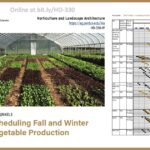
A new bulletin “Scheduling Fall and Winter Vegetable Production in High Tunnels” is available from the Purdue Education store at https://edustore.purdue.edu/item.asp?Item_Number=HO-330-W . The publication brings together information collected on farms and research stations in Indiana and Ohio to provide detailed guidance on scheduling vegetable crops for winter high tunnel production. It includes a fillable scheduling…Read more about Scheduling Fall and Winter Vegetable Production in High Tunnels[Read More]
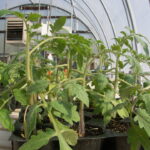
We are getting close to the time of year when I begin to get phone calls about strange symptoms on tomato plants in greenhouses. Too often, the problem is ethylene damage. Read on to find out how to avoid this problem. Tomato plants with ethylene damage often have leaves that are curled down and stems…Read more about Ethylene Damage on Tomato[Read More]
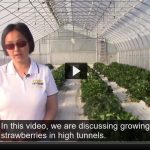
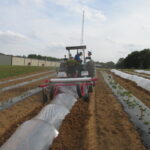
Strawberries are primarily grown in matted row system in Indiana, in which bare-root strawberry plants are set in the spring. Runners are established. Fruit is first harvested in the second year and plantings are renovated each year for 2-3 seasons. Growers in the southern part of the state expressed interest in growing strawberries in plasticulture…Read more about Using Low Tunnel is Promising to Increase Yield of Annual Plasticulture Strawberry Production[Read More]
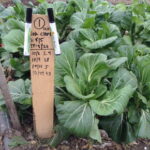
A lot of things are different this year. With the changes come opportunities to try something new. Liz Brownlee with Hoosier Young Farmers Coalition mentioned to me that some markets, especially in rural areas, do not have a steady supply of Fall crops, and that farmers might be looking to extend the season with crops…Read more about Is This the Year to Try Fall Crops?[Read More]
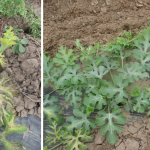
Watermelon is best grown at temperatures around 80-90°F. Temperatures above 90°F reduce the growth rate; above 105°F may cause plant injury. Temperatures below 42°F result in watermelon chilling injury; below 32°F will kill watermelon plants. Extended cool days that lead to soil temperatures dropping into lower 50°F can also kill watermelon seedlings. Using low tunnels is…Read more about Be Cautious When Using Low Tunnels for Early Watermelon Planting[Read More]