
Indiana saw a lot of precipitation in the early part of this past week, with rainfall totals of 0.5” or more in northern and far southwestern counties and more than 5” in south-central Indiana. In fact, an observer just south of Bedford, IN, reported a combined total of 5.80”! Figure 1 shows the 2-day total…Read more about An Impressive Amount of Rain[Read More]
Found 1707 Articles

NourishCap is a digital marketing company that works with mushroom growers. They have partnered with Purdue Extension in an effort to understand and find potential solutions to marketing and shipping barriers faced by mushroom growers. As part of this process, NourishCap has developed a grower survey. If you are a mushroom grower, please take a…Read more about Mushroom Grower Survey[Read More]
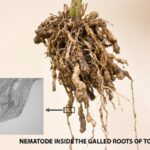
Root-knot nematodes (RKN, Meloidogyne spp.) are among the most damaging plant-parasitic nematodes in vegetable production systems. Infective juveniles hatch from eggs in the soil, find and penetrate host plant roots. They migrate to the vascular tissue, where they establish specialized feeding sites, develop into adults, and reproduce by laying eggs on the surface of roots….Read more about Root-knot Nematodes and Their Populations Identified in Indiana[Read More]
Plant-Parasitic Nematodes Plant-parasitic nematodes (PPN) are a group of microscopic, worm-like organisms that live in soil or plant tissues and cause damage to crop production. While some species infect aboveground plant parts such as leaves and stems, those of greatest concern across a wide range of vegetables are soil-dwelling species that feed on plant roots….Read more about Understanding Nematodes in Soils of Diversified Vegetable Farms in Indiana[Read More]
Dear Valued Vegetable Crops Hotline Readers, Welcome to this issue of the 2026 Vegetable Crops Hotline newsletter! Our mission remains steadfast: to deliver crucial updates on pest management, production practices, food safety, and marketing opportunities that directly impact your farming operations. Growers and Purdue Extension Educators, your input and expertise make this newsletter a truly…Read more about From The Editor’s Desk[Read More]
A cold snap is forecast for this weekend, although temperature predictions vary slightly across weather sources. At the same time, some early plantings of watermelon and cantaloupe are already in the field in southern Indiana, or seedlings have already arrived and are waiting to be planted. What steps can growers take to protect these young…Read more about Coming Cold Snap: When to Plant Watermelons and Considerations Under Suboptimal Temperature Conditions[Read More]
Dear Valued Vegetable Crops Hotline Readers, Welcome to the second edition of the 2026 Vegetable Crops Hotline newsletter! Our mission remains steadfast: to deliver crucial updates on pest management, production practices, food safety, and marketing opportunities that directly impact your farming operations. In upcoming issues, we’ll cover several critical topics, including emerging pest challenges, innovative…Read more about From The Editor’s Desk[Read More]
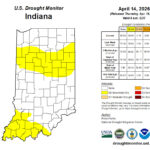
Soil temperatures are often a guide for various timing decisions in agriculture. In the spring, once soil temperature (often at 4” depths) is sustained above a particular threshold (e.g., 50°F), field preparations and planting can progress, for example. Temperatures may also relate to pest and weed emergence. The Midwestern Regional Climate Center, in partnership with…Read more about A Look at Soil temperature Climatology[Read More]
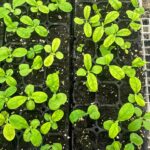
Diversified produce growers and u-pick operations are increasingly exploring cut-flower production as a way to broaden their markets and increase revenue. To support this interest, our team of Extension specialists and educators is establishing demonstration sites in Lafayette, Indianapolis, and Vincennes, spanning north-south Indiana. In this article, we share lessons we’ve learned from our vegetable-growing…Read more about Starting Cut-Flower from Seeds: Lessons Learned from Demonstration Sites[Read More]
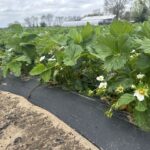
When growers are asked about the top challenges in plasticulture strawberry production, frost/freeze damage is almost always at the top of the list. Anyone living in Indiana understands how unpredictable spring weather can be. This year, in southern Indiana, we experienced warm periods with average daily temperatures exceeding 60°F in mid-February, followed by sharp drops…Read more about Spread out Flower Timing to Reduce Spring Frost/Freeze Risks in Plasticulture Strawberry Production[Read More]
Purdue University prohibits discrimination against any member of the University community on the basis of race, religion, color, sex, age, national origin or ancestry, genetic information, marital status, parental status, sexual orientation, gender identity and expression, disability, or status as a veteran. This material may be available in alternative formats. 1-888-EXT-INFO Disclaimer: Reference to products in this publication is not intended to be an endorsement to the exclusion of others which may have similar uses. Any person using products listed in this publication assumes full responsibility for their use in accordance with current directions of the manufacturer.