
Welcome to the Vegetable Crops Hotline (VCH), Purdue Extension’s exclusive newsletter for people in the business of growing vegetables. This is, again, a bumper issue. It seems we can look forward to warmer days. Farm activity will increase in the coming weeks as conditions become more favorable for the planting of tender vegetable crops. Remember,…Read more about From the Editor’s Desk[Read More]
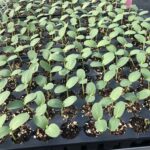
Most of us know a temperature lower than 32°F would kill tender vegetables like tomatoes, peppers, melons, and cucumbers. Home gardeners would wait to plant those crops after the last frost passed, but commercial farmers may take the risk of planting earlier to capture early-season premium prices. Farmers use various strategies, i.e., high tunnels, low…Read more about Check Soil Temperatures Before Planting Cold Sensitive Crops[Read More]

This article was originally written by Dan Egel, who retired from Purdue. Please contact the PPDL for more information. MELCAST is a weather-based disease-forecasting program that helps growers schedule foliar fungicide applications for cantaloupe and watermelon. MELCAST stands for MELon disease for CASTer. This program, designed by Dr. Rick Latin, Professor Emeritus of Plant Pathology at…Read more about Melon Disease Forecaster 2024[Read More]
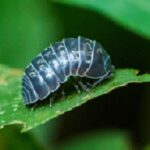
Background Pillbugs, roly-polys, and potato bugs are the dominant common names for the isopod genus Armadillidium spp. As the scientific name suggests, these little critters resemble mini armadillos but are, in fact, crustaceans that live on land (Figure 1). Therefore, they are more closely related to lobsters, crabs, and shrimp than insects. Pillbugs are important…Read more about Are Pillbugs Pests? How Can They be Managed?[Read More]
Since we are well into fungicide application time, below I have listed 10 rules that will help vegetable growers apply fungicides effectively and safely. Apply fungicides prior to the development of disease. Although many fungicides have systemic (“kick back”) action they will not completely eradicate diseases after they have started. And by the time a single…Read more about 10 Useful Rules for Fungicide Application[Read More]
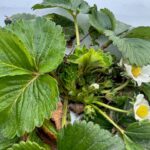
Frost/freeze damage is one of the major risks of growing strawberries in Indiana. During the morning of April 24, a widespread freeze event caused damage to several crops, including strawberries. Strawberries in southern Indiana, particularly on plasticulture, have entered full bloom. Without protection, freeze damage was extensive in some fields. A case study was described…Read more about Strawberry Crop Update[Read More]
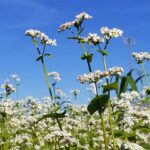
Buckwheat (Fagopyrum esculentum) has been cultivated for thousands of years (Figure 1). Not at all related to wheat, buckwheat gets its common name from an old Dutch word that means “beech wheat” due to the seed’s resemblance to a beech nut. A member of the smartweed family, buckwheat is a cousin to familiar species like…Read more about Cover Crop Species Spotlight – Buckwheat[Read More]
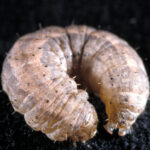
Each year we get several reports of seedlings being cut at or near the base of the plant/soil surface. The critter who gets the blame most often is cutworms. And that makes sense because the damage is in the name. However, with closer inspection, it seems that the blame can often be misplaced. There are…Read more about Cut Seedlings and the Potential Culprits[Read More]
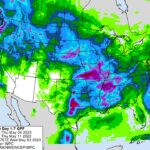
It is May, the sun is shining, of course the wind is blowing, and the weather forecast is calling for warmer temperatures. Things are looking up from here. Despite the warm start and cool end to April, the preliminary statewide average temperature ran 1.2°F above normal (Figure 1). The largest temperature departures occurred in northern…Read more about Warmer Temperatures on the Way[Read More]
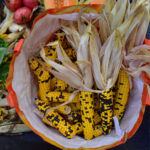
Heritage Corn: Planting, Challenges, and Educating from the Family Plot Perspective This winter, Northern Indiana farmer, Zuleyja Prieto, finished her SARE farmer rancher grant that focused on planting and preserving heritage corn varieties (Figure 1). Prieto worked with her family and local farmer collaborators on heritage corn in a family plot for two years. A…Read more about Sustainable Agriculture Research and Education (SARE) News[Read More]
Purdue University prohibits discrimination against any member of the University community on the basis of race, religion, color, sex, age, national origin or ancestry, genetic information, marital status, parental status, sexual orientation, gender identity and expression, disability, or status as a veteran. This material may be available in alternative formats. 1-888-EXT-INFO Disclaimer: Reference to products in this publication is not intended to be an endorsement to the exclusion of others which may have similar uses. Any person using products listed in this publication assumes full responsibility for their use in accordance with current directions of the manufacturer.