
What is Optogen®? The active ingredient in Optogen® (Figure 1) is bicyclopyrone. Corn growers may recognize bicyclopyrone as one of the four ingredients in Acuron® herbicide. Bicyclopyrone is a Group 27 herbicide with pre- and post-emergence activity on select weed species. Group 27 herbicides inhibit an enzyme known as “HPPD”, resulting in an inhibition of…Read more about Optogen®- a New Herbicide Available in Select Vegetables and Strawberry[Read More]
Found 1716 Articles
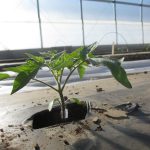
Grafted tomatoes show advantages, particularly for high tunnel production. A Purdue extension publication, Techniques for Tomato Grafting, and the video provide a step-by-step guideline for small growers to explore this technique. I am often asked. When should I start to plant the seeds to produce grafted plants? The chart below shows a general timeline and materials needed to produce…Read more about Grafted Tomatoes for High Tunnel Production[Read More]

There are many traps available to help with monitoring insect populations. As you prepare for the 2023 growing season, I would like to review some of them in case you want to implement trapping on your own farm to help improve your pest management programs. Trap Design. Traps come in a variety of shapes, sizes,…Read more about Insects Traps as a Monitoring Tool[Read More]
Are you still thinking about varieties for the upcoming season? Purdue has been keeping a record of vegetable variety trials in the Midwest since 1999. The Midwest Vegetable Trial Report series includes reports of applied research relevant to vegetable and melon production in the Midwest. Here are some abstracts of the most recent reports. Visit…Read more about Selecting Vegetable Varieties for your Farm[Read More]

A common approach in winter production is to allow crops to reach maturity or harvestable size by the end of November. High tunnels are then used as a ‘living refrigerator’ from December to around the middle of February. Crops are harvested as needed in the darkest and coldest periods. This approach, however, did not work…Read more about Low Temperatures in December Hurt January and February Markets[Read More]
There are two important notices that you need to be aware of. Revisions to Indiana Pesticide Regulations – January 5, 2023 As you may already be aware, Indiana has recently made several changes to the state pesticide regulations. The Office of the Indiana State Chemist (OISC) and the Indiana Pesticide Review Board (IPRB) have been…Read more about News from the Office of Indiana State Chemist and Seed Commissioner[Read More]

The Cooperative Extension Service is one of the nation’s largest scientific research-based information and education providers. It’s a network of colleges, universities, and the U.S. Department of Agriculture, serving communities and counties across America. Purdue Extension is a service tailored to meet the needs of Indiana, needs we know firsthand. Our educators, specialists, and volunteers…Read more about What is Purdue Extension?[Read More]
NCR-SARE Funded Awards NCR-SARE Announces 2022 Research and Education Awards – February 1, 2023 NCR-SARE is pleased to announce the projects selected for funding for the 2022 Research and Education competitive grant program. Seventeen (17) projects were awarded a total of more than $3.8 million through this NCR-SARE grant program for researchers and educators involved…Read more about Sustainable Agriculture Research and Education (SARE) News[Read More]
Indiana NRCS accepting applications for Farmers Helping Hellbenders RCPP project – February 17, 2023 Applications are being accepted through March 31 from farmers and forestland owners in portions of Washington, Harrison, Crawford, and Floyd counties. Funding is now available to producers in the Blue River-Sinking Watershed to implement conservation practices on their land to assist…Read more about Indiana Natural Resources Conservation Services News[Read More]
The Food Systems (FS) Coordinator leads a state extension program with the main focus on realizing value-added opportunities for local food systems. These systems include clusters of producers, processors, distributors, sellers, consumers, and supporting organizations that have proven to enhance the rural and urban economy, the environment, food access and nutrition, and strengthen producers and…Read more about Career Opportunity at Purdue Extension – Food Systems Coordinator[Read More]
Purdue University prohibits discrimination against any member of the University community on the basis of race, religion, color, sex, age, national origin or ancestry, genetic information, marital status, parental status, sexual orientation, gender identity and expression, disability, or status as a veteran. This material may be available in alternative formats. 1-888-EXT-INFO Disclaimer: Reference to products in this publication is not intended to be an endorsement to the exclusion of others which may have similar uses. Any person using products listed in this publication assumes full responsibility for their use in accordance with current directions of the manufacturer.