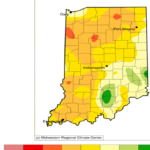
Indiana has been very dry the last several weeks (Figure 1) and conditions are starting to show in lawns and fields. This dryness has been exacerbated by low humidity and warmer temperatures (Figure 2). After a nice respite this past weekend, temperatures will start rising again into the weekend, but may not seem too uncomfortable…Read more about Warm, Dry Weather Causing Abnormally Dry Conditions Across Indiana[Read More]
Found 1716 Articles
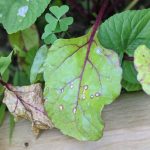
This disease was observed in a home garden recently on table beet (Figure 1). I was surprised considering how dry it has been. Cercospora leaf spot also affects swiss chard. Symptoms include circular leaf spots that may have a reddish margin. The center of the lesions may start off a light brown and turn to gray after the fungus (Cercospora beticola) begins to sporulate….Read more about Cercospora Leaf Spot of Beet[Read More]
The Purdue Extension Entomology Vegetable Team has a new website available for you to stay in touch and access resources for pest management in your vegetables, wherever and however you grow them! It is also the place to stay updated with the CEW trapping for 2020 by following the page to this location. Check it…Read more about Updated Resources to Check Out![Read More]
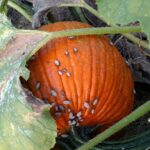
Squash bugs are a pest of cucurbit crops and can sometimes go unnoticed until late in the season when the local populations have built up and you see them in high numbers (Figure 1) attacking the fruits of your crop. Squash bugs are similar in appearance to stink bugs but smell much more pleasant (in…Read more about Now is the Time to Treat Squash Bugs[Read More]
A few weeks ago, the Great Lakes Vegetable Producer’s Network discussed hoophouse nutrient management. Judson Reid from Cornell University and David Van Eeckhout from The Good Acre, St. Paul, MN, were the invited speakers. They shared their insights. I find them very helpful, so I want to pass my notes on to Indiana hoophouse growers….Read more about Hoophouse Nutrient Management — Notes from Great Lakes Vegetable Producer’s Network Weekly Roundtable Discussion[Read More]
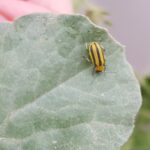
While in your fields in the last week you may have noticed fewer striped cucumber beetles on the leaves and stems of the growing cucurbit plants (Figure 1). This is because there are two generations of this pest in Indiana; the 1st generation adults that overwintered in the field have mated and left behind their…Read more about Cucumber Beetle Updates and Spray Considerations[Read More]
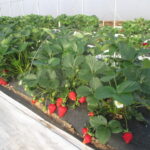
Strawberries have a rich flavor; sugar, acid, phenolic content, and aroma all together make the wonderful fruit. Many factors are assumed to affect strawberry flavor. Some are supported by scientific evidence, some may be simply people’s impressions. In this article, we discuss some of the factors that are more likely to affect strawberry flavor. Locally…Read more about What Factors Affect Strawberry Flavor?[Read More]
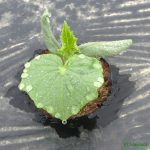
Question: Why are the water droplets arranged so evenly around the edge of this cucurbit leaf? Answer: The water droplets came out of pores that are at the edge of the leaf where a vein ends. The pores are called hydathodes. The droplets form through the process of guttation. Guttation is when the water pressure…Read more about Answer to Question from Last Issue (6-3-2020)[Read More]

We received calls recently reporting observations of leaf curling on tomatoes. This article discusses factors that may cause tomato leaf curling. In a similar way as other vegetables, hot and dry conditions may cause leaf curling on tomatoes. In late spring and early summer, plants that are actively growing and developing fruit have a high…Read more about Tomato Leaf Curling[Read More]
Purdue University prohibits discrimination against any member of the University community on the basis of race, religion, color, sex, age, national origin or ancestry, genetic information, marital status, parental status, sexual orientation, gender identity and expression, disability, or status as a veteran. This material may be available in alternative formats. 1-888-EXT-INFO Disclaimer: Reference to products in this publication is not intended to be an endorsement to the exclusion of others which may have similar uses. Any person using products listed in this publication assumes full responsibility for their use in accordance with current directions of the manufacturer.