
The Purdue Small Farm Education Field Day is presented on July 27, 2023, at the Purdue Student Farm in West Lafayette, IN. Registration for the field day is now open. To reserve your spot, visit https://cvent.me/ewWN3b. Students register for free! Please get in touch with Lori Jolly-Brown to receive the discount code for student registration….Read more about Purdue Small Farm Education Field Day – Registration Now Open[Read More]
Beans (Green, Wax, Snap)

The 2022 Purdue Small Farm Education Field Day was a big success. Nearly 72% of attendees reported that they learned something new. Nearly half indicated they plan to adopt recommended practices for diversified farming systems, and over a third (36.0%) plan to adopt recommended practices for creating, improving, or strengthening their business. Half (52.0%) indicated…Read more about Small Farm Education Field Day, July 27, 2023[Read More]

The 2022 Purdue Small Farm Education Field Day was a big success. Nearly 72% of attendees reported that they learned something new. Nearly half indicated they plan to adopt recommended practices for diversified farming systems, and over a third (36.0%) plan to adopt recommended practices for creating, improving, or strengthening their business. Half (52.0%) indicated…Read more about Small Farm Education Field Day – July 27, 2023[Read More]

A diversified farm plans its crop rotation around producing various perishable products that sell well, like tomatoes, peppers, and leafy greens. As the farm builds market opportunities, it might consider adding new or unusual crops to the crop plan. Storage crops can be part of that plan, extending the sale season for growers and additional…Read more about A Large Grain for the Small Farm?[Read More]
Our recent field visit revealed a green bean issue that is likely associated with wet conditions. Purdue soybean specialist Shaun Casteel recently released this video that may also help vegetable bean growers to assess the damage. https://www.youtube.com/watch?v=IMfoghn7Ilk
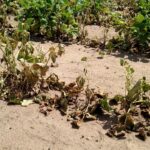
Root rot of snap bean can be a devastating disease in Indiana. Often, the first symptom observed is the collapse and wilt of the plant (Figure 1). The roots of such plants may be discolored and rotten (Figure 2). Lower areas of the field and fields which are not well drained are more likely to…Read more about Root Rot of Snap Bean[Read More]
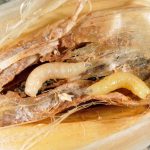
Three species of seed and root maggots attack vegetables in Indiana. The seedcorn maggot (Figure 1) feeds on seeds and seedlings of sweetcorn, cucurbits, lima and snap beans, peas, and other crops. Cabbage maggots can cause serious damage to transplants of cabbage, broccoli, cauliflower, and Brussels sprouts and make the fleshy roots of radishes, turnips,…Read more about Seed and Root Maggots[Read More]
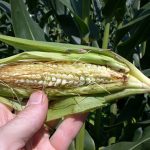
I have seen more green stink bugs this year than at any time in my career. I have no logical explanation for their abundance. It was thought that as the invasive brown marmorated stink bug became established, it might outcompete the native stink bugs such as the green stink bug, causing numbers to decrease. However,…Read more about Green Stink Bug[Read More]
I’ve seen some substantial populations of potato leafhoppers recently. Leafhoppers can be a significant pest of a number of vegetable crops, with potato and snap beans being particularly affected. Look for adults flitting off the plants when they are disturbed and for nymphs feeding on the underside of the leaves. It is important not to…Read more about Potato Leafhopper[Read More]