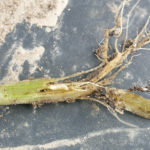
In addition to delaying much of our fieldwork, the cool set spring has wreaked havoc on some of the plants we have been able to squeeze in during brief dry periods. We have received reports of damage caused by seedcorn maggots (Figure 1) and wireworms (Figure 2). In preparation of this article I browsed the…Read more about Seedcorn Maggots and Wireworms in Cucurbits[Read More]
Cucurbits
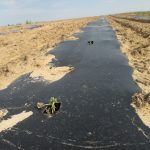
In the past week, we have observed a few cases where newly planted watermelon seedlings were severely damaged or dead (Figure 1). In some fields, we observed rotted roots and lower stems caused by fungal pathogens. However, such diseases were in response to the cold soils and would not normally cause problems in warm soils….Read more about Low Temperature Caused Watermelon Establishment Failure[Read More]
In response to the many questions about this disease on cucurbits, a new extension bulletin has been produced. The bulletin may be accessed at the link below. Or contact me to get your copy. https://www.extension.purdue.edu/extmedia/bp/bp-204-w.pdf
Ever year, I put together fungicide schedules for cucurbits. These may be found at purdue.ag/pumpkinfs and purdue.ag/melonfs. They may be downloaded as PDFs on legal sized pages. Please use these tables along with the MW Vegetable Production Guide and the fungicide label. If you have trouble with accessing the tables or have other questions. please…Read more about Fungicide Schedules[Read More]
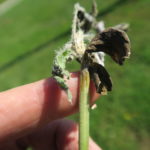
A recent observation of gummy stem blight on a watermelon transplant has reminded me to remind growers to inspect seedlings. Whether one is growing transplants or receiving transplants for delivery, seedlings should be inspected for possible disease problems. If one is uncertain of the cause of the symptoms, an official diagnosis can be obtained by…Read more about Watermelon Transplant Diseases[Read More]
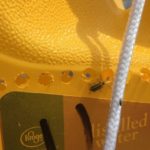
Have you ever wondered how striped cucumber beetles manage to find your cucurbits every year? Striped cucumber beetles rely on sight and smell to find food. They are particularly attracted to the color yellow and scents produced by cucurbit flowers and male striped cucumber beetles. This summer we studied how we could use lures that…Read more about DIY Traps for Striped Cucumber Beetle Management[Read More]
On Friday, April 12, the FDA and CDC announced an outbreak of Salmonella Carrau in pre-cut melon products distributed by Indianapolis-based Caito Foods. While an Indiana company has been implicated in the outbreak, the melon product used to create the pre-cut products were not from Indiana and were likely imported from outside of the United…Read more about Salmonella Outbreak does not Involve Indiana-Grown Melons[Read More]
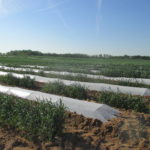
Two types of injury on young warm-season vegetable plants are caused by low temperatures: frost/freezing injury and chilling injury. Frost/freezing injury occurs when temperatures drop below 32°F. Ice formation in plant tissues cut cell membranes. When the tissue thaws, the damage results in fluids leaking from the cell, causing water soaked damage. Frost/freezing injury is…Read more about Protect Early Planted Warm-Season Vegetables from Low Temperatures[Read More]
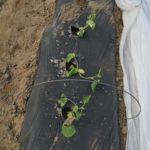
Chilling injury occurs when temperatures are above 32°F and below 55°F. The plant tissue becomes weakened that leads to cellular dysfunction. The most noticeable visual symptom of chilling injury is leaf and hypocotyl wilt (Figure 1). This is caused by the rapid decline in the ability of roots to absorb and transport water. It also…Read more about Chilling Injury on Young Warm-season Vegetable Plants[Read More]
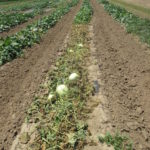
Bacterial wilt is a serious pest of cucumbers and melons. This disease is caused by the bacterium, Erwinia tracheiphila. However, it is spread by the striped or spotted cucumber beetle. Most management schemes have concentrated on controlling the cucumber beetle in order to lessen the severity of bacterial wilt. Currently, management of bacterial wilt often…Read more about Susceptibility of Melon Varieties to Bacterial Wilt[Read More]