Gowers always want to know which variety is the most suitable one for their farming location and market. I do understand the frustration of growers when looking online at all the varieties being sold by different vendors. There are a plethora of varieties available that have different fruit types and growth habits. Characteristics like potential…Read more about Yellow and Green Zucchini Varieties for the Local Market[Read More]
Cucurbits
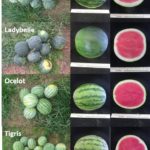
Watermelon variety trials are conducted every year at the Southwest Purdue Agricultural Center in Vincennes, IN. In the 2018 trials, it included 38 standard-size seedless watermelon cultivars and 10 personal-size watermelons. This article discussed the top yielding varieties in our trials in 2018. The full report of the variety trials, and information about the previous…Read more about Watermelon Cultivar Update from the 2018 Indiana Watermelon Variety Trial[Read More]
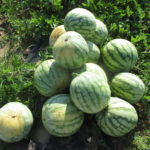
With the growing interest from consumers looking for new, unique products, yellow– and orange-flesh watermelons might create opportunities for small-sized growers to differentiate their products. This article answers a few questions you may have about growing and marketing these unique type of watermelons. Yellow and orange-flesh watermelons usually have narrow strips with varying degree of green…Read more about Yellow- and Orange-flesh Watermelons[Read More]

Tomato and Cucumber growers who are interested in grafting tomato and cucumber plants by themselves may find this information helpful. Step-By-Step instruction of how to graft tomato plants is available from Purdue Extension publication Vegetable Grafting: Techniques for Tomato Grafting https://mdc.itap.purdue.edu/item.asp?Item_Number=HO-260-W as well as a Purdue Extension video https://www.youtube.com/watch?v=7Ufx66Isf88 A cucumber grafting instruction was also…Read more about Learn How to Graft Cucumber and Tomato Plants[Read More]
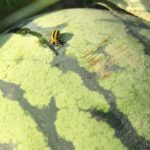
Striped cucumber beetle can be a significant pest in watermelon production systems. These pests can cause feeding damage to roots, stems, leaves, and flowers of plants as well as the watermelon fruit itself (Figure 1). In large enough densities, this damage can lead to economic loss. The economic threshold for striped cucumber beetles in watermelon…Read more about Striped Cucumber Beetles: Densities and Effective Scouting in Watermelons[Read More]
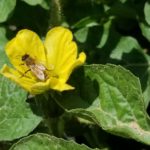
Insecticides are often needed to control pests in vegetable crops, but in crops that require pollinators we often worry about the impact those insecticides may have on those pollinators (Figure 1). In the summer of 2018, a team of researchers at Purdue University explored the effects of insecticide applications on watermelon yield across Indiana, considering…Read more about IPM Revisited: A Cost-effective Solution for Balancing Pest and Pollinator Management[Read More]
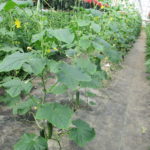
Cucumbers are extremely sensitive to cold. Locally grown cucumbers are almost only available in the summer. While in Asia, without the use of fancy heated greenhouses, cucumbers can grow all winter. Growing grafted cucumbers with cold tolerant squash rootstock is one of the key factors making this possible. Since 2016, we started to evaluate opportunities…Read more about Growing Grafted Cucumbers for Early Season Production in Protected Cultural Systems — Lessons Learned from on-farm Trials[Read More]
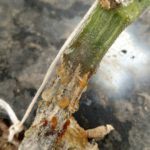
This disease was identified on a long Asian cucumber growing in a high tunnel in Mid-June in Knox County. The first symptom noted was wilting of the cucumber plant. Upon closer examination, a light, gray necrosis was observed on the lower portion of the plant. In Figure 1, you may notice dark spots in the…Read more about New Disease Report – Charcoal Rot of Cucumber[Read More]

With the start of pumpkin harvest, it is a good time to review important considerations for harvest and postharvest storage of pumpkins and winter squash (butternut, acorn and hubbard squash etc.). Pumpkin and winter squash should be harvested fully mature to reach their optimal quality and fulfill their potential for long shelf lives. Characters indicating…Read more about Harvest and Postharvest Storage of Pumpkins and Winter Squash[Read More]
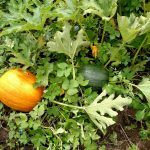
Several pumpkin growers have asked me when to stop managing for pumpkin diseases. That is, when should a pumpkin grower stop applying fungicides? I cannot provide a definitive answer for this question; every grower will have to make his or her own decision. Below, however, are some factors to consider. Estimate the crop yield-walk through the field and…Read more about Late Season Pumpkin Disease Management[Read More]