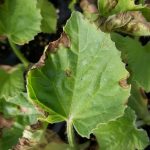
In the last issue of the Vegetable Crops Hotline, I wrote an article about common diseases of cantaloupe and watermelon transplants. Based on the samples I have received over the last few days, I would like to write about a disease that is not usually a problem: angular leaf spot. Angular leaf spot affects all…Read more about Angular leaf spot of Cucurbits[Read More]
Cucurbits
No-till pumpkin podcast starts the specialty crops series in the HAT-Soil Health podcasts from CCSI, Purdue and Hoosier Ag Today.
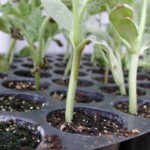
1. What caused the water-soaked stem of this watermelon transplant? A-damping-off B-gummy stem blight C-Lightening strike Correct Answer: B 2. Is this problem likely to spread to other transplants? Yes 3. Will this problem likely spread in the field? Yes More information about gummy stem blight can be found in the article Cantaloupe and Watermelon…Read more about Answer to Question from Last Issue (4-23-2020)[Read More]
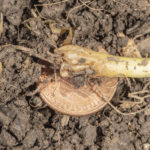
Each and every spring we get reports of poor seed emergence, seedling and transplant damage in early planted crops of all sorts. Most recently in untreated sweet corn, home gardens and transplanted onions. Lucky for us, we got to dive right into this pest and see them in action, but not so lucky for the…Read more about Seedling Damage by Maggot Pests[Read More]
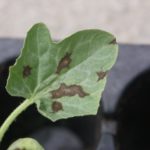
Many cantaloupe and watermelon growers are either growing transplants in a greenhouse or are expecting delivery of transplants in the next few weeks. Either way, growers should inspect transplants for disease before planting in the field. Below I will describe several common transplant diseases of cantaloupe and watermelon as well as management options. Gummy stem…Read more about Cantaloupe and Watermelon Transplant Diseases[Read More]
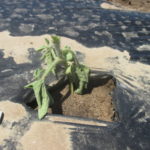
This is a newly released video about when to plant watermelons. https://youtu.be/tHT2mAnNRWk Watermelon, cantaloupe, cucumber plants are very sensitive to low temperatures. Even when frost has passed, soil temperatures below 60°F can result in transplant establishment failure. Check soil temperatures before planting. The rule of thumb is to plant watermelon, cantaloupe and cucumber transplants when…Read more about When to Plant Watermelons[Read More]
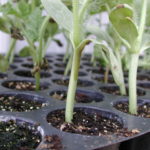
Dear Watermelon Growers, At our past winter technical meeting, several growers suggested fertilizer recommendations need to be reevaluated for watermelon production in our area. This suggestion is timely and critical. We plan to initiate a project for the 2020 watermelon production season to reevaluate the fertility and irrigation practices used in Indiana. We will identify…Read more about Watermelon Fertility and Irrigation Management[Read More]
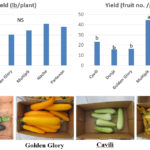
Warm-season vegetables like tomato, cucumber, pepper etc. often receive premium prices if they were sold at farmers’ markets earlier in the season. The same happens on summer squash, with the different fruit shape and color, summer squash provides a great diversity to the market. High tunnels that are planted with warm-season vegetables are often closed…Read more about Summer Squash Cultivar Selection for High Tunnel Production[Read More]
Thanks to the support from NC-SARE, we are going to continue the study of evaluating grafted cucumbers for early season production in greenhouses and high tunnels by collaborating with farmers in 2020. You can find our 2019 on-farm trials’ summary here: https://ag.purdue.edu/arge/swpap/Documents/Summary%20of%202019%20On-farm%20Grafted%20Cucumber%20Trials.pdf. The same as in previous years, we are going to supply grafted and…Read more about Call for Growers’ Participation of Grafted Cucumber Research[Read More]